• Home
  • popular
  • Events
  • Submit New Event
  • Subscribe
  • About
  • News
  • Restaurants + Bars
  • City Life
  • Entertainment
  • Travel
  • Real Estate
  • Arts
  • Society
  • Home + Design
  • Fashion + Beauty
  • Innovation
  • Sports
  • Charity Guide
  • children
  • education
  • health
  • veterans
  • SOCIAL SERVICES
  • ARTS + CULTURE
  • animals
  • lgbtq
  • New Charity
  • Series
  • Delivery Limited
  • DTX Giveaway 2012
  • DTX Ski Magic
  • dtx woodford reserve manhattans
  • Your Home in the Sky
  • DTX Best of 2013
  • DTX Trailblazers
  • Tastemakers Dallas 2017
  • Healthy Perspectives
  • Neighborhood Eats 2015
  • The Art of Making Whiskey
  • DTX International Film Festival
  • DTX Tatum Brown
  • Tastemaker Awards 2016 Dallas
  • DTX McCurley 2014
  • DTX Cars in Lifestyle
  • DTX Beyond presents Party Perfect
  • DTX Texas Health Resources
  • DART 2018
  • Alexan Central
  • State Fair 2018
  • Formula 1 Giveaway
  • Zatar
  • CityLine
  • Vision Veritas
  • Okay to Say
  • Hearts on the Trinity
  • DFW Auto Show 2015
  • Northpark 50
  • Anteks Curated
  • Red Bull Cliff Diving
  • Maggie Louise Confections Dallas
  • Gaia
  • Red Bull Global Rally Cross
  • NorthPark Holiday 2015
  • Ethan's View Dallas
  • DTX City Centre 2013
  • Galleria Dallas
  • Briggs Freeman Sotheby's International Realty Luxury Homes in Dallas Texas
  • DTX Island Time
  • Simpson Property Group SkyHouse
  • DIFFA
  • Lotus Shop
  • Holiday Pop Up Shop Dallas
  • Clothes Circuit
  • DTX Tastemakers 2014
  • Elite Dental
  • Elan City Lights
  • Dallas Charity Guide
  • DTX Music Scene 2013
  • One Arts Party at the Plaza
  • J.R. Ewing
  • AMLI Design District Vibrant Living
  • Crest at Oak Park
  • Braun Enterprises Dallas
  • NorthPark 2016
  • Victory Park
  • DTX Common Desk
  • DTX Osborne Advisors
  • DTX Comforts of Home 2012
  • DFW Showcase Tour of Homes
  • DTX Neighborhood Eats
  • DTX Comforts of Home 2013
  • DTX Auto Awards
  • Cottonwood Art Festival 2017
  • Nasher Store
  • Guardian of The Glenlivet
  • Zyn22
  • Dallas Rx
  • Yellow Rose Gala
  • Opendoor
  • DTX Sun and Ski
  • Crow Collection
  • DTX Tastes of the Season
  • Skye of Turtle Creek Dallas
  • Cottonwood Art Festival
  • DTX Charity Challenge
  • DTX Culture Motive
  • DTX Good Eats 2012
  • DTX_15Winks
  • St. Bernard Sports
  • Jose
  • DTX SMU 2014
  • DTX Up to Speed
  • st bernard
  • Ardan West Village
  • DTX New York Fashion Week spring 2016
  • Taste the Difference
  • Parktoberfest 2016
  • Bob's Steak and Chop House
  • DTX Smart Luxury
  • DTX Earth Day
  • DTX_Gaylord_Promoted_Series
  • IIDA Lavish
  • Huffhines Art Trails 2017
  • Red Bull Flying Bach Dallas
  • Y+A Real Estate
  • Beauty Basics
  • DTX Pet of the Week
  • Long Cove
  • Charity Challenge 2014
  • Legacy West
  • Wildflower
  • Stillwater Capital
  • Tulum
  • DTX Texas Traveler
  • Dallas DART
  • Soldiers' Angels
  • Alexan Riveredge
  • Ebby Halliday Realtors
  • Zephyr Gin
  • Sixty Five Hundred Scene
  • Christy Berry
  • Entertainment Destination
  • Dallas Art Fair 2015
  • St. Bernard Sports Duck Head
  • Jameson DTX
  • Alara Uptown Dallas
  • Cottonwood Art Festival fall 2017
  • DTX Tastemakers 2015
  • Cottonwood Arts Festival
  • The Taylor
  • Decks in the Park
  • Alexan Henderson
  • Gallery at Turtle Creek
  • Omni Hotel DTX
  • Red on the Runway
  • Whole Foods Dallas 2018
  • Artizone Essential Eats
  • Galleria Dallas Runway Revue
  • State Fair 2016 Promoted
  • Trigger's Toys Ultimate Cocktail Experience
  • Dean's Texas Cuisine
  • Real Weddings Dallas
  • Real Housewives of Dallas
  • Jan Barboglio
  • Wildflower Arts and Music Festival
  • Hearts for Hounds
  • Okay to Say Dallas
  • Indochino Dallas
  • Old Forester Dallas
  • Dallas Apartment Locators
  • Dallas Summer Musicals
  • PSW Real Estate Dallas
  • Paintzen
  • DTX Dave Perry-Miller
  • DTX Reliant
  • Get in the Spirit
  • Bachendorf's
  • Holiday Wonder
  • Village on the Parkway
  • City Lifestyle
  • opportunity knox villa-o restaurant
  • Nasher Summer Sale
  • Simpson Property Group
  • Holiday Gift Guide 2017 Dallas
  • Carlisle & Vine
  • DTX New Beginnings
  • Get in the Game
  • Red Bull Air Race
  • Dallas DanceFest
  • 2015 Dallas Stylemaker
  • Youth With Faces
  • Energy Ogre
  • DTX Renewable You
  • Galleria Dallas Decadence
  • Bella MD
  • Tractorbeam
  • Young Texans Against Cancer
  • Fresh Start Dallas
  • Dallas Farmers Market
  • Soldier's Angels Dallas
  • Shipt
  • Elite Dental
  • Texas Restaurant Association 2017
  • State Fair 2017
  • Scottish Rite
  • Brooklyn Brewery
  • DTX_Stylemakers
  • Alexan Crossings
  • Ascent Victory Park
  • Top Texans Under 30 Dallas
  • Discover Downtown Dallas
  • San Luis Resort Dallas
  • Greystar The Collection
  • FIG Finale
  • Greystar M Line Tower
  • Lincoln Motor Company
  • The Shelby
  • Jonathan Goldwater Events
  • Windrose Tower
  • Gift Guide 2016
  • State Fair of Texas 2016
  • Choctaw Dallas
  • TodayTix Dallas promoted
  • Whole Foods
  • Unbranded 2014
  • Frisco Square
  • Unbranded 2016
  • Circuit of the Americas 2018
  • The Katy
  • Snap Kitchen
  • Partners Card
  • Omni Hotels Dallas
  • Landmark on Lovers
  • Harwood Herd
  • Galveston.com Dallas
  • Holiday Happenings Dallas 2018
  • TenantBase
  • Cottonwood Art Festival 2018
  • Hawkins-Welwood Homes
  • The Inner Circle Dallas
  • Eating in Season Dallas
  • ATTPAC Behind the Curtain
  • TodayTix Dallas
  • The Alexan
  • Toyota Music Factory
  • Nosh Box Eatery
  • Wildflower 2018
  • Society Style Dallas 2018
  • Texas Scottish Rite Hospital 2018
  • 5 Mockingbird
  • 4110 Fairmount
  • Visit Taos
  • Allegro Addison
  • Dallas Tastemakers 2018
  • The Village apartments
  • City of Burleson Dallas

    At the Movies

    Why it's good to be bad: Richard Gere opens up about being a scoundrel of aone-percenter

    Joe Leydon
    Sep 15, 2012 | 4:05 pm
    • Susan Sarandon and Richard Gere in a scene from Arbitrage.
      Photo by Myles Aronowitz
    • Official Arbitrage movie poster.
    • Tim Roth.
      Photo by Myles Aronowitz
    • Brit Marling and Richard Gere.
      Photo by Myles Aronowitz

    Robert Miller has it all: a billion-dollar business that he built from scratch, a supportive wife (Susan Sarandon) and family, a stunningly sexy mistress (Laetitia Casta), and a welcome opportunity to cash out of his company, thanks to a merger that would allow him to walk away at age 60 with all the money — well, almost all the money — he could ever want.

    Trouble is, Robert Miller could very well lose it all. When his mistress dies in an auto accident after Robert quite literally falls asleep at the wheel, the normally self-assured master of the universe grows increasingly desperate to hide any trace of his involvement in the mishap. Even during the best of times, the bad publicity would be worse for business.

    But any delay in the proposed merger could lead to the uncovering of a $400 million debt he has inconveniently amassed — and meticulously hidden.

    The stakes are high and the tension is crackling in Arbitrage, a slickly packaged and smartly written indie drama starring Richard Gere as Robert Miler, a remorselessly amoral One Percenter who fears he may be toppled from his spot at the top of the world.

    The debut feature of writer-director Nicholas Jarecki, it’s an impressively enthralling and provocatively timely piece of work. Not so incidentally, it’s also a worthy showcase for one of Gere’s finest performances ever.

    Indeed, judging from the veteran actor’s enthusiasm during a telephone interview with CultureMap, Gere, too, fully realizes — and greatly appreciates — just how much mileage he got from this star vehicle.

    CultureMap: I assumes it’s safe to say that, in real life, you’re nothing like the guy you play in Arbitrage. But was there an aspect of the character you found easy to identify with? One that might have made the character slightly less difficult to pull off?

    Richard Gere: Honestly, I look at all of my characters as just people. I don’t see them as caricatures in any way. So I certainly could see myself — I could see anyone — in the position this guy was in.

    But to play the character as realistically as I wanted to, I was glad I had to spend a lot of time with guys who actually do this for a living and got the sense of ease and normalcy that they have in their lives. I wanted to bring that sense of ease in life to Robert Miller, the guy I’m playing in the movie.

    See, he always knows where he’s at. He’s always comfortable in his situations. But then he has the rug pulled out from under him.

    CM: I would imagine folks like Robert Miller are a bit like surgeons. That is, in order to be any good at what they do, they really can’t spend too much time thinking about the enormous stakes involved. Like, you can’t let yourself be fazed by the idea that what you’re doing is, in effect, making billion-dollar bets that black will come up instead of red.

    RG: I also think there’s an action junkie aspect to these guys. They crave that pressure. When I went down to the stock exchange, I found some wonderful characters there. There was this 80-year-old guy employed by the exchange. And it was just infectious, the energy that this guy had. He just loved being there so much.

    I pulled him aside to have a conversation — to pick his brain — to see what he was about. He told me he’d been there since he was a teenager — and that he just loved the energy of it. He’d spent something like 70 years of his life being inside that kind of intense action. And he didn’t want to be anywhere else. That was it.

    And I think that’s the case for a lot of these guys. A lot of the stock trades are done by computers these days. But to be able to make the big decisions about which ones to take on, and basically plug into the computers — these are billion-dollar bets, as you said. So you’ve got to have a lot of confidence.

    CM: Can you identify with that? Having to be confident, I mean. Because, as an actor, every time you make a movie — whether it turns out well or not — it stays around forever. And every decision you made about your performance, good or bad, always will be available for audiences to see.

    RG: I’ve been doing this a long time, so that decision is not such a big deal. But I’ve got to tell you: Before every shot, I still get a little nervous. There’s always a little bit of stuff going on inside of me. And that’s good, I like the energy of that. But there’s always the question of whether it’s going to work, of whether I can pull it off. That’s always there.

    CM: Was there a scene in this movie that you found especially challenging? One that made you think the night before, “Oh, yeah, we’re going to do that one tomorrow,” or something along those lines?

    RG: I don’t think there was anything that was so emotionally difficult. The whole thing was sort of at the same emotional pitch.

    But we were shooting on a very short schedule. And I think the scene in the park with my daughter [played by Brit Marling] is a very, very long scene. And we would shoot the entire scene from one angle, and then do it again from another angle. And, you know, we’re talking about five pages of dialogue. And complex stuff. And I wanted to get that five pages right from every angle, to make it a satisfying scene.

    So I think there was enormous amount of pressure — on all of us. Because on top of everything else, it was a daylight scene, and we didn’t have all day to do it. I think everybody was a little nervous about that.

    CM: In the course of the Arbitrage, your character does some pretty dastardly things and puts other people at serious risk. Yet you manage somehow to generate a rooting interest in the guy. How do make an audience care for someone they likely wouldn’t care about — and might even detest — in real life?

    RG: Well, that’s very tricky — not just for the actor, but also the director — to keep people involved for two hours. And honestly, I don’t know how you do that. I mean, I guess my success rate of doing that is fairly high, or I wouldn’t keep working. But I don’t know how exactly to do that. Yet it’s my job to do that. And it’s obviously more fun to do that with someone who’s difficult, who has unexplainable angles in him. Like most people.

    I guess the trick ultimately is, if you can make them a human being, then it’s very easy to relate to them. If you play clichés — if you play categories of people, or descriptions of people — that makes it very difficult for an audience to identify with them. So as long as you’re playing honestly in a scene, and the story is true – I think we naturally want to be carried away by the story.

    CM: I teach a course about ’70s cinema. And I often stress to students that while great movies continue to be made today, the big difference back in the ’70s — during what some people call the last golden age for Hollywood — is that most of the important American movies, the movies that have lasted, actually were released by major studios.

    You started out in films during that period. How do you feel the film industry has changed?

    RG: Well, you know, it’s funny: You look at the New York Times movie section, and you see there’s an enormous number of independent movies that have found a niche. And they’re a lot like the movies you’re talking about, the really well-made, interesting ’70s movies. This one, Arbitrage, clearly is one that would have been a studio picture back in the ’70s. Warners or Paramount would have made this movie. This is like a Sidney Lumet movie. And it’s true, the studios don’t make them anymore.

    But, you know, it wasn’t that hard to find the independent money for this one. Mostly because the script was so well-conceived. And since it was able to attract well-known actors to play these parts, the financing was fairly easy.

    I did live through what you’re calling the golden years for modern filmmaking, for sure. But I think that to make those same films now, we have to rethink budgets, we have to rethink what compensations are, we have to rethink how quickly we work. Those are compromises we all have to make to make those same movies. But it’s part and parcel of it.

    I think there are still wonderful movies being made. Just in a different way.
    unspecified
    news/entertainment

    Movie review

    Nick Jonas steals song from Paul Rudd in music-heavy Power Ballad

    Alex Bentley
    Jun 5, 2026 | 1:30 pm
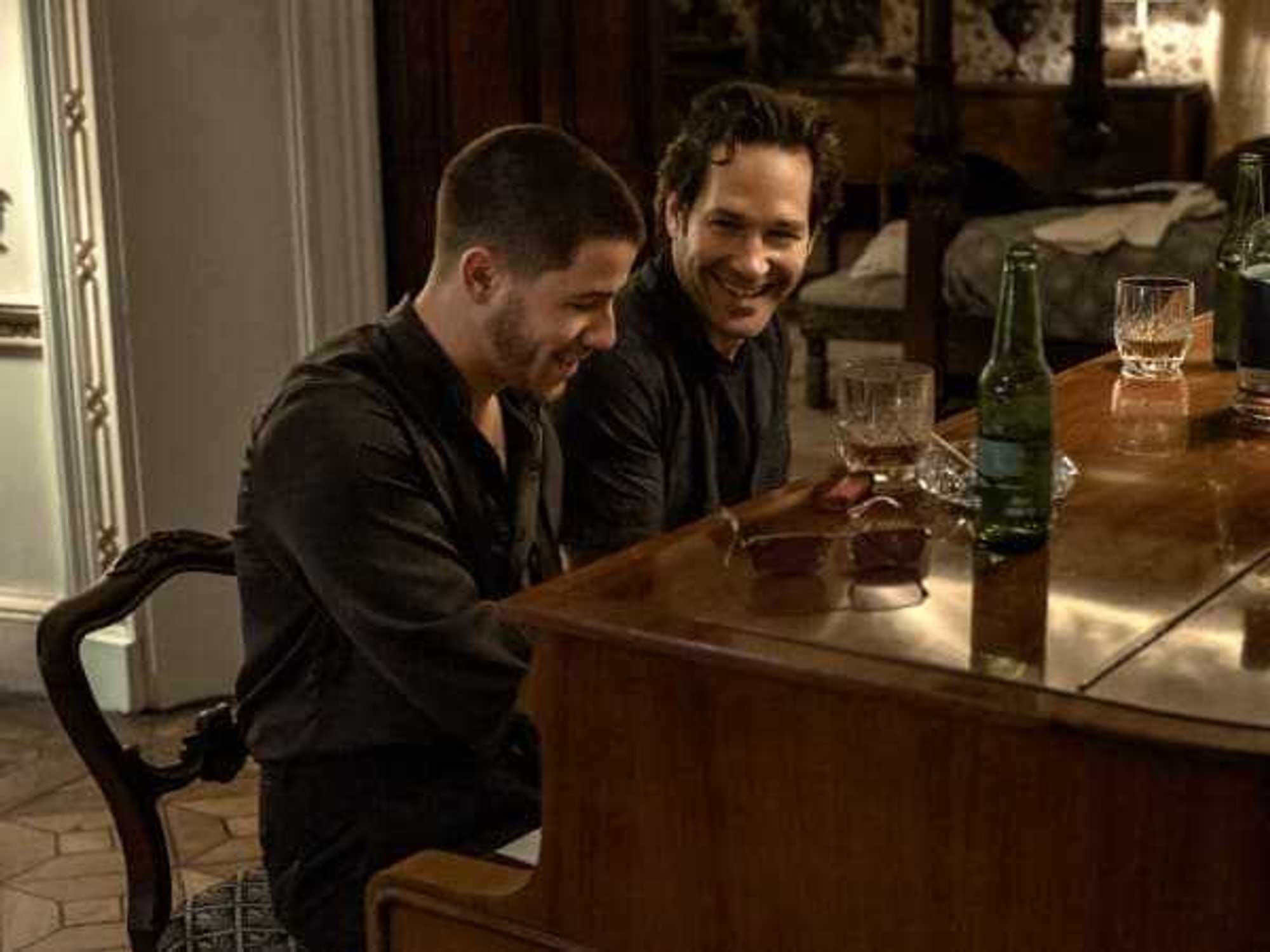
    Nick Jonas and Paul Rudd in Power Ballad
    Photo by David Cleary for Lionsgate
    Nick Jonas and Paul Rudd in Power Ballad.

    Writer/director John Carney is one of the great purveyors of movies featuring music (as opposed to musicals) in the 21st century. Starting with Once in 2007 (which was turned into a Broadway musical several years later), he has made music-themed stories like Begin Again, Sing Street, Flora and Son, and now Power Ballad.

    Rick Power (Paul Rudd) is a former wannabe rock star who is now the lead singer of “Ireland’s #1 Wedding Band,” The Bride & Grooves. While they mostly play smaller weddings, a gig at a country estate leads to an encounter with Danny Wilson (Nick Jonas), a former boy band member struggling to make it as a solo artist. Rick and Danny wind up bonding in a booze- and pot-filled jam session, sharing various song ideas.

    After returning to Los Angeles and desperate for a hit, Danny steals one of Rick’s songs, which miraculously turns into the No. 1 “How to Write a Song (Without You).” Rick, initially overjoyed that something he wrote has become big, is crushed when he finds out Danny didn’t give him credit. His quest to find a way to prove his worth sends him into a spiral, upending the ordinary life he had built.

    Co-written by Peter McDonald, the film is a nice exploration of two men trying to hold on to their music dreams. Their individual circumstances could not be more different, but each of them knows the ups and downs of the business as well as the other, as well as the ineffable magic of creating that one great song. While the music scenes are hit-and-miss because of a reliance on lip synching, the scene featuring Rick and Danny trading ideas is electric with creativity.

    Oddly, though, the film could have used a bit less music and more of a focus on the two men’s personal lives. Rick wound up living in Ireland after falling in love with his future wife, Rachel (Marcella Plunkett), while on tour with his former American band. He spends a decent amount of time with her and his daughter, Aja (Beth Fallon), but his story needed a few more family scenes to drive the point home. Danny’s personal life is all but nonexistent, giving his arc less impact than it could have had.

    Instead of loved ones, Carney and McDonald try to give Rick and Danny more depth through friends and business associates. Rick’s bandmate Sandy (McDonald) is a ride-or-die kind of guy for him, but his presence is only good for a few humorous distractions. Danny’s manager Mac (Jack Reynor) is difficult to parse, as he goes to bat for Danny on multiple occasions, but also seems to keep him at arm’s length.

    It’s long been joked that Rudd never ages, and that youthfulness serves him well in this role, in which his character is supposed to be much younger than his actual age of 57. His energy and enthusiasm make his character appealing throughout, even when Rick starts to go off the deep end. Jonas is decent in his role, selling the music side well, but there might be a reason his character doesn’t have many scenes requiring him to show emotions.

    While Power Ballad has all the hallmarks of another great Carney music movie, it’s missing a few pieces that could have put it over the top. It’s still a fun film with an insanely catchy song at its center, but it’s not quite as memorable as most of the filmmaker’s previous efforts.

    ---

    Power Ballad is now playing in theaters.

    moviesmusicfilm
    news/entertainment
    Loading...