Everyone in Dallas-Fort Worth has spent four days slipping and sliding on the ice that has coated the region, so it's only logical that, just as the ice starts to melt, Klyde Warren Park will finally introduce its long buzzed-about ice skating rink on Friday, December 13.
We kid, of course; it's purely coincidence that the deck park would choose this of all times to tempt people with the fun entertainment option, because it's been in the works for months.
Besides, the park isn't even bringing in real ice: The 32-by-100-foot skating rink, which will be placed on the lawn in front of the children’s park, is made out of a synthetic ice skating surface called Super-Glide. The eco-friendly surface lets skaters glide just as smoothly as on real ice.
The other benefit of a synthetic skating surface is that skaters can enjoy it no matter if it's 20 degrees or 70 degrees, which is a real possibility given Texas' mercurial weather.
The rink is scheduled to be open December 13 through February 2. Hours are Monday-Thursday, 11 am-8 pm; Friday-Saturday, 10 am–10 pm; and Sunday, noon-6 pm. Anyone who owns ice skates can use the rink for free; skate rentals are $5 per person on weekdays and $10 on weekends.
Park officials will celebrate the opening of the rink with free skate rentals on December 13 and free skating lessons on December 14-15. Additionally, skating will be free every Tuesday thanks to a sponsorship from El Centro College.
Skaters will be able to take in the grandeur of the park's Christmas tree while they skate.
Photo courtesy of Klyde Warren Park
Skaters will be able to take in the grandeur of the park's Christmas tree while they skate.
Actor Rose Byrne had a banner year in 2025, getting her first Oscar nomination for her starring role in If I Had Legs, I’d Kick You. Although she came up short in that race, she’s getting another chance to prove her acting bona fides in the new film, Tow.
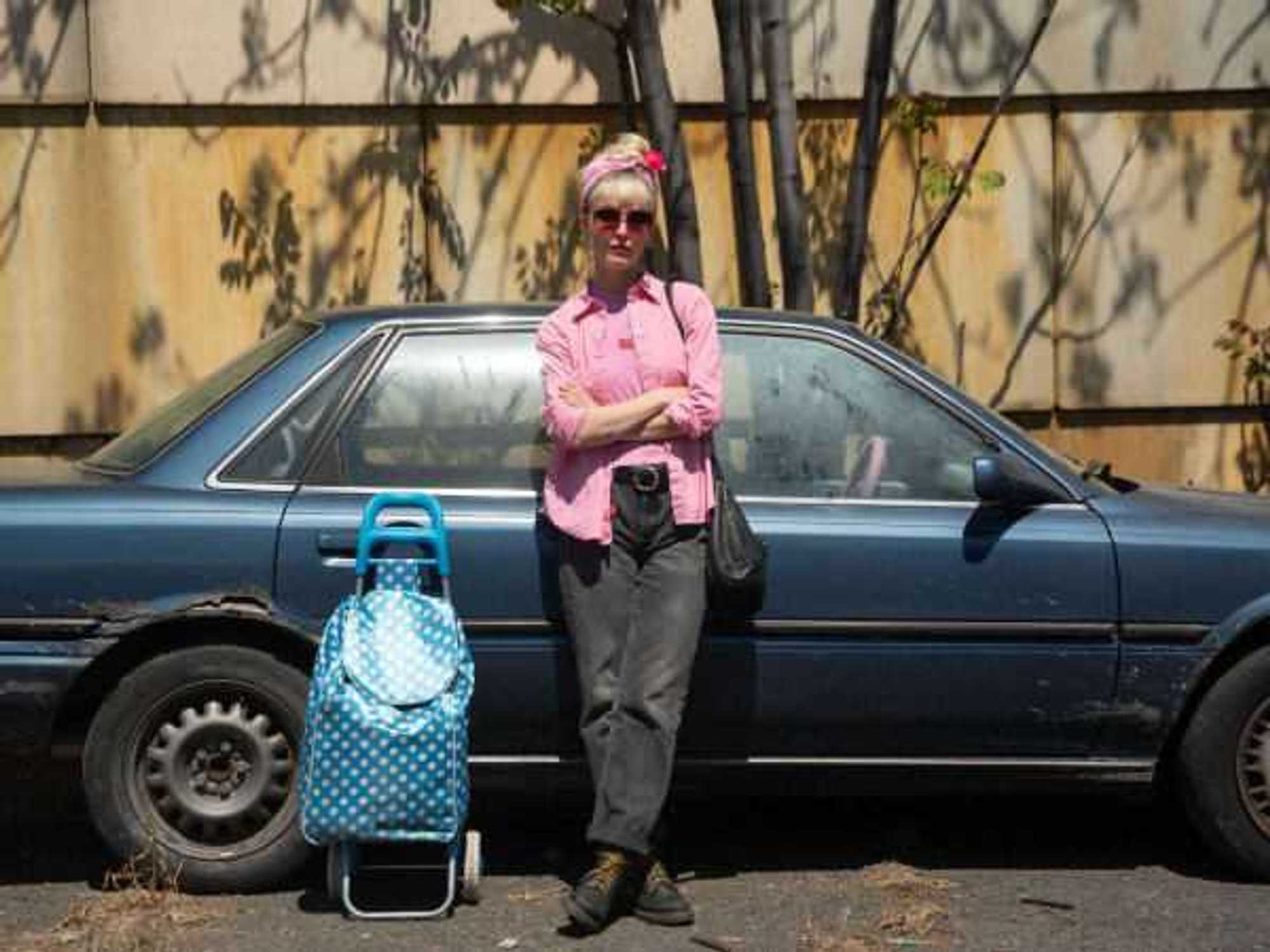
In the “inspired by a true story” movie, Byrne plays Amanda, a down-on-her-luck woman who lives in her car and can’t find a job. Living in Seattle, she tries to stay in touch with her daughter, Avery (Elsie Fisher), who lives with her dad in another city, but circumstances sometimes limit their communications, especially when her car is stolen.
The good news is that her car is found relatively quickly. The bad news is that the tow company is charging her to get her car back, money she can’t afford. Now truly homeless, she does everything in her power to right the wrong, even taking the company to court. Without much luck, she has to start staying in a women’s shelter run by Barbara (Octavia Spencer), where she makes friends with Nova (Demi Lovato) and Denise (Ariana DeBose), among others.
Directed by Stephanie Laing and written by Jonathan Keasey and Brent Boivin, the film has relatively low stakes going for it and never really tries to make the story feel deeper than it is. The situation Amanda finds herself in is clearly a tough one, and any empathetic person would feel for her and want her to overcome her plight. But the filmmakers keep things light and never try to up the drama in any significant way.
The issue Amanda is dealing with, being price gouged by a predatory towing company, is one with which many people can relate. But aside from helpfully underscoring Amanda’s frustration by showing the increasing number of days she is without a car, they never establish why they felt this particular story was one worth telling. Her personal issues, including a growing estrangement with her daughter, fail to conjure any big emotions.
The filmmakers are very loose with their storytelling, especially when it comes to side characters. The presence of the women she meets at the shelter, and Kevin (Dominic Sessa), the young lawyer who offers to help her, never makes full sense other than a need for her to have other people with whom to interact. A tighter focus on what Amanda was going through would’ve helped both her and people around her feel more important.
Byrne is a dynamic performer who’s shown great skill at both drama and comedy, but there’s nothing special about her performance here. Hampered a bit by a blonde wig and false teeth, she feels out of sorts for much of the film. The unusually high-powered supporting cast - both Spencer and DeBose are Oscar winners - makes things interesting on first blush, but none of them outside of Sessa is given much to do, so they’re mostly wasted.
Tow will be a disappointment for anyone hoping to see more great stuff from Byrne. While she remains a fine actor, her performance and the story as a whole are nowhere near the level shown in her previous film. The real life predicament shown in the film also never rises to the level of being of something worth showing to the masses.