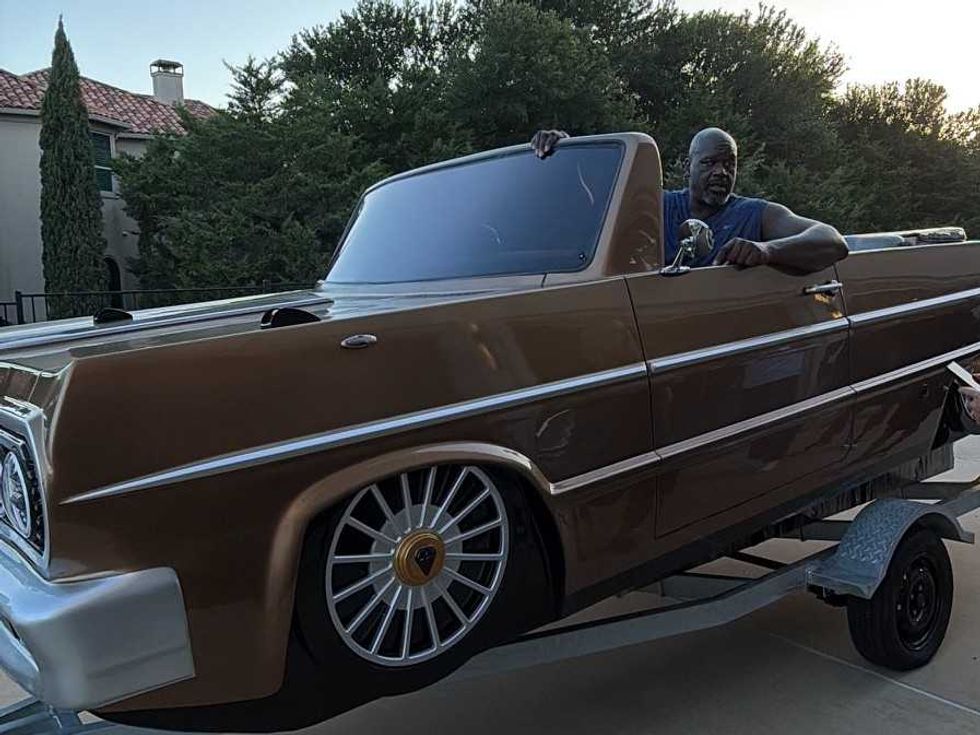
“Oh, my God! My Impala boat has arrived!” The shout comes from NBA Hall-of-Famer Shaquille O’Neal, as seen in a viral video from California-based Effortless Motors.
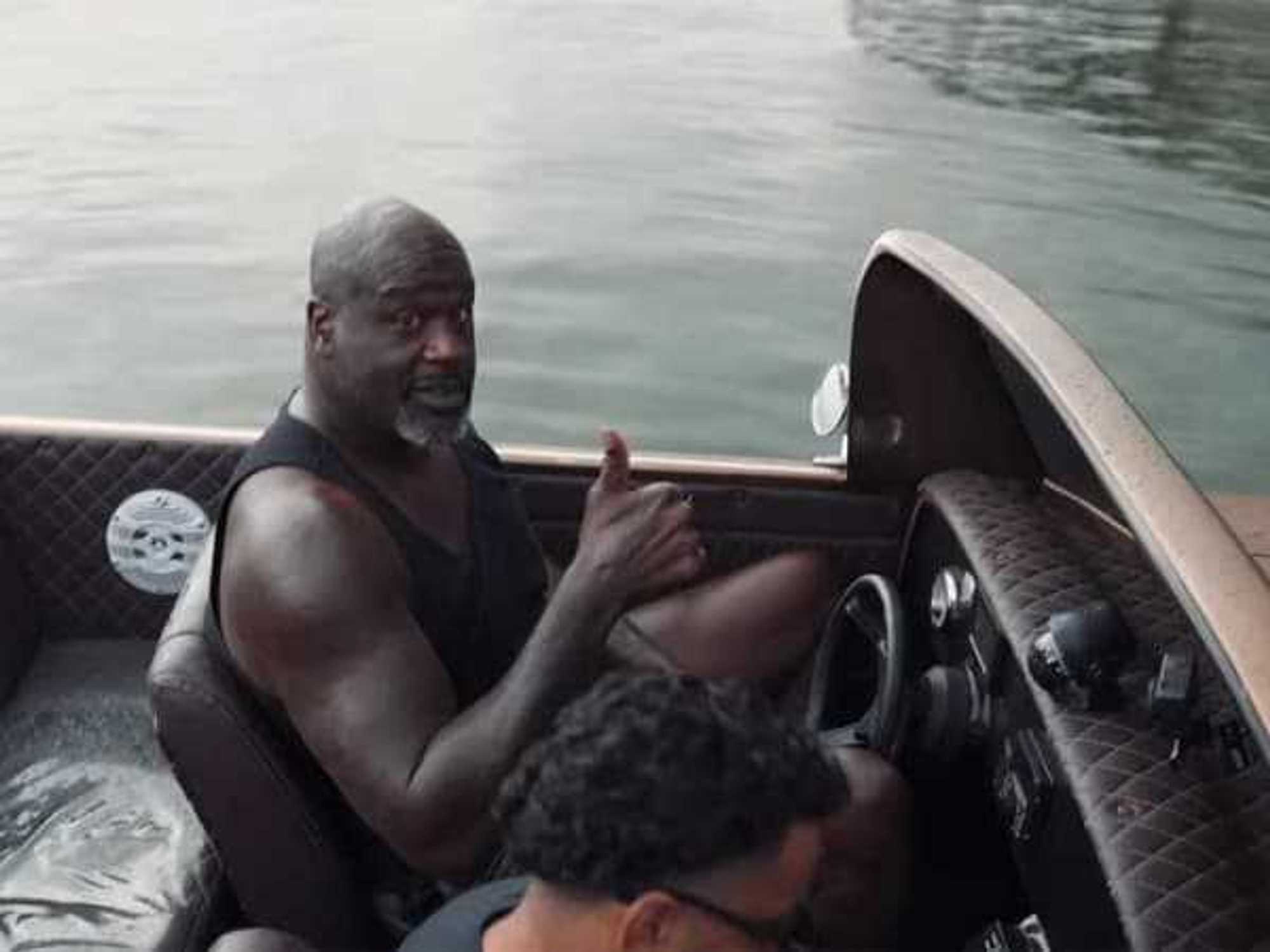
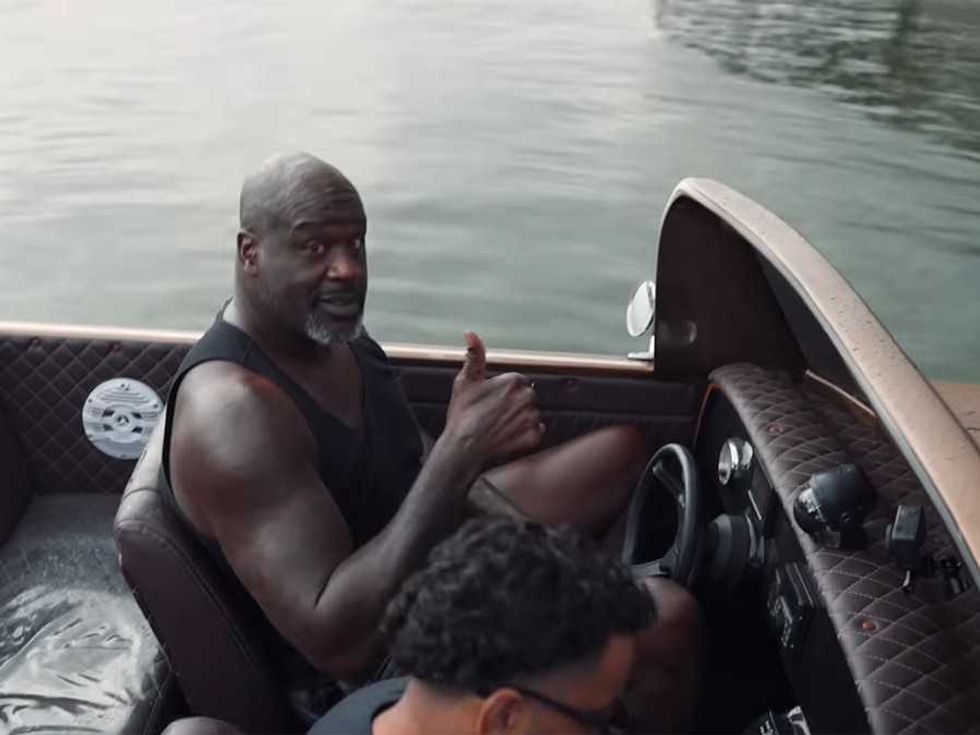
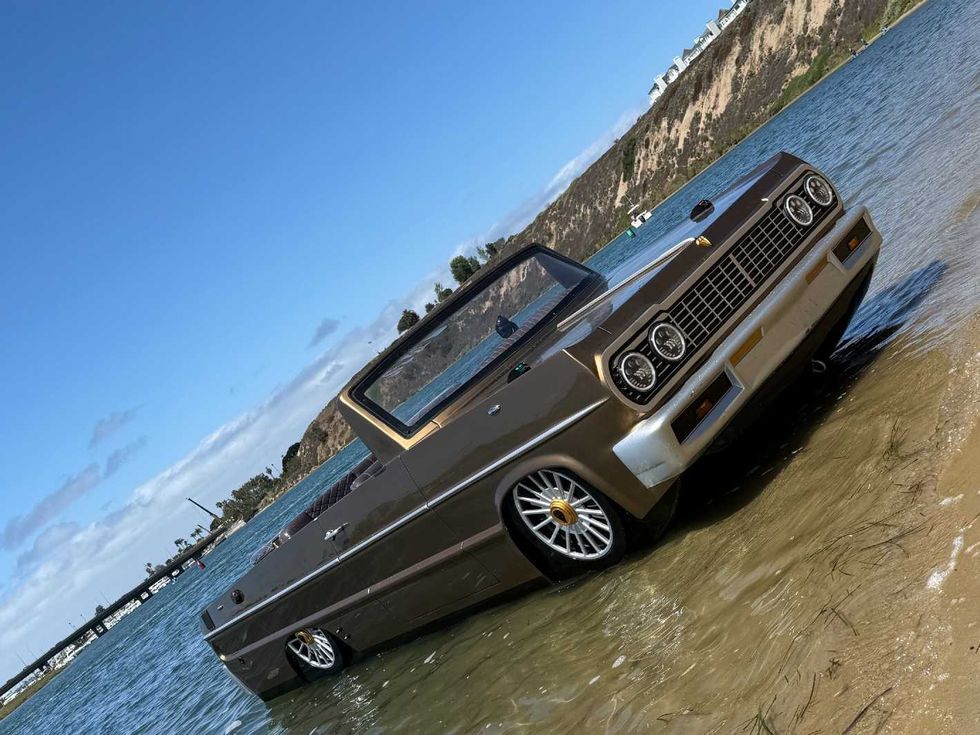
Those on Lake Ray Hubbard one day in early July witnessed the 7-foot-1-inch basketball superstar, known worldwide as Shaq, cruising the North Texas waters in a convertible 1964 Chevrolet Impala. A surreal sight, onlookers say.
“I had to do a double take, rub my eyes, and hope no one had spiked my coffee,” says Rockwall resident Steve Johns via phone. Johns was doing maintenance on his berthed boat when he saw the celebrity steering the craft through the waves with two other men aboard.
The passengers were Ahmad Abdelrahman and Daniel Ubario, classic car specialists who founded Effortless Motors, a full-service auto concierge in Riverside, California. They built and delivered the custom craft to O'Neal and filmed both its reveal and its maiden voyage.
O’Neal had semi-jokingly discussed the idea with the men last March, on his 54th birthday, while commissioning a Chevy Impala ‘64 restoration for his multimillion-dollar car collection.
“He wanted something crazy that no one in the world has ever seen,” Abdelrahman, Effortless CEO, tells CultureMap in an interview.
In early July, the team delivered O'Neal's consigned classic car to his home in the Ridge Lakes of Heath subdivision, on the lake’s east side. The video shows O’Neal treating family members to low, rumbling rides around his otherwise quiet suburban enclave and appearing ecstatic as he hugs and heaps praise upon the car specialists.
“You did a great job. Oh, thank you! Everything is perfect,” O’Neal says about the $1.2 million street-ready Impala, whose price reflects the extensive modifications needed to accommodate Shaq’s XXL physique. “But you promised me the boat for my birthday,” O’Neal quips.
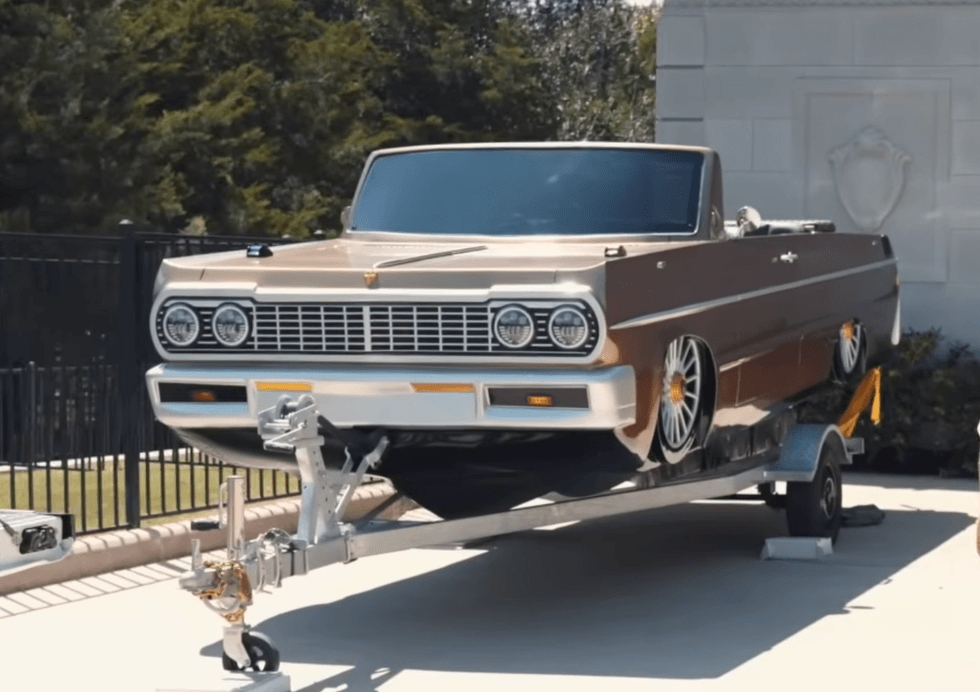
On cue, a second trailer arrives hauling the gold Impala boat, a nod to Doughboy (Ice Cube)’s 1993 ride in the movie Boyz n the Hood.
The logistics of delivering both a car and a surprise boat — and secretly setting up the latter’s trial run — were challenging, but O'Neal's reaction made everything worthwhile, Abdelrahman says.
“The best thing was knowing we built something that has never existed before," he says. "Seeing that Impala on the water, it’s like seeing a unicorn flying across the sky.”
In the video, Shaq is seen settling into the customized captain’s seat and navigating choppy waters as Abdelrahman exclaims, “First seven footer to drive a ‘64 Impala in the water.”
“Once again, Effortless Motors delivers,” O’Neal says into the camera.
The video then shows the famous TNT broadcaster stopping under storm clouds to sign autographs and snap photos with starstruck lakegoers. “We love your boat, Shaq,” a teenage boy is heard saying after snapping a selfie. “You’re the best, man. We love you!”
O’Neal has lived part-time in the Dallas area since 2022, when he bought a $1.2 million Carrollton mansion. He sold it for $1.7 million and moved into his current 5,100 square-foot, approximately $2 million Rockwall County estate in 2024.
Since then, sightings of the megastar abound around Dallas-Fort Worth. In Mesquite in 2024, he treated 20 students to $500 shopping sprees at JCPenney. On another occasion he gave a $500 gift card to a couple he met at Fort Worth’s JCPenney, which they paid forward to children in need. And earlier this year at the Rockwall Target, he distributed $100 bills to shoppers at random. He's also behind the Big Chicken restaurant franchise, whose Fort Worth location recently closed.
But Shaq isn't the only retired athlete taking high-end toys to Texas waters. While his Impala jetboat is one of a kind, other luxury autos afloat have been spotted nearby. Former Dallas Maverick Charlie Villanueva regularly is seen cruising his Rolls Royce amphi-boat near his Lake Ray Hubbard home, many Instagram commenters pointed out after Shaq’s maritime adventure went viral.
Automotive journalists at The Autopian noted that, based video footage, Shaq’s new toy is not amphibious but rather a fiberglass silhouette of the Impala attached to a jet boat hull.
“That doesn’t take away from the spectacle of the thing much, with the rather slab-sided Impala body cutting an unexpected shape through the water,” wrote The Autopian's Andrew Evans.
A still from the Effortless Motors video
Courtesy of Effortless Motors/Youtube