Movie Review
New film The Plague turns tween bullying into chilling drama
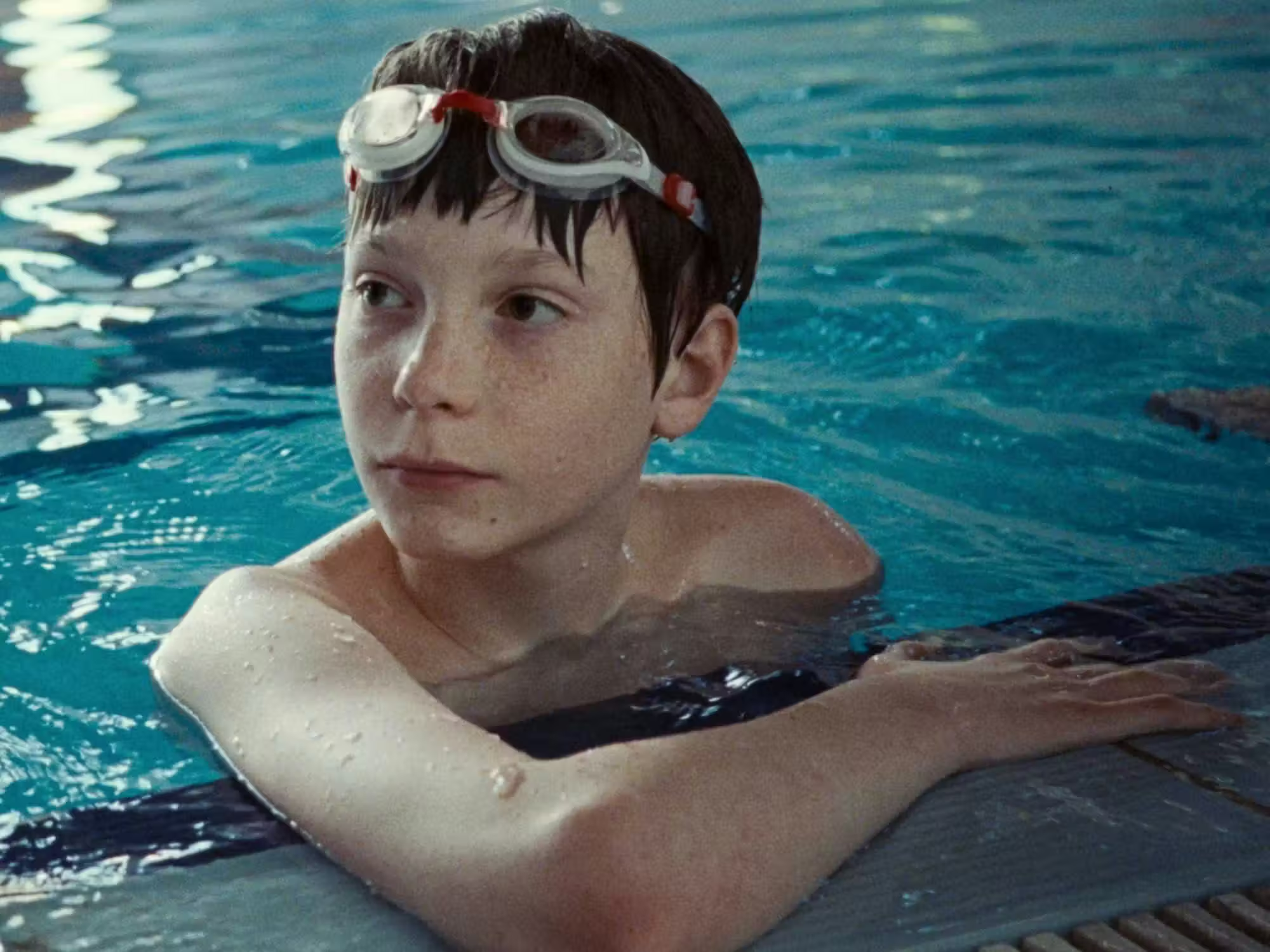
Everett Blunck in The Plague.
Anybody who’s attended elementary school in the last 100 years knows the concept of “cooties,” a fictional affliction that is typically caught when touched by a member of the opposite sex. A more updated version of the same idea is featured in the Diary of a Wimpy Kid series, this time called the “Cheese Touch,” making anyone who touches a moldy piece of cheese on the school’s basketball court an outcast.
A much more menacing version of this “disease” is on display in The Plague, which takes place at a summer water polo camp for tweens. The film focuses on Ben (Everett Blunck), a slightly awkward boy who struggles to fit in with the “cool” crowd led by Jake (Kayo Martin). That group has no problems making fun of others that they deem to be different, especially Eli (Kenny Rasmussen), who has been ostracized because of a rash he has that the kids call “the plague.”
Ben wants to be part of the main group, but his natural empathy leads him to reach out to Eli on more than one occasion despite Eli engaging in some uncomfortable behavior. With the camp’s coach (Joel Edgerton) not much help when it comes to the bullying tactics by Jake and others, especially those that take place at night, Ben is left to fend for himself. His vacillations between wanting to be accepted and wanting to do what’s right continue until his hand is forced.
Written and directed by first-time feature filmmaker Charlie Polinger, the film has all the feel of a horror movie without actually being a horror. The staging used by Polinger gives the film a claustrophobic feel as Ben can’t seem to escape the psychological torture inflicted by Jake and others no matter where he goes. He also employs a jarring score by Johan Lenox to great effect, one that’s designed to keep viewers on edge even when nothing bad is happening.
No matter how far removed you are from middle school, the film will likely bring up feelings you thought you had left behind. Much like with Bo Burnham’s Eighth Grade, Polinger finds a way to tap into something universal in his depiction of tweens, an age when everyone is still discovering who they really are. Some go along to get along, others don’t even attempt to fit in, but no one truly feels settled.
Whether the plague is real or not in the world of the film is up for debate. While most of the time it comes off as something made up to underscore the feeling of otherness felt by Ben, Polinger does literalize it to a degree. He even tiptoes up to the line of body horror before wisely retreating, although what he does show will still make some viewers squeamish. However, because he seems to be leaning one way before pulling back, there’s the possibility that some will be disappointed by the tease of something more intense.
The film’s biggest success is in its casting. Finding good child actors is notoriously tough, and yet Polinger and casting director Rebecca Dealy found a bunch who sell the story for all it’s worth. Blunck, Martin, and Rasmussen get the most play, but everyone else complements them well. Edgerton is the only well-known actor in the film, but he’s used sparingly and isn’t asked to do much, leaving the kids to carry the story on their shoulders.
Fitting in as a tween is hard enough without others actively trying to find ways to cast someone out. The Plague is an effective demonstration of the dynamics that can play out in a competitive environment that also includes a group that has yet to develop into fully-rounded people. It features discomfort on multiple levels, marking an auspicious debut for Polinger.
---
The Plague is now playing in theaters.