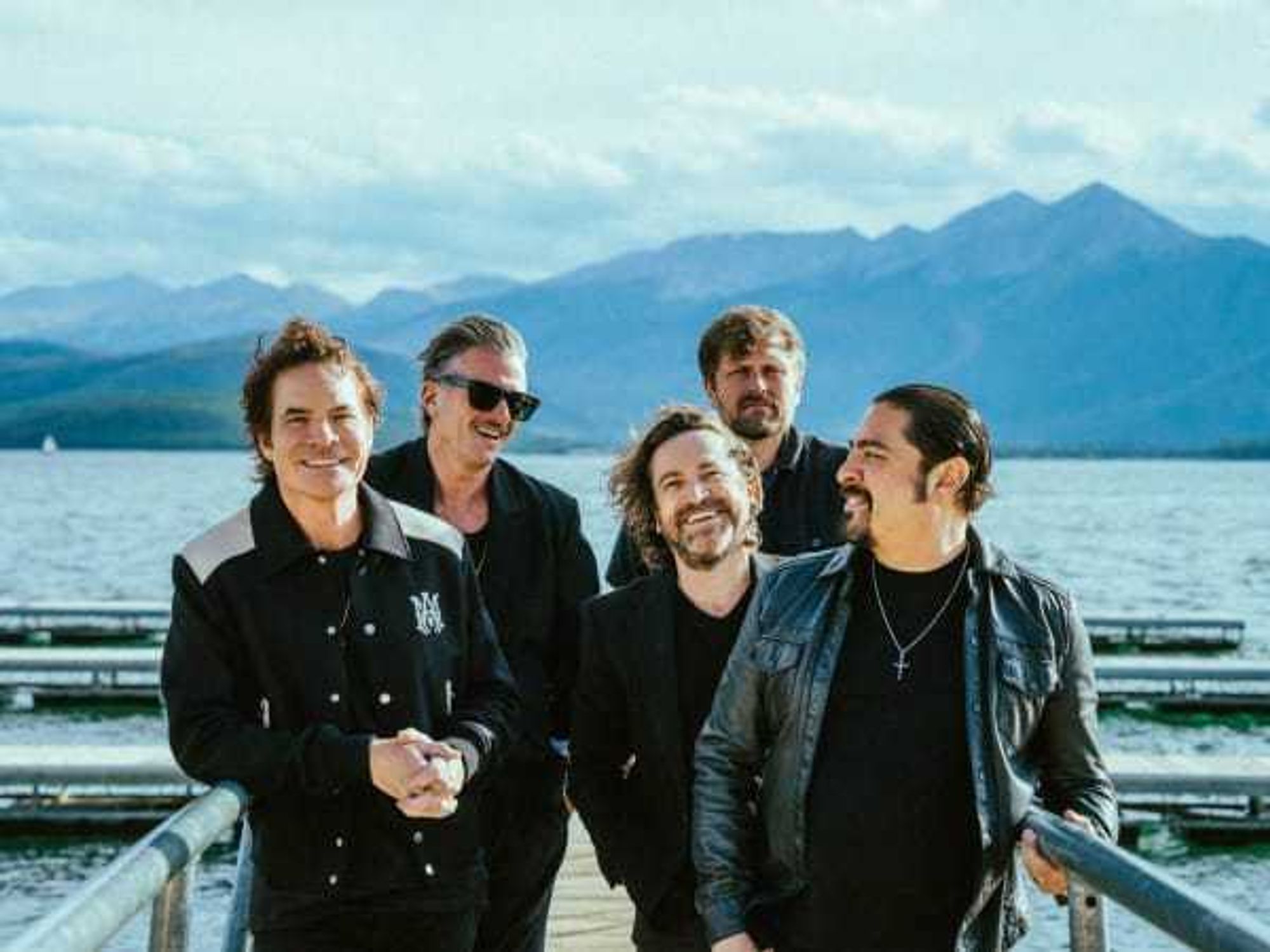
Pop rock band Train will celebrate the 25th anniversary of their breakthrough album, 2001's Drops of Jupiter, on a 2026 tour that will include a stop at Dos Equis Pavilion in Dallas on August 15.
The Drops of Jupiter: 25 Years in The Atmosphere Tour kicks off on July 8 in West Palm Beach, Florida, making its way around the U.S. and Canada before wrapping up at the end of August in Washington state.
In addition to Dallas, Train will play in Houston suburb The Woodlands on on August 14. They will joined by Barenaked Ladies and Matt Nathanson at all stops.
Each tour stop will feature Train playing their most well-known hits like “Hey, Soul Sister,” “Drops of Jupiter (Tell Me),” "Drive-By," "Play That Song," and more.
To coincide with the 25th anniversary, the band is set to release new music in spring 2026.
Drops of Jupiter was the first of six albums to make the top 10 on the Billboard 200 chart. Overall, Train has released 11 albums over 27 years, most recently AM Gold in 2022.
Fans can sign up now at SaveMeSanFrancisco.com/tour to gain first access to the artist presale for most dates beginning on Tuesday, November 11 at 12 pm.
Additional presales, including one for Citi cardholders, will run throughout the week ahead of the general on-sale beginning on Friday, November 14 at 10 am.
DROPS OF JUPITER: 25 YEARS IN THE ATMOSPHERE 2026 SUMMER TOUR DATES
- July 8, 2026 – West Palm Beach, FL – iTHINK Financial Amphitheatre
- July 10, 2026 – Tampa, FL – MIDFLORIDA Credit Union Amphitheatre
- July 11, 2026 – Alpharetta, GA – Ameris Bank Amphitheatre
- July 12, 2026 – Orange Beach, AL – The Wharf Amphitheater
- July 14, 2026 – Charlotte, NC – PNC Music Pavilion
- July 16, 2026 – Raleigh, NC – Coastal Credit Union Music Park
- July 17, 2026 – Columbia, MD – Merriweather Post Pavilion
- July 18, 2026 – Wantagh, NY – Northwell at Jones Beach Theater
- July 20, 2026 – Gilford, NH – BankNH Pavilion
- July 22, 2026 – Saratoga Springs, NY – Saratoga Performing Arts Center
- July 24, 2026 – Holmdel, NJ – PNC Bank Arts Center
- July 25, 2026 – Mansfield, MA – Xfinity Center
- July 26, 2026 – Camden, NJ – Freedom Mortgage Pavilion
- July 28, 2026 – Cuyahoga Falls, OH – Blossom Music Center
- July 29, 2026 – Cincinnati, OH – Riverbend Music Center
- July 31, 2026 – Nashville, TN – Ascend Amphitheater
- August 1, 2026 – Noblesville, IN – Ruoff Music Center
- August 4, 2026 – Toronto, ON – RBC Amphitheatre
- August 5, 2026 – Clarkston, MI – Pine Knob Music Theatre
- August 7, 2026 – Tinley Park, IL – Credit Union 1 Amphitheatre
- August 8, 2026 – Madison, WI – Breese Stevens Field
- August 9, 2026 – Shakopee, MN – Mystic Lake Amphitheater
- August 11, 2026 – St. Louis, MO – Hollywood Casino Amphitheatre
- August 12, 2026 – Riverside, MO – Morton Amphitheater
- August 14, 2026 – The Woodlands, TX – The Cynthia Woods Mitchell Pavilion
- August 15, 2026 – Dallas, TX – Dos Equis Pavilion
- August 17, 2026 – Morrison, CO – Red Rocks Amphitheatre
- August 19, 2026 – West Valley City, UT – Utah First Credit Union Amphitheatre
- August 21, 2026 – Phoenix, AZ – Talking Stick Resort Amphitheatre
- August 22, 2026 – Santa Barbara, CA – Santa Barbara Bowl
- August 24, 2026 – Los Angeles, CA – Greek Theatre
- August 25, 2026 – Lake Tahoe, NV – Lake Tahoe Amphitheatre at Caesars Republic
- August 26, 2026 – Mountain View, CA – Shoreline Amphitheatre
- August 28, 2026 – Bend, OR – Hayden Homes Amphitheater
- August 29, 2026 – Ridgefield, WA – Cascades Amphitheater
- August 30, 2026 – Auburn, WA – White River Amphitheatre