
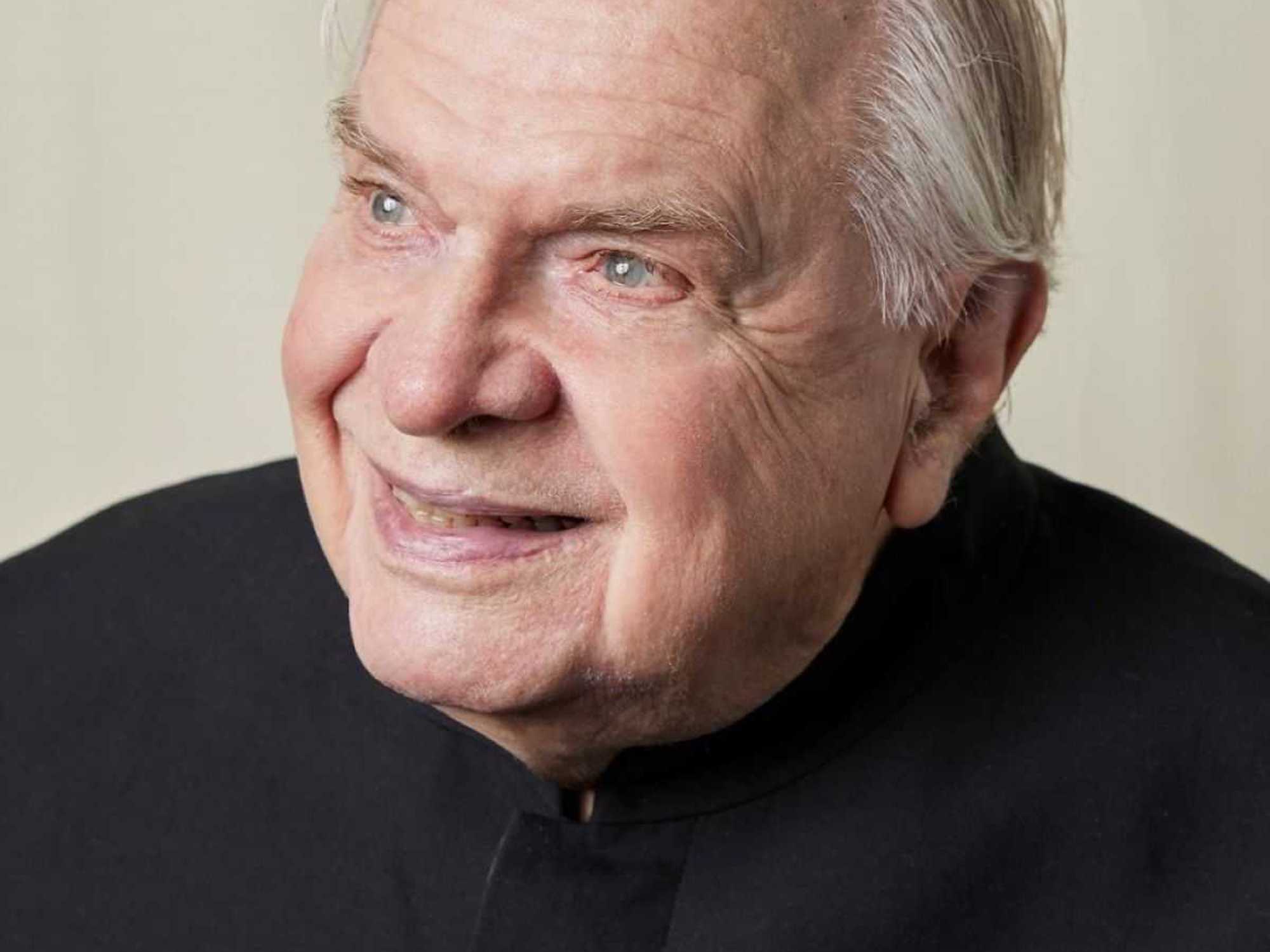
Ben Stevenson, OBE, the longtime artistic director of Texas Ballet Theater and a legendary ballet dancer and choreographer, died March 29, 2026 - just days shy of his 90th birthday, which would have been April 4.
"Stevenson’s profound impact on dance spanned decades and continents, shaping countless careers and elevating ballet companies to global prominence," reads a statement from the Ben Stevenson Trust. His cause of death has not been made public.
Stevenson served as TBT artistic director in Dallas-Fort Worth from 2003 to 2022, when he transitioned to a new role as artistic director laureate - a lifetime appointment. He continued to work with North Texas dancers in studio, set the choreography for his legendary ballets, and attend performances; he was spotted in the audience of the company's most recent mixed-rep program just weeks ago.
“Ben Stevenson is one of the great storytellers of ballet who has brought magic to the stages of Dallas and Fort Worth," Anne Bass, then-TBT board of governors chairman, said when his appointment as artistic director laureate was announced in 2022. "It is impossible to overstate his importance in elevating our company to the internationally acclaimed ensemble that it is today.”
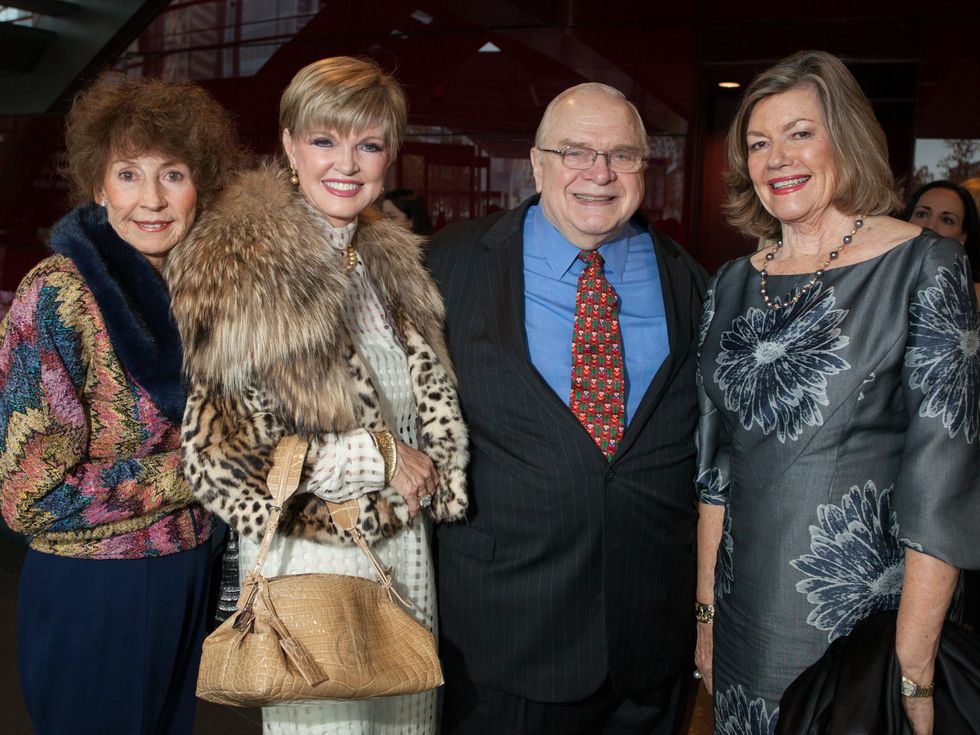 Ben Stevenson with Betty Jean Willbanks, Donna Arp-Weitzman, and Louella Martin at a TBT Tutu Chic Luncheon. Photo by Andy Keye
Tim O'Keefe, who took the reins as TBT artistic director from Stevenson, said of his passing on Sunday, "Ben was more than a mentor to me — he was family. His artistry, his generosity, and his vision shaped not only my own journey as a dancer and leader, but also the very heart of Texas Ballet Theater.
"I will miss his wisdom, his humor, and his boundless passion for storytelling through dance. While my heart is heavy with grief, I am profoundly grateful for the decades of inspiration and love he shared with me and with this company. His spirit will live on in every performance, every dancer, and every audience moved by his work."
Before his tenure with TBT, Stevenson served as artistic director of Houston Ballet, beginning in 1976. Over 27 years, he transformed the company into one of the world’s leading ensembles and founded Houston Ballet Academy.
A ballet giant, Stevenson's choreography, from Cinderella to Dracula, is performed by companies around the globe.
Texas Ballet Theater's annual presentation of Ben Stevenson's The Nutcracker is a holiday tradition across Dallas-Fort Worth. The company's next performance will be Ben Stevenson's Swan Lake, May 1-3 at Winspear Opera House in Dallas and May 15-17 at Bass Hall in Fort Worth. "Ben Stevenson O.B.E.’s masterful two-act production offers an elegant yet approachable retelling filled with passion, drama, and grandeur," reads the description.
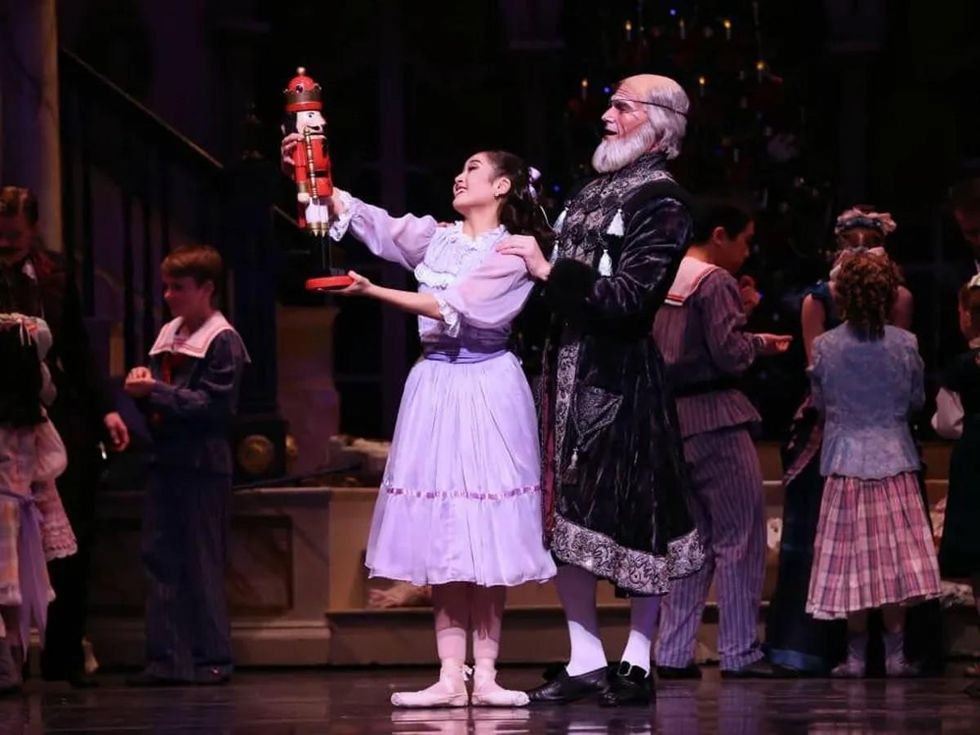 Texas Ballet Theater annually presents Ben Stevenson's The Nutcracker at Bass Performance Hall and Winspear Opera House. Photo by Amitava Sarkar
TBT's announcement of Stevenson's death on social media Sunday night brought hundreds of comments, many of whom were from former dancers in his productions who underscored the impact he'd had on their life and careers.
Details on memorial services will be announced at a later date.
Below is the full obituary prepared by the Ben Stevenson Trust:
---
BEN STEVENSON, OBE, decorated and acclaimed ballet dancer, teacher, choreographer, and artistic director, passed away March 29, 2026.
A native of Portsmouth, England, Stevenson was born April 4, 1936. As a child, Stevenson received his dance training in London, England, at Arts Educational School. Upon graduation, he was awarded the prestigious Adeline Genee Gold Medal, the highest award given to a dancer by the Royal Academy of Dancing. At the age of 18, he was invited by Dame Ninette de Valois to join the world-famous Sadler’s Wells Royal Ballet (currently The Royal Ballet), where he worked with Sir Frederick Ashton, Sir Kenneth MacMillan, and John Cranko. At Sir Anton Dolin’s invitation to London Festival Ballet as a principal dancer, Stevenson performed leading roles in all the classics.
In London’s West End, Stevenson performed the juvenile lead in ”The Music Man”, and appeared in the original casts of ”Half a Sixpence” and ”The Boys From Syracuse”. On British television’s “Sunday Night at the Palladium,” Stevenson danced in musical numbers 52 weeks a year with Judy Garland, Ella Fitzgerald, Shirley Bassey, and Cleo Laine.
In 1967, he staged his first ballet for English National Ballet, a triumphant production of “The Sleeping Beauty” starring Dame Margot Fonteyn. His arrival in the United States one year later marked the beginning of a journey spanning the remainder of his life. Rebecca Harkness appointed him as the Director of the Harkness Youth Dancers in New York City where he created two of his most celebrated works: “Three Preludes” and “Bartok”. After Harkness, Stevenson’s next position was as the Co-Artistic Director with Fredrick Franklin of National Ballet, in Washington, D.C. where he choreographed “Cinderella” and a new production of “The Sleeping Beauty” for the inaugural season of The John F. Kennedy Center for the Performing Arts.
After a brief association with Ruth Page's Chicago Ballet, Stevenson was appointed Artistic Director of Houston Ballet in 1976. During his tenure of 27 years, Houston Ballet grew from a small provincial ensemble to one of the largest and most respected ballet companies in the world. At Stevenson’s invitation, Sir Kenneth MacMillan and Christopher Bruce joined the Houston Ballet in 1989 as Artistic Associate and Resident Choreographer respectively, thereby establishing a permanent core of choreographers whose works contribute to the diversity of the Houston Ballet’s repertory.
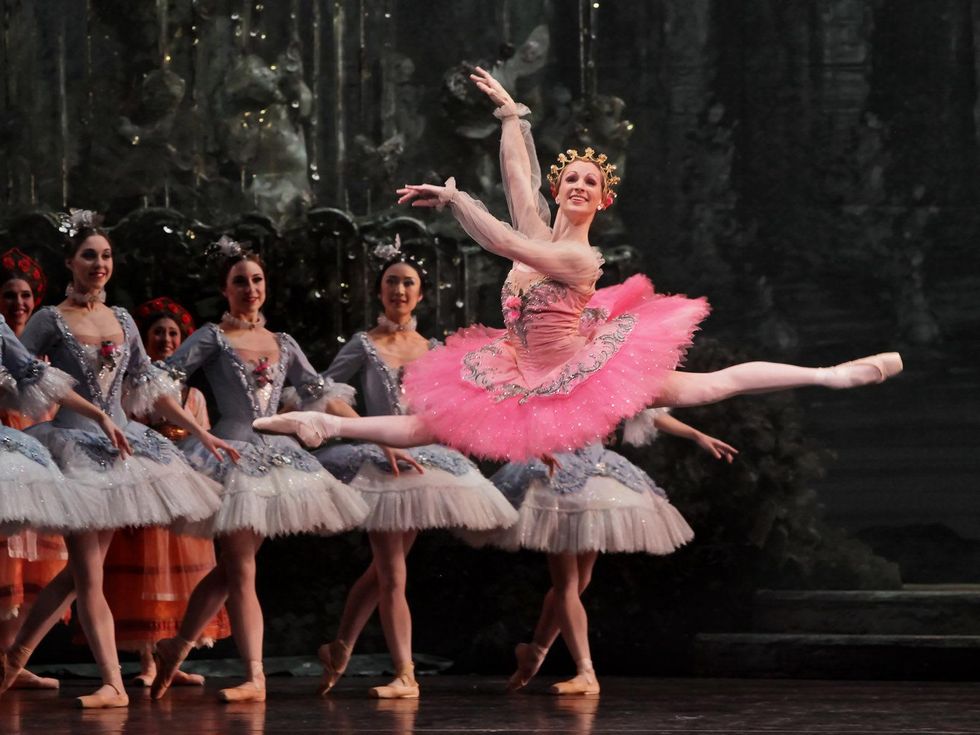 Sara Webb and artists of the Houston Ballet in The Sleeping Beauty, choreographed by Ben Stevenson. Photo by Amitava Sarkar
One of Stevenson’s proudest accomplishments was establishing the Houston Ballet Academy. In touch with his own inner child, Stevenson focused on developing children’s expression through movement, connecting their bodies and feelings to music. Through the Ben Stevenson Houston Ballet Academy, he provided nourishment and education for such artistic expression to grow young dancers who would ultimately become his dancers in the Houston Ballet.
By establishing a school where he could hone his skills as a teacher to develop dancers, his vision was to build a company from the ground up. As a result, Stevenson trained several generations of world-renowned dancers including Lauren Anderson, Janie Parker, Carlos Acosta, and Li Cunxin. In 1990, Stevenson’s promotion of Lauren Anderson to principal dancer was an important milestone in American ballet, making her one of the first Principal African American ballerinas in history.
As part of a cultural exchange program in 1978, Stevenson was among the first to gain entrance into China on behalf of the U.S. government, thus beginning a mutual love affair between China and Stevenson. He returned almost every year to teach at the Beijing Dance Academy. To expose the Chinese students to Western dance forms, Stevenson brought with him teachers of jazz and modern dance, including Gwen Verdon. In 1985, he was instrumental in the creation of the Choreographic Department at the Beijing Dance Academy. Stevenson is the only non-Chinese citizen to have been made Honorary Faculty Member there and at the Shenyang Conservatory of Music. In 2018, he was acknowledged by the Chinese government as one the most influential Foreign Experts in the 40 years since China initiated its policy on Reform and Opening Up.
In July 1995, Stevenson led the Houston Ballet, the first full American ballet company to be invited by the Chinese government, on a two-week tour of the People’s Republic of China with performances in Beijing, Shanghai, and Shenzhen. China’s invitation was a direct result of Stevenson's international reputation. Houston Ballet’s opening night performance of “Romeo and Juliet” in Beijing was telecast live and was seen by over 500 million Chinese viewers.
In July 2003, Stevenson became Artistic Director of Texas Ballet Theater in Fort Worth and Dallas. The company began to experience tremendous growth in budget and repertoire, as well as its education programs, all while attracting dancers from around the world. Stevenson remained Artistic Director until 2023–the longest-serving Artistic Director in the company’s history. Under his leadership, TBT flourished. His strong relationships with current and former dancers allowed him to bring world-class choreography to the company, raising the profile not only of TBT, but of the DFW Metroplex as an arts hub. Like he had in Houston, Stevenson recruited dancers to TBT from all over the world.
Legendary for his storytelling, Stevenson has left his mark on stages in London, Munich, Norway, Paris, New York, Santiago, Brisbane, among many others. He is best known for his compelling stagings of “Swan Lake”, “Romeo and Juliet”, “Cinderella”, “The Nutcracker”, “Coppelia”, “Don Quixote”, the original productions of “Peer Gynt”, “Dracula”, “The Snow Maiden” and “Cleopatra”. His wide range of friendships included ballet luminaries and celebrities from across the globe.
For his contributions to the world of dance, Stevenson was named an Officer of the Order of the British Empire (OBE) by Queen Elizabeth II in the New Year’s Honors listed in December 1999. His choreography also earned him numerous awards including three gold medals at the International Ballet Competition of 1972, 1982, and 1986. In April 2000, he was presented with the Dance Magazine Award, one of the most prestigious honors on the American dance scene. In 2005, he was awarded the Texas Medal of Arts.
Devilishly sneaky and intrinsically shy, Stevenson was an introverted extrovert. He shone the brightest in his kitchen, be it at home or a French chateau. Each meal, a feast fit for kings, was a reflection of the importance he placed on communing with dancers, friends and unsuspecting passersby. His generosity knew no bounds. Nourishing body and soul, from the head of his table, he spun tales of his life entrancing all seated around him.
Survivors include Ben’s extended family in Portsmouth, England, and a host of friends and dancers around the world who will never forget him.
 Ballet Austin isn't afraid to add some edge to classic stories. Photo courtesy of Ballet Austin