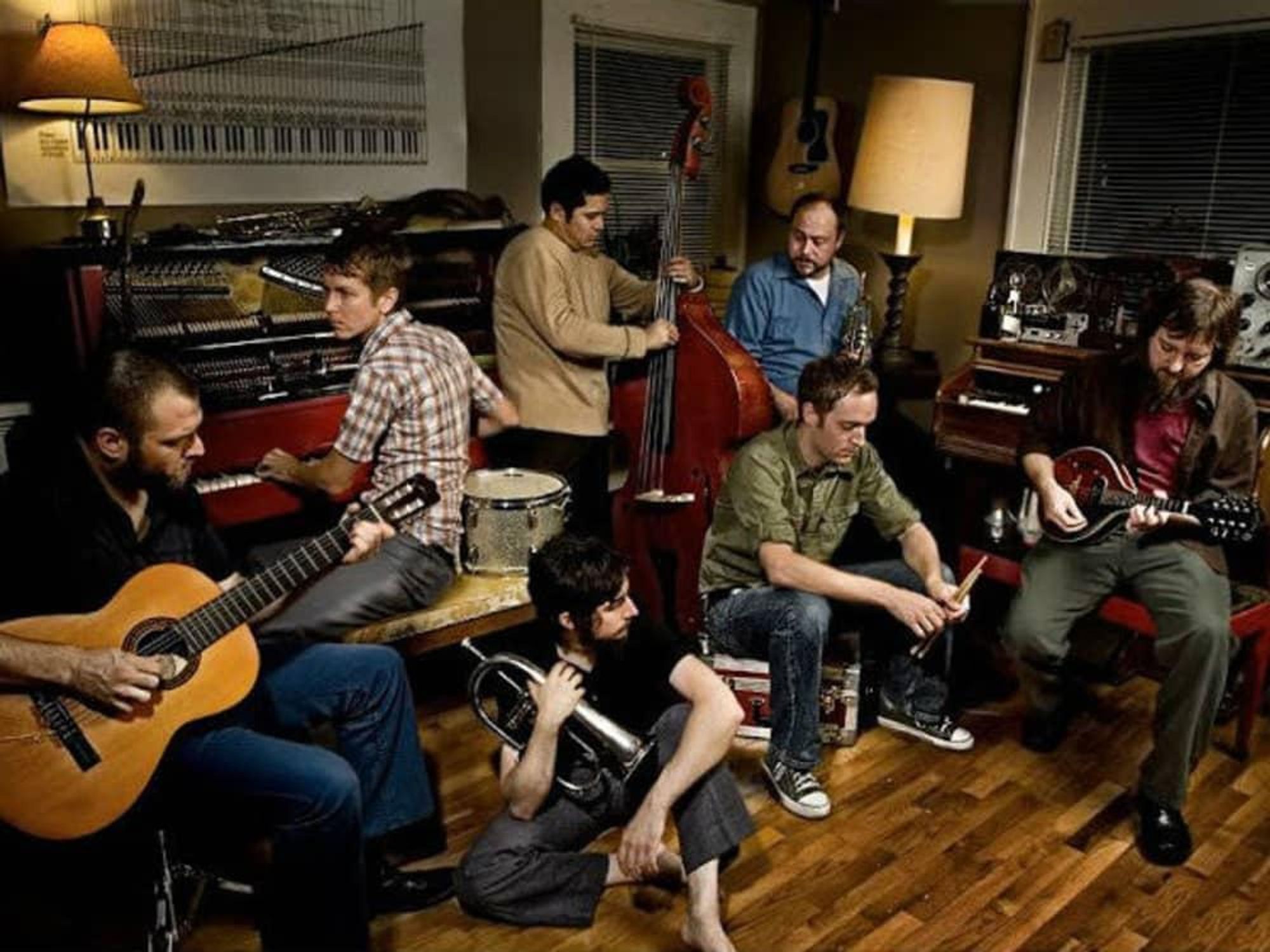
The Theater Fire plays May 9 at Kettle Art Gallery to kick off the new ArtCon(cert) series.
Photo courtesy of Art Conspiracy
To support its mission to engage Dallas’ creative communities for the benefit of local arts nonprofits, Art Conspiracy is launching a new series of intimate concerts. Dubbed ArtCon(cert), the first takes place May 9 at Kettle Art Gallery, featuring the musical stylings of The Theater Fire.
The Fort Worth-based band uses intricate instrumental arrangements (pedal steel, violin, accordion, mandolin, banjo, guitar and percussion) and pulls from an array of genres (zydeco, bluegrass, mariachi, country, gospel, rock ’n’ roll) to convey stories about love, loss and everything in between.
“The addition of the ArtCon(cert) series grew out of feedback from the public and fellow conspirators,” said Art Conspiracy executive director Erica Felicella in a release. “They want more. More art. More music. More opportunities to engage with this vibrant creative community we have right here in Dallas.”
The now 10-year-old street philanthropists promise more ArtCon(certs) with local bands in the coming months. For this first show, doors open at 7 pm, and the show begins at 8. Tickets are $10 each and can be purchased on the Art Conspiracy website.
Since 2005, Art Conspiracy has raised more than $250,000 for groups such as My Possibilities, Girls Rock Dallas, and W. T. White Academy of Visual and Performing Arts.
Writer/director Paul Greengrass made his name with a cinéma vérité style of filmmaking that brought immediacy and depth to three Jason Bourne films, United 93, Captain Phillips, and more. In The Uprising, he uses those skills to tell the story of the so-called Peasants’ Revolt in 14th century England.
Greengrass wastes no time starting the main plot as Ploughman (Andrew Garfield) and his fellow villagers object to onerous taxes put on them by the country’s nobility, led by the young King Richard II (Woody Norman), to fund an ongoing war. Ploughman initiates a violent response over the tone-deaf — and unseemly — way the king’s guard go about their business, and the rebellion soon starts to spread across the countryside, with the citizens looking for a degree of autonomy.
The ever-expanding group makes their way toward London to try to make their case to the king himself. Meanwhile, the king’s top advisors, including Archbishop Sudbury (Stephen Dillane) and Treasurer Hales (Tom Hollander), try to usurp power from the inexperienced monarch even as the king’s mother (Katherine Waterston) tries to get him to be more assertive.
The history of the English monarchy is long and lurid, as Shakespeare detailed in multiple plays, including Richard II. Though the events in the film took place almost 650 years ago, it’s easy to see parallels between what the peasants were fighting for and modern-day politics. Greengrass’ storytelling intent is solid, and the righteous anger the citizens feel is initially relatable and palpable.
But the populism theme of the story soon gets bogged down in drudgery and minutiae that is difficult to understand, especially when the details are lost in the thick regional English accents. The leaders of the rebels — including John Ball (Jamie Bell), Wat Tyler (Cosmo Jarvis), and Alyce (Thomasin McKenzie) — are shown doing a lot of planning, but the strong feelings they have about their quest don’t come across well, leaving the audience as passive observers.
When there is action, Greengrass and his team employ a frenetic style that is not great for comprehension. While the gist of what is happening and what side is winning is legible, individual moments go by so quickly so as to be nearly meaningless. Save for Ploughman, any connection that has been made with various characters proves futile, as Greengrass doesn’t seem to have any time for emotion. Scenes that should feel thrilling or heartbreaking instead come off as empty.
Garfield is a two-time Oscar nominee who has done great work across multiple genres. He’s fine in this role, but whether it’s the story, the filmmaking, or something else, he’s not as captivating as usual. The same goes for other strong actors like Bell, McKenzie, Dillane, Hollander, and Waterston, who each seem to be giving their all to their performances but are somehow muted in the process.
Done right, The Uprising could have been a rip-roaring account of people standing up against their oppressors. What Greengrass has made, though, is a film that can’t translate its medieval story for a modern audience and concentrates too much on unexciting elements and too little on thrilling ones.