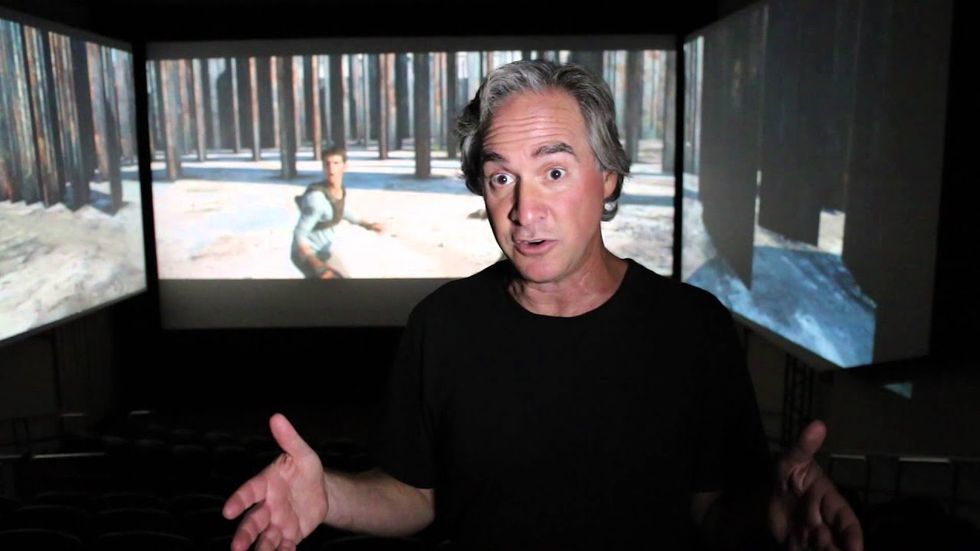
Movie theaters need to pull out all the stops to draw people in nowadays, and one local theater is now experimenting with what could be the next evolution: Barco Escape, which utilizes three screens to envelop the audience in the movie.
Cinemark is debuting the new technology at five theaters nationwide, including Cinemark Legacy and XD in Plano, as well as one in Belgium. The first film to be showcased on those three screens is The Maze Runner, which opened on September 19.
Barco Escape includes three special screens — one directly in front of the audience and two more jutting out on both sides. The two on the side will come to life at key points in the film, which for The Maze Runner is during two sequences, totaling about five minutes worth of screen time.
This is similar to what happens during some IMAX films, only instead of the screen expanding vertically, the audience will suddenly find their entire field of vision taken up by the action on the screens.
Frugal moviegoers will be pleased to note that Cinemark is charging normal prices for 2D movies for Barco Escape — the film is not in 3D, as that might be a bit too immersive — instead of tacking on extra fees for the privilege of seeing something new.
For right now, Barco Escape is still in the experimental phase. They are asking for feedback from those who choose to see the film in the new format at ready2escape.com. Presumably, if they receive enough positive feedback, the screens will stay in place to enhance future film experiences.
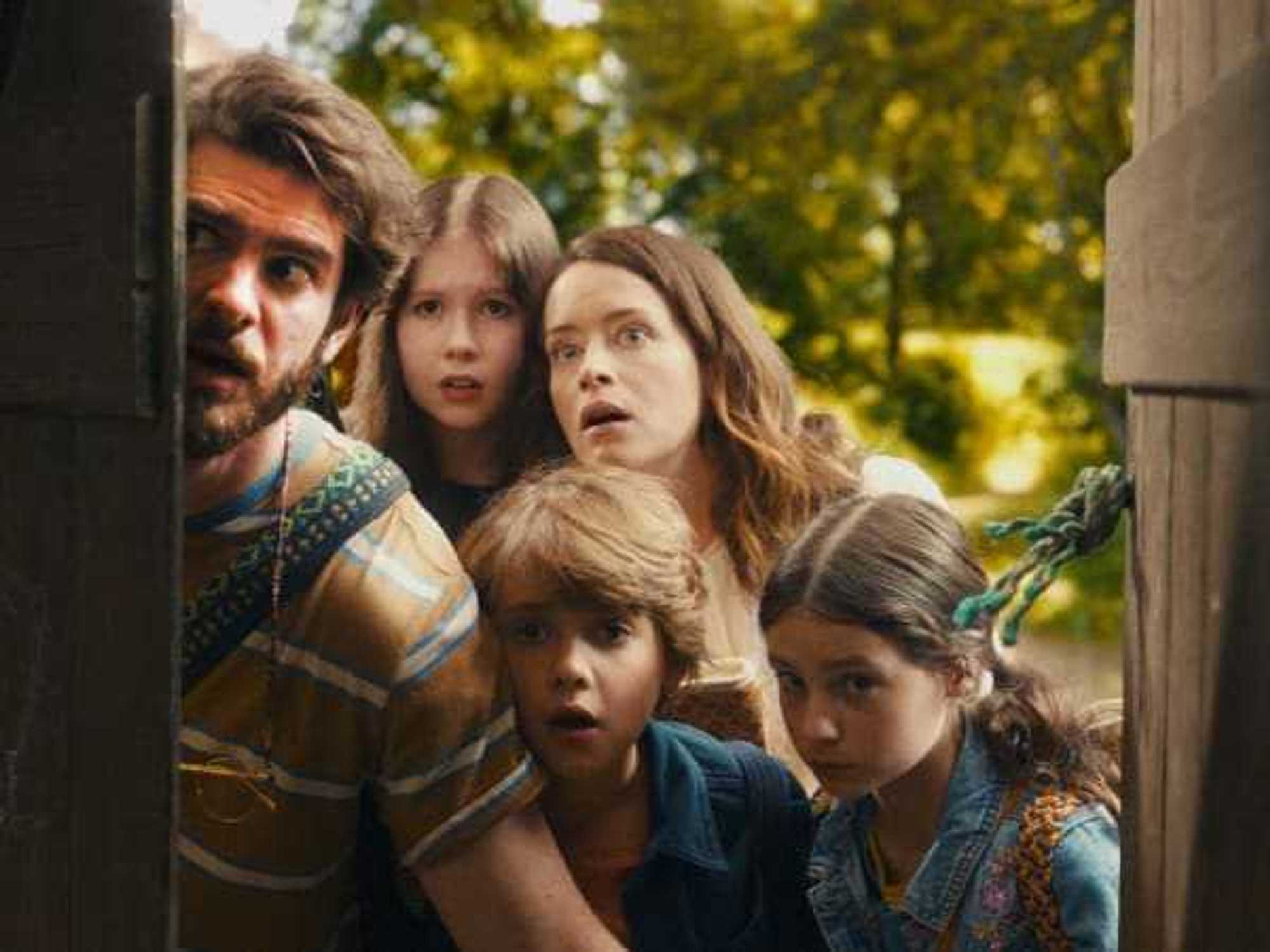
Andrew Garfield, Delilah Bennett-Cardy, Claire Foy, Phoenix Laroche, and Billie Gadson in The Magic Faraway Tree.
With kids and families always on the hunt for entertainment, it’s typically a safe bet for a movie studio to offer up something new, even if it is a film based on an old property. The Magic Faraway Tree, based on a series of books that started in the 1930s, is a very old property, one that its filmmakers have tried to liven up with a few stars, a lot of whimsy, and a boatload of CGI.
The Thompson family, led by stay-at-home dad Tim (Andrew Garfield) and breadwinner mom Polly (Claire Foy), are forced to move to a rundown country home when Polly gets laid off. The kids - Joe (Phoenix Laroche), Fran (Billie Gadson), and Beth (Delilah Bennett-Cardy) - are used to the perks of city life like wifi and electricity, and each of them rebels in their own way to their new lot in life.
Fran, enticed by a fairy named Silky (Nicola Coughlan), is the first to venture out of the house, making her way to a magic tree that transports her to a world full of strange characters like Moonface (Nonso Anozie), Saucepan Man (Dustin Demri-Burns), Dame Washalot (Jessica Gunning), and more. Her adventures there not only broaden the world she thought she knew, but may be the key to helping her ailing family.
Directed by Ben Gregor and written by Simon Farnaby (Paddington 2, Wonka), the film is a pleasant enough lark, but it fails to fully capture the imagination. The five-member family has a lot going on, from an initially-mute Fran to a domestic situation that raises more questions than it answers. The film tries to incorporate an anti-technology message through Tim’s hatred of a smart refrigerator (voiced by Judi Dench!) and the kids' addictions to devices, but it’s quickly shed in favor of other options.
Once Fran makes it to the Magic Faraway Tree, there’s a nice shift in the storytelling, but it’s unclear what the ultimate goal is. It’s a good idea to have Fran, the youngest of the children, convince her older, more cynical siblings about the virtues of the magic world, but the conflict in the real world doesn’t seem to rise to the level needed for the escape the tree provides.
There also seems to be a missing link in the storytelling for viewers to understand the importance of the fantastical characters. The visuals of seeing Moonface and his crescent moon-shaped hair, a man with a suit full of banging pots, and more are fun for a while, but not enough to carry the whole film. A last-minute revelation feels like it was something that should have been disclosed much earlier to help strengthen the emotions of the story.
A two-time Oscar nominee, Garfield is making his first foray into family movies (if you don’t count playing Spider-Man), and while he does a good job, he doesn’t make the best fit for the semi-goofy role. The same goes for the Emmy-winning Foy, who isn’t given much of anything to do. The movie puts the story on the shoulders of the three child actors, and while each of them acquit themselves well, none of them are so outstanding as to be noteworthy.
With nearly 90-year-old source material, The Magic Faraway Tree needed to be something truly special to stand out in the 21st century movie world. Unfortunately, it features a mostly forgettable story that features some fun visuals, a couple of cute kids, and not much else.
---
The Magic Faraway Tree is now playing in theaters.