Editor's note: There's so much that's beautiful, funny, smart and informative on the Internet. Problem is, there's also a bunch of garbage. Here's the best of the web right now:
1. Johnny Manziel does Dude Perfect. If you aren't familiar with the basketball trick shots of Dude Perfect, well, I feel sorry for your eyeballs. Highlights of this edition include Manziel throwing a football into a basketball goal from the stands of Kyle Field, Manziel skeet shooting at Kyle Field "football style," and, of course, a whole lot of Superman celebrations.
2. Giant squid filmed in Pacific depths. Despite measuring 26 feet, the giant squid has stealthily eluded filming from the dawn of time until now. Japan's National Science Museum, in conjunction with the Discovery Channel, recently captured the tentacled beast in action.
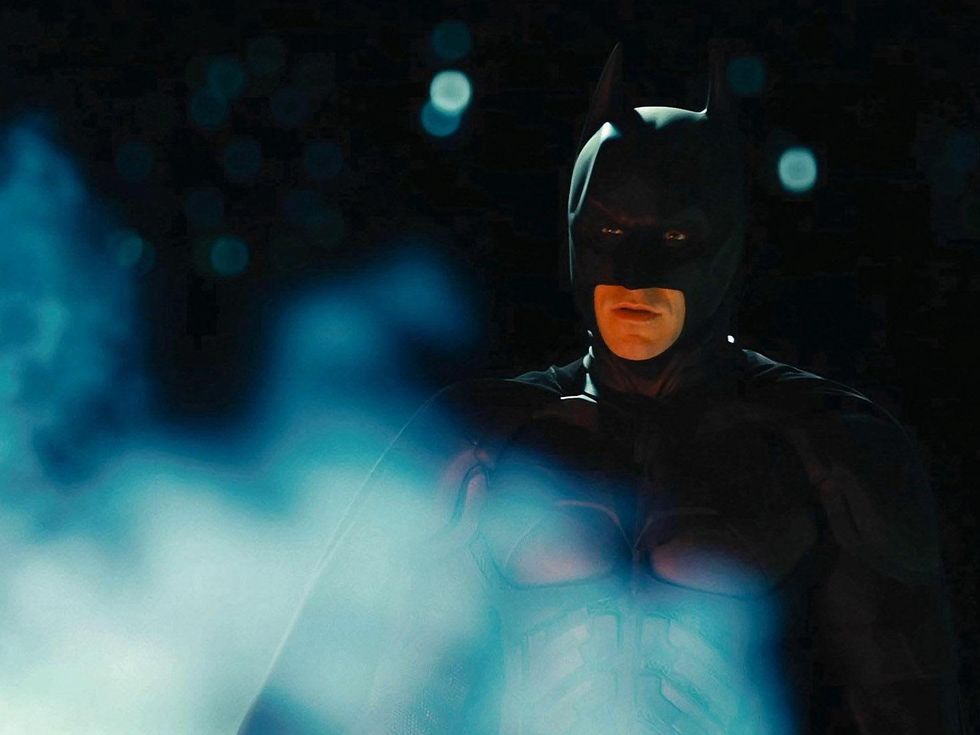
5. Local link shout-out. Preston Hollow People shares the story of Zach Guillot, a Dallas child with acute myeloid leukemia who got a call from Batman (a.k.a. Christian Bale) while in the hospital. The conversation includes Zach explaining the mechanics of his cardboard Batmobile and Bale telling Guillot to be strong. Pass the tissues, please.
If you thought Johnny Manziel was entertaining when he was just playing football, wait until you see him combine pigskin with basketball, darts and skeet shooting.
The history of DC Comics in movies has been hit-and-miss, especially when it comes to anything not directly involving Batman or Superman. Over the years, films have been headlined by heroes like Catwoman, Green Lantern, Aquaman, Shazam, the Flash, and more, and while some succeeded, none left a lasting mark on moviegoers’ imaginations.
Much like they did with Joker, the powers-that-be behind DC Studios productions are trying to entice viewers with a no-holds-barred story in Clayface. Matt Hagen (Tom Rhys Harries) is an A-list movie actor with both critical and commercial appeal. Unfortunately, a night of celebration for his recent Oscar nomination leads to him sleeping with Theresa (Ruby Sear), the girlfriend of Markos Szabo (David Dencik), a prominent mobster in Gotham City. Markos then enacts revenge by taking a razor to Matt’s face.
Desperate to find a way to look like his old self again, Matt seeks out Dr. Caitlyn Corr (Naomi Ackie), who’s conducting cutting-edge nanotechnology research that can heal any kind of damage. While the solution works on Matt, it also has the side effect of his body doing unintended things, even morphing into those with whom he comes into contact. After initially struggling with his new body, Matt decides to use his powers to enact revenge on those who’ve done him wrong.
Directed by James Watkins (Speak No Evil) and written by Mike Flanagan (The Life of Chuck) and Hossein Amini, the film is only intermittently entertaining as it tries to sell its ridiculous premise. Right from the start, it seems like the filmmakers have been given a limited budget, as everything from the sets to the CGI to the stilted dialogue feels cheap. For a film coming from a major studio, the whole thing comes off as schlocky and undercooked.
Watkins and his team try to make up for that shoddiness by delivering R-rated thrills like nudity and body horror, but those elements can only distract for so long. Much of the film is spent dealing with Matt’s trauma, and the downbeat nature of his body issues combined with very little action makes the movie not very fun to watch. The film also tries to make hay with more than a doctor-patient bond between Caitlyn — who has a boyfriend on the police force — and Matt, but like the most of the film, it never connects.
It’s not until the final third of the movie that the filmmakers land on the tone they should have been using the whole time. Matt’s ability to transform himself, while illogical and confounding, provides multiple over-the-top, funny moments and some legitimately creative kills. Instead of taking forever to set up Matt/Clayface’s origin story, Watkins and his team should have just cut to the chase and let him loose to see what the character could truly do.
This is the first big role for Welsh actor Harries, and while he’s not exactly magnetic, he proves himself worthy of the lead role. Ackie is also fine, but after several years of trying to advance up the Hollywood ladder, she may be running out of time to show she’s a star. The supporting cast has a couple of familiar faces, but it’s mostly lesser-known actors who do nothing to indicate they deserve bigger showcases.
It’s difficult to imagine any non-DC Comics fans having a strong attachment to the character of Clayface, and the film fails to make the case that he should be a continuing character. The poor quality of almost everything that appears on screen is indicative of the kind of effort and money that was put into the film, and sometimes you really do get what you pay for.