• Home
  • popular
  • Events
  • Submit New Event
  • Subscribe
  • About
  • News
  • Restaurants + Bars
  • City Life
  • Entertainment
  • Travel
  • Real Estate
  • Arts
  • Society
  • Home + Design
  • Fashion + Beauty
  • Innovation
  • Sports
  • Charity Guide
  • children
  • education
  • health
  • veterans
  • SOCIAL SERVICES
  • ARTS + CULTURE
  • animals
  • lgbtq
  • New Charity
  • Series
  • Delivery Limited
  • DTX Giveaway 2012
  • DTX Ski Magic
  • dtx woodford reserve manhattans
  • Your Home in the Sky
  • DTX Best of 2013
  • DTX Trailblazers
  • Tastemakers Dallas 2017
  • Healthy Perspectives
  • Neighborhood Eats 2015
  • The Art of Making Whiskey
  • DTX International Film Festival
  • DTX Tatum Brown
  • Tastemaker Awards 2016 Dallas
  • DTX McCurley 2014
  • DTX Cars in Lifestyle
  • DTX Beyond presents Party Perfect
  • DTX Texas Health Resources
  • DART 2018
  • Alexan Central
  • State Fair 2018
  • Formula 1 Giveaway
  • Zatar
  • CityLine
  • Vision Veritas
  • Okay to Say
  • Hearts on the Trinity
  • DFW Auto Show 2015
  • Northpark 50
  • Anteks Curated
  • Red Bull Cliff Diving
  • Maggie Louise Confections Dallas
  • Gaia
  • Red Bull Global Rally Cross
  • NorthPark Holiday 2015
  • Ethan's View Dallas
  • DTX City Centre 2013
  • Galleria Dallas
  • Briggs Freeman Sotheby's International Realty Luxury Homes in Dallas Texas
  • DTX Island Time
  • Simpson Property Group SkyHouse
  • DIFFA
  • Lotus Shop
  • Holiday Pop Up Shop Dallas
  • Clothes Circuit
  • DTX Tastemakers 2014
  • Elite Dental
  • Elan City Lights
  • Dallas Charity Guide
  • DTX Music Scene 2013
  • One Arts Party at the Plaza
  • J.R. Ewing
  • AMLI Design District Vibrant Living
  • Crest at Oak Park
  • Braun Enterprises Dallas
  • NorthPark 2016
  • Victory Park
  • DTX Common Desk
  • DTX Osborne Advisors
  • DTX Comforts of Home 2012
  • DFW Showcase Tour of Homes
  • DTX Neighborhood Eats
  • DTX Comforts of Home 2013
  • DTX Auto Awards
  • Cottonwood Art Festival 2017
  • Nasher Store
  • Guardian of The Glenlivet
  • Zyn22
  • Dallas Rx
  • Yellow Rose Gala
  • Opendoor
  • DTX Sun and Ski
  • Crow Collection
  • DTX Tastes of the Season
  • Skye of Turtle Creek Dallas
  • Cottonwood Art Festival
  • DTX Charity Challenge
  • DTX Culture Motive
  • DTX Good Eats 2012
  • DTX_15Winks
  • St. Bernard Sports
  • Jose
  • DTX SMU 2014
  • DTX Up to Speed
  • st bernard
  • Ardan West Village
  • DTX New York Fashion Week spring 2016
  • Taste the Difference
  • Parktoberfest 2016
  • Bob's Steak and Chop House
  • DTX Smart Luxury
  • DTX Earth Day
  • DTX_Gaylord_Promoted_Series
  • IIDA Lavish
  • Huffhines Art Trails 2017
  • Red Bull Flying Bach Dallas
  • Y+A Real Estate
  • Beauty Basics
  • DTX Pet of the Week
  • Long Cove
  • Charity Challenge 2014
  • Legacy West
  • Wildflower
  • Stillwater Capital
  • Tulum
  • DTX Texas Traveler
  • Dallas DART
  • Soldiers' Angels
  • Alexan Riveredge
  • Ebby Halliday Realtors
  • Zephyr Gin
  • Sixty Five Hundred Scene
  • Christy Berry
  • Entertainment Destination
  • Dallas Art Fair 2015
  • St. Bernard Sports Duck Head
  • Jameson DTX
  • Alara Uptown Dallas
  • Cottonwood Art Festival fall 2017
  • DTX Tastemakers 2015
  • Cottonwood Arts Festival
  • The Taylor
  • Decks in the Park
  • Alexan Henderson
  • Gallery at Turtle Creek
  • Omni Hotel DTX
  • Red on the Runway
  • Whole Foods Dallas 2018
  • Artizone Essential Eats
  • Galleria Dallas Runway Revue
  • State Fair 2016 Promoted
  • Trigger's Toys Ultimate Cocktail Experience
  • Dean's Texas Cuisine
  • Real Weddings Dallas
  • Real Housewives of Dallas
  • Jan Barboglio
  • Wildflower Arts and Music Festival
  • Hearts for Hounds
  • Okay to Say Dallas
  • Indochino Dallas
  • Old Forester Dallas
  • Dallas Apartment Locators
  • Dallas Summer Musicals
  • PSW Real Estate Dallas
  • Paintzen
  • DTX Dave Perry-Miller
  • DTX Reliant
  • Get in the Spirit
  • Bachendorf's
  • Holiday Wonder
  • Village on the Parkway
  • City Lifestyle
  • opportunity knox villa-o restaurant
  • Nasher Summer Sale
  • Simpson Property Group
  • Holiday Gift Guide 2017 Dallas
  • Carlisle & Vine
  • DTX New Beginnings
  • Get in the Game
  • Red Bull Air Race
  • Dallas DanceFest
  • 2015 Dallas Stylemaker
  • Youth With Faces
  • Energy Ogre
  • DTX Renewable You
  • Galleria Dallas Decadence
  • Bella MD
  • Tractorbeam
  • Young Texans Against Cancer
  • Fresh Start Dallas
  • Dallas Farmers Market
  • Soldier's Angels Dallas
  • Shipt
  • Elite Dental
  • Texas Restaurant Association 2017
  • State Fair 2017
  • Scottish Rite
  • Brooklyn Brewery
  • DTX_Stylemakers
  • Alexan Crossings
  • Ascent Victory Park
  • Top Texans Under 30 Dallas
  • Discover Downtown Dallas
  • San Luis Resort Dallas
  • Greystar The Collection
  • FIG Finale
  • Greystar M Line Tower
  • Lincoln Motor Company
  • The Shelby
  • Jonathan Goldwater Events
  • Windrose Tower
  • Gift Guide 2016
  • State Fair of Texas 2016
  • Choctaw Dallas
  • TodayTix Dallas promoted
  • Whole Foods
  • Unbranded 2014
  • Frisco Square
  • Unbranded 2016
  • Circuit of the Americas 2018
  • The Katy
  • Snap Kitchen
  • Partners Card
  • Omni Hotels Dallas
  • Landmark on Lovers
  • Harwood Herd
  • Galveston.com Dallas
  • Holiday Happenings Dallas 2018
  • TenantBase
  • Cottonwood Art Festival 2018
  • Hawkins-Welwood Homes
  • The Inner Circle Dallas
  • Eating in Season Dallas
  • ATTPAC Behind the Curtain
  • TodayTix Dallas
  • The Alexan
  • Toyota Music Factory
  • Nosh Box Eatery
  • Wildflower 2018
  • Society Style Dallas 2018
  • Texas Scottish Rite Hospital 2018
  • 5 Mockingbird
  • 4110 Fairmount
  • Visit Taos
  • Allegro Addison
  • Dallas Tastemakers 2018
  • The Village apartments
  • City of Burleson Dallas

    The Farmer Diaries

    Welcome rain has unintended consequences on drought-ridden Texas farm

    Marshall Hinsley
    Apr 26, 2015 | 6:00 am

    With all the rain we've had since January, you might think the drought in the state has finally come to an end. But you'd be wrong. In fact, North Texas is still experiencing an extreme drought, and Austin is only a little better off than before. The Possum Kingdom area is even worse off than we are, as it's still in the most extreme classification of drought.

    The reason it can rain almost every week, or every day, yet we're still not in the clear is that the precipitation just hasn't been enough to reverse the last eight years of shortfalls. For almost a decade, the scarcity of storm clouds in Texas has lowered lake levels and dried out the soil deep below the surface to such a degree that we'd need another four months of rain like we've had so far just to break even.

    That's unlikely to happen before summer heat arrives and starts drying everything out again.

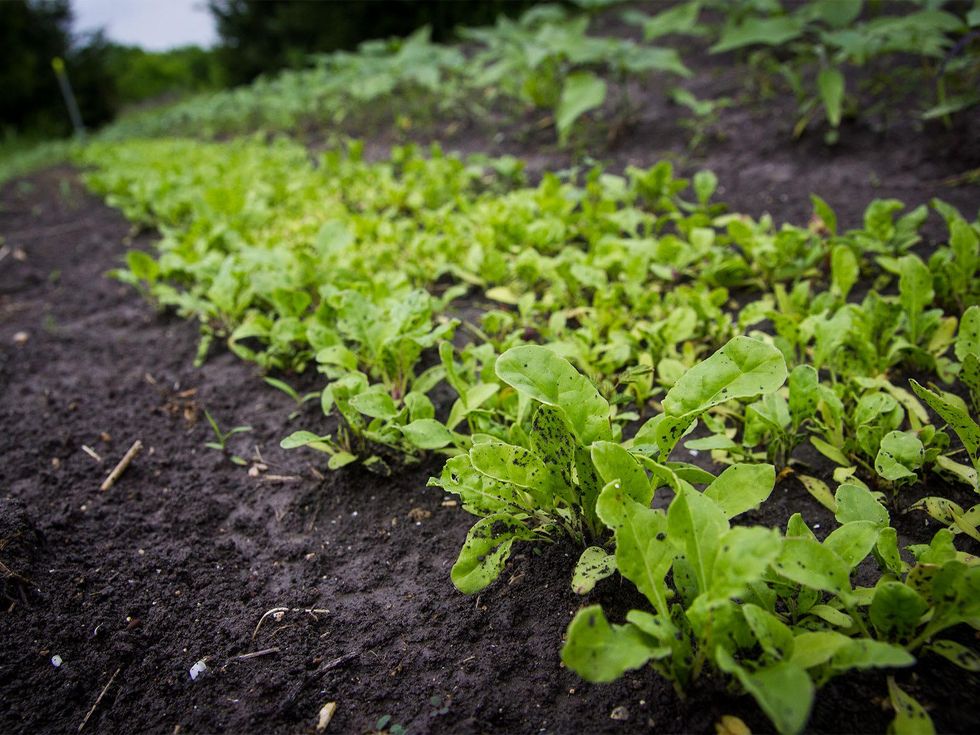
    But the rainfall this year that's accumulating inch by inch over the state is indeed easing our drought. It's also making for an excellent start to the season for those few gardeners growing crops in a well-drained plot.

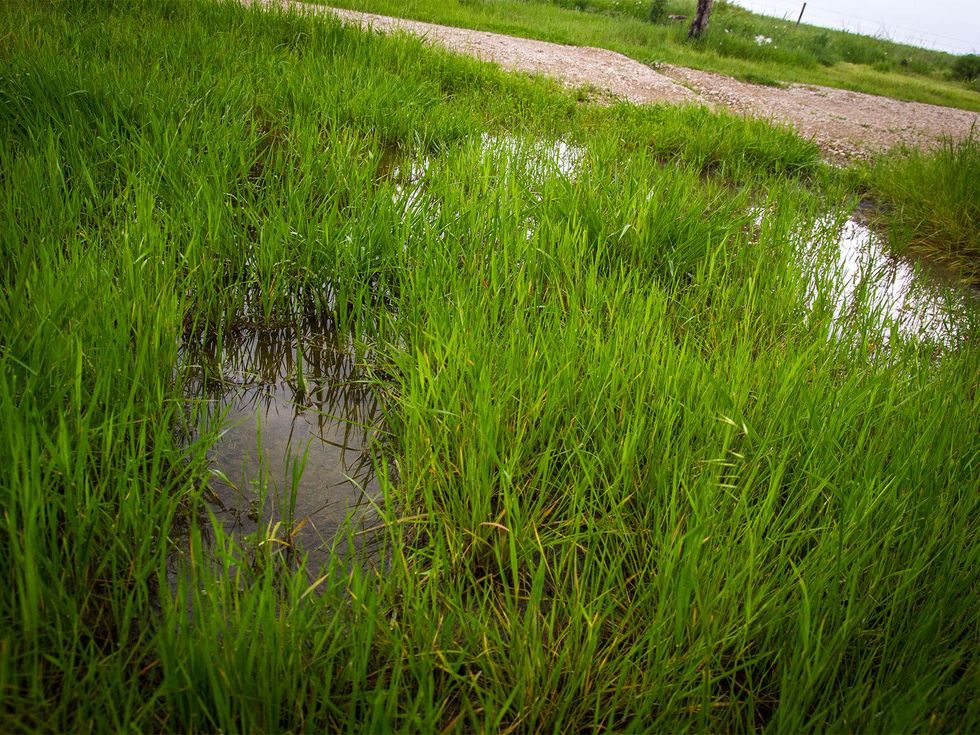
    But not for me. I live in a low-lying area that a biologist with the U.S. Fish and Wildlife Service once told me was a semi-aquatic wetland. As such, it naturally holds water in the spring and fall, drying out only in the summer. Many of the native plants that grow on the property, thriving where others would drown, are a dead giveaway of its wetland past, before it was cleared off and made into a cotton field a century before my family bought it.

    The rainfall by the end of April has fully saturated the soil on my farm and in my raised bed garden. There are areas where the soil is under water, and in other areas the soil is at about the same level as the flood.

    This standing water will eventually percolate through the soil and recharge it with moisture as it makes its way down to the water table — perhaps even to the underground aquifers that make up much of the area's water supply. So I'm not upset about the situation, even though my plans for a huge melon crop are now unlikely to come to pass.

    When the soil becomes this waterlogged, crops suffer and start to die because plants need oxygen within reach of their roots to metabolize the nutrients they uptake and the food that forms in their leaves. When water purges that oxygen from the soil, the roots change from aerobic respiration to anaerobic respiration, a much less efficient process that produces substances such as ethanol that are toxic to the plant.

    The substances harden the roots and make them less permeable to water. The result of this is that a plant, standing in a pool of water, can wilt, droop over and die from lack of water in an ironic twist.

    Simultaneously in waterlogged soil, a process called denitrification takes place in which soil microbes that would have used oxygen in their metabolic processes switch to using nitrogen from the soil. The process changes the nitrogen into a climate-changing greenhouse gas and releases it into the atmosphere, therefore stealing this vital nutrient away from the plants that need it. So now the plants are not only drying out from within, but they're also being starved off.

    The lack of oxygen in the soil also kills off fungi that live in a symbiotic relationship within the plant's roots. There, they exude elements in a plant-ready form that feeds crops. In their absence, nutrients such as phosphorous are almost unusable by a plant.

    On top of everything else, because a plant in waterlogged soil starts to lose its ability to take up moisture, the calcium that piggybacks on the movement of the moisture cannot be taken up from the soil and distributed throughout the plant. The lack of calcium affects the plant's tissue, especially the fruit, resulting in what's known as blossom end rot, which looks exactly as you'd expect: The bottom side of forming tomatoes and peppers turns into a brownish-black mush.

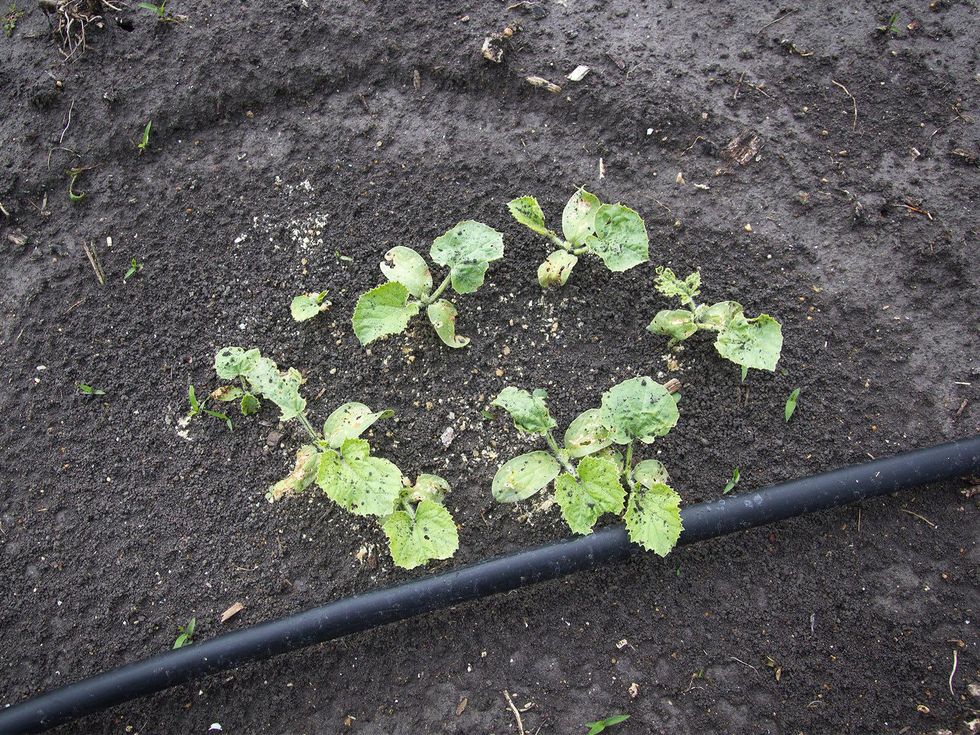
    To say the least, plants subjected to these conditions become stressed, and stressed plants are more vulnerable to insects and disease. If the soil doesn't dry up in the next week, crops can be so aversely affected that they can't recover.

    Seedlings succumb more quickly than established plants, deceptively looking like they'll make it. But in fact they're so stunted and have lost so much of their root system that they can't mature. If they reach that point, they're lost and it's time to start over.

    I know that my plants are stressed by the saturated soil. The signs include the following:

    • Chlorosis: A yellowing of the leaves
    • Wilting: Plants look as though they haven't been watered, droop and become so soft that they can't stand upright.
    • Purple, stunted leaves: Some of my transplants have developed purplish leaves that show no signs of growing. This, I understand, comes from an inability to take up phosphorous.

    Because there has been a little time of drying out between rains among my crops, I can't say that they're to the point on no return yet. Additionally, I've taken steps to bolster them before each rainfall.

    Foliar feeding
    Because plant-ready nutrients are more efficiently absorbed by a plant's leaves than its roots, and because I haven't wanted to add water to already saturated soil, I have been feeding my established crops and seedlings alike with a foliar spray. This goes against conventional advice, which says stressed plants should never be fertilized, but the results I've seen seem to back my decision up as tomatoes, melons and flowers that were turning yellow are now greening up and looking healthier.

    I use a Medina's Hasta Gro for the foliar spray. It's not organic, but its low-salt formula can be adopted as part of sustainable agricultural practices that will not harm the soil, as conventional fertilizers do. I see it as a sort of medicine for plants, which infuses them with a shot-in-the-arm of nitrogen, potassium and phosphorous to stave off disease. My aim is to keep the crops alive until maybe the soil dries out a little and new roots can grow, allowing the plant to recover and return to a normal state in time.

    Additionally, I use liquid seaweed as a foliar spray. A substance called cytokinin naturally occurs in plants and promotes cell division. Waterlogged plants cease to form these compounds, and seaweed's cytokinins are thought to step in and keep the plant's functions going and the plant growing.

    Drainage trenches
    Perhaps the most effective way to treat waterlogged soil is to get rid of the excess water. Wherever water is dammed up around crops, I've dug out trenches to let the water flow away.

    For my raised bed garden, one trench dug through a gravel driveway, only four inches deep and about eight feet long, allowed water to flow away from the beds. The result was about a three-inch drop in the water level around the beds, which for most of the plants was the difference between merely being in wet soil or totally drowning underwater.

    Throttling back the mulch
    In drought, mulch keeps soil moister and cooler. But mulch over waterlogged soil keeps it from drying as quickly, which means that plants will get much closer to the point of no recovery. By pulling mulch away from from underneath established plants, I will give the soil a better chance of drying in time.

    My problems with the rains stunting my farming efforts has added to my drive to fully transition to hydroponic crop production. The early frost last November had convinced me at that time to skip land-based agriculture this spring, but when it became time to plant, I couldn't feel left out.

    So I planted transplants and sowed seed just as before. As I look at my soil-based crops, faltering in the mud that surrounds them, and contrast them to my lush, green Dutch buckets of peppers, tomatoes and melons that seem to thrive in the rain, I feel almost guided by circumstances to make this transition happen sooner rather than later.

    But for now, I am actually enjoying my experimentation in the field, trying to keep plants alive in poor conditions. I've stopped seeing things as successes or failures as much in the garden. Now, I'm gaining a sense of enjoying the process and looking forward to what I can learn.

    Medina's Hast Gro plant food is a low-salt formula that makes a foliar spray that can green plants up within a day of application.
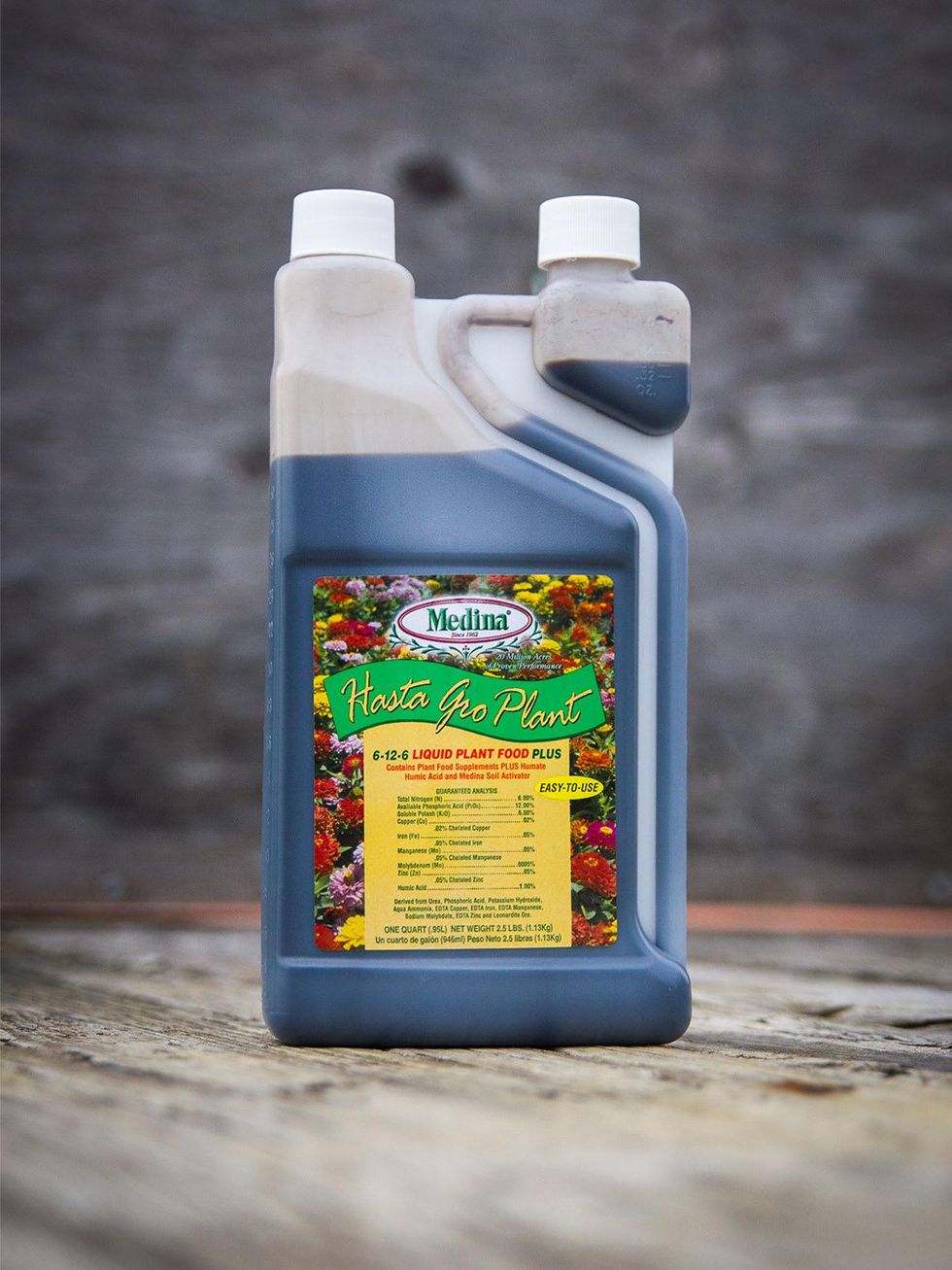
    Photo by Marshall Hinsley
    Medina's Hast Gro plant food is a low-salt formula that makes a foliar spray that can green plants up within a day of application.
    unspecified
    news/restaurants-bars
    CULTUREMAP EMAILS ARE AWESOME
    Get Dallas intel delivered daily.

    Omakase News

    Downtown Dallas restaurant Sauvage expands with new dining twist

    Teresa Gubbins
    Dec 5, 2025 | 5:56 pm
    Sauvage
    Sauvage
    Sauvage

    A downtown Dallas restaurant famous for its multi-course tasting experience is letting its hair down: Sauvage, the high-end mom-and-pop restaurant near the Statler Dallas hotel, has a new dining option that gives a smaller, more casual taste.

    The restaurant opened in September with a set menu featuring 16 to 18 courses — wild game, seafood, vegetables, and dessert — all cooked via grill and smoker.

    While 16 courses might sound like a lot, the courses are mostly small bites. However, owners Casey and Amy LaRue received feedback from diners wanting a smaller option.

    "We were getting a ton of messages from guests who want to stop by just to try one dish, a bite, or a specific pairing without committing to the full tasting — so we built something for exactly that," Casey says.

    They've introduced a new three-course "Cocktails & Bites hour" featuring three dishes, each paired with its own cocktail, served from 5–6 pm on weekdays.

    Last week’s menu consisted of:

    • dry-aged red snapper crudo with La Chinola Way, a cocktail featuring passionfruit, mezcal, lime, and ginger
    • foie gras & truffle on house-baked croissant with Pendennis Club, a gin sour with apricot liqueur bitters
    • jerk-spiced shrimp with Clarified Paper Plane, a bourbon cocktail with Aperol, Amaro Nonino, and lemon juice

    The new offering continues their pattern of pairing courses with cocktails rather than wine — an approach they've embraced since opening. "Limiting pairings to wine can get boring — it so often ends up being one expensive red after another," Casey says.

    You can make a reservation on Tock, or just walk in and grab a seat.

    Caviar
    They've also added a new version of their classic menu: no caviar.

    "Some love having caviar integrated into the menu, but others prefer to skip it, whether for taste or dietary reasons, but still want the full value of the experience," Casey says. "With such a small counter, this put us in a strange position: do we give everyone caviar whether they want it or not, or do we remove it entirely and lose a core part of our menu?"

    Thus, a new menu without caviar, priced at $195, with an optional caviar course available for those who want it for $245.

    downtown
    news/restaurants-bars
    Loading...