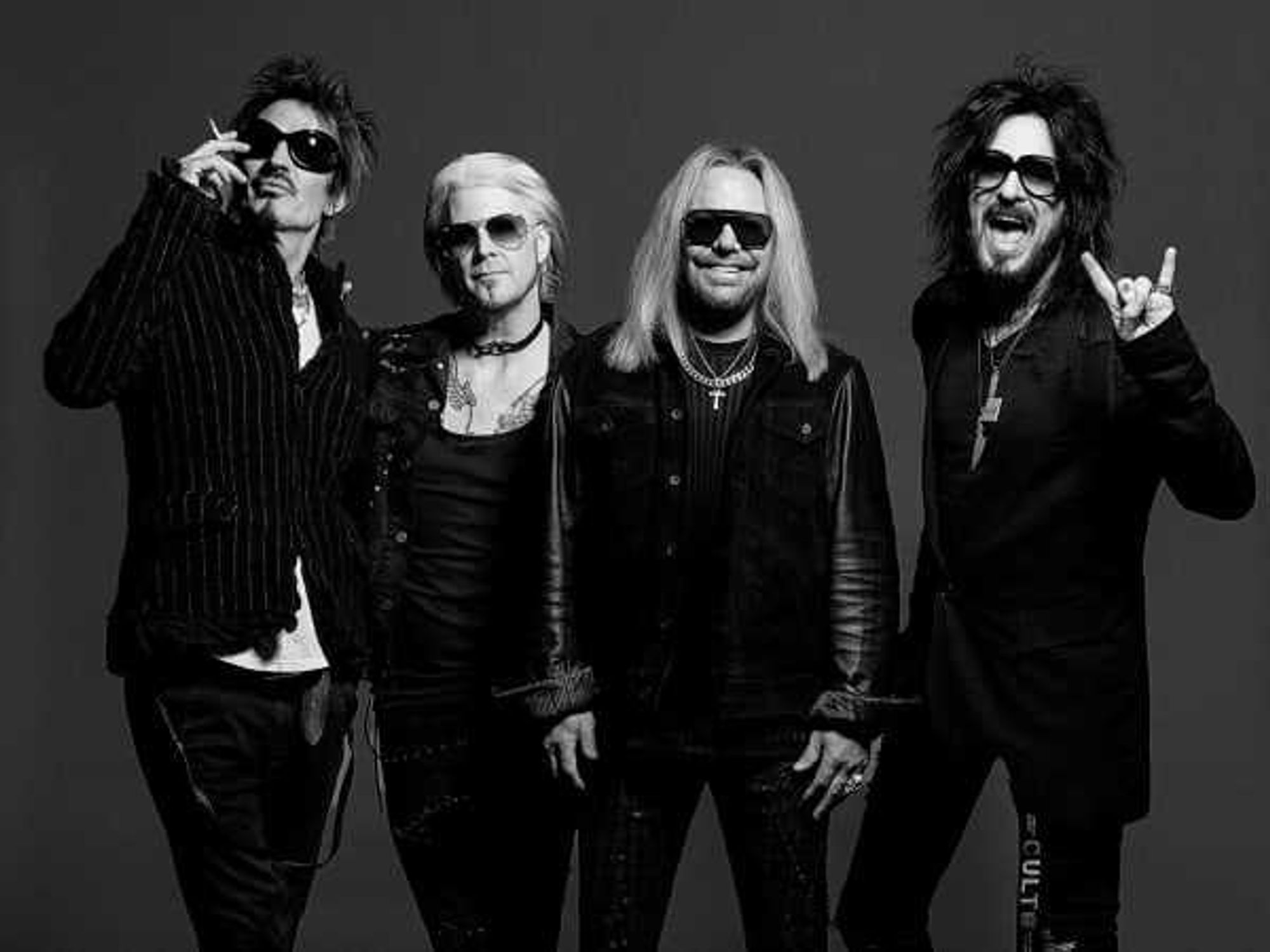
Iconic rock band Mötley Crüe will celebrate a couple of key anniversaries on their upcoming 2026 tour, The Return of the Carnival of Sins, which will include a stop at Dos Equis Pavilion in Dallas on Thursday, September 10.
The two milestones being remembered are the 20th anniversary of their 2005-2006 Carnival of Sins tour, which marked the reunion of the band's original four members, and the 45th anniversary of the band itself, which was formed in 1981.
It's also the 12th anniversary of Mötley Crüe's "retirement" from touring, but that retirement was shelved in 2022 when they started the first of two tours with Def Leppard.
Calling the tour The Return of the Carnival of Sins isn't just trying to make fans nostalgic; it's Mötley Crüe saying that they're going to try to emulate the elaborate staging and a sense of chaos that came with the original tour.
The tour will stop in 33 cities across North America, starting on July 17 in Burgettstown, Pennsylvania. In addition to Dallas, they will play in Houston suburb The Woodlands on September 11.
They'll be joined by special guests Tesla and Extreme on all dates.
The heavy metal band was at their peak in the 1980s and '90s, when they had a string of top 10 albums and hits like "Smokin' in the Boys Room," "Dr. Feelgood," and "Without You."
They've released nine albums in their career, most recently Saints of Los Angeles in 2008.
In conjunction with the tour announcement, the band is releasing the Theatre Of Pain 40th Anniversary Deluxe box set, featuring a newly remastered version of the 1985 album on color vinyl, a never-before-released 1985 Long Beach live concert, and more.
The general on-sale for the tour begins on Friday, November 21 at 9 AM at motley.com.
THE RETURN OF THE CARNIVAL OF SINS - 2026 TOUR DATES
- Fri, Jul 17, 2026 — Burgettstown, PA — The Pavilion at Star Lake
- Sat, Jul 18, 2026 — Buffalo, NY — Darien Lake Amphitheater
- Mon, Jul 20, 2026 — Clarkson, MI — Pine Knob Music Theatre
- Wed, Jul 22, 2026 — Toronto, ON — RBC Amphitheatre
- Fri, Jul 24, 2026 — Gilford, NH — BankNH Pavilion
- Sat, Jul 25, 2026 — Bangor, ME — Maine Savings Amphitheater
- Mon, Jul 27, 2026 — Camden, NJ — Freedom Mortgage Pavilion
- Wed, Jul 29, 2026 — Saratoga Springs, NY — Saratoga Performing Arts Center
- Fri, Jul 31, 2026 — Holmdel, NJ — PNC Bank Arts Center
- Sat, Aug 1, 2026 — Mansfield, MA — Xfinity Center
- Mon, Aug 3, 2026 — Bristow, VA — Jiffy Lube Live
- Wed, Aug 12, 2026 — Alpharetta, GA — Ameris Bank Amphitheatre
- Fri, Aug 14, 2026 — West Palm Beach, FL — iTHINK Financial Amphitheatre
- Sat, Aug 15, 2026 — Tampa, FL — MIDFLORIDA Credit Union Amphitheatre
- Mon, Aug 17, 2026 — Charlotte, NC — PNC Music Pavilion
- Wed, Aug 19, 2026 — St. Louis, MO — Hollywood Casino Amphitheater
- Fri, Aug 21, 2026 — Shakopee, MN — Mystic Lake Amphitheater
- Sat, Aug 22, 2026 — Tinley Park, IL — Credit Union 1 Amphitheatre
- Mon, Aug 24, 2026 — Cuyahoga Falls, OH — Blossom Music Center
- Tue, Aug 25, 2026 — Cincinnati, OH — Riverbend Music Center
- Thu, Aug 27, 2026 — Grand Rapids, MI — Acrisure Amphitheater
- Fri, Aug 28, 2026 — Noblesville, IN — Ruoff Music Center
- Tue, Sep 8, 2026 — Kansas City, MO — Morton Amphitheater
- Thu, Sep 10, 2026 — Dallas, TX — Dos Equis Pavilion
- Fri, Sep 11, 2026 — The Woodlands, TX — The Cynthia Woods Mitchell Pavilion
- Sun, Sep 13, 2026 — Albuquerque, NM — Isleta Amphitheater
- Wed, Sep 16, 2026 — Phoenix, AZ — Talking Stick Resort Amphitheatre
- Fri, Sep 18, 2026 — Chula Vista, CA — North Island Credit Union Amphitheatre
- Sat, Sep 19, 2026 — Long Beach, CA — Long Beach Amphitheater
- Mon, Sep 21, 2026 — Salt Lake City, UT — Utah First Credit Union Amphitheatre
- Wed, Sep 23, 2026 — Wheatland, CA — Toyota Amphitheatre
- Thu, Sep 24, 2026 — Mountain View, CA — Shoreline Amphitheater
- Sat, Sep 26, 2026 — Ridgefield, WA – Cascades Amphitheater