Population report
Collin County explodes with growth as Dallas County dips, says U.S. Census
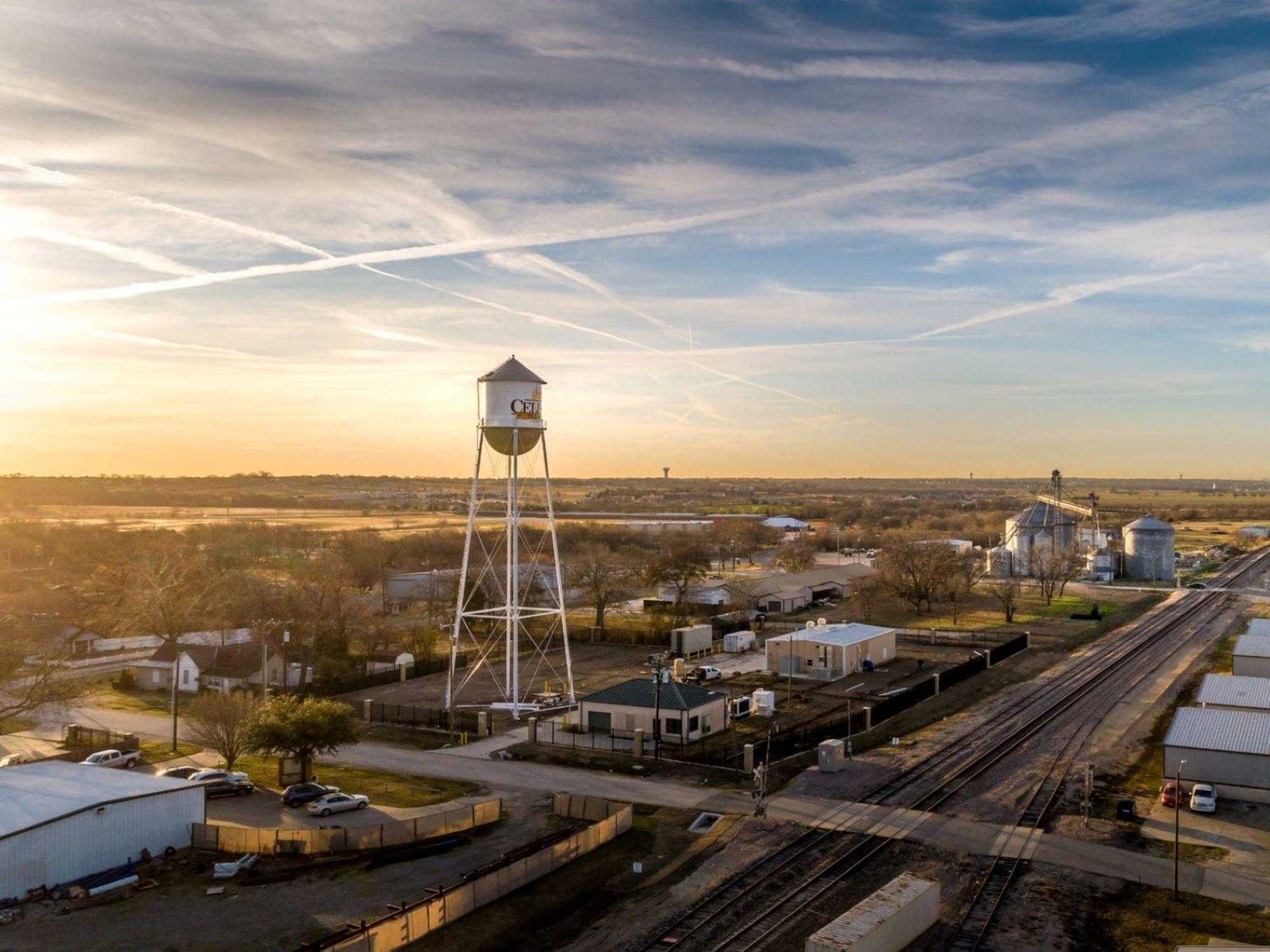
Suburbs like Celina are fueling a surge in population growth across Collin County.
Collin County is experiencing a big population surge. The county north of Dallas — home to Princeton, the country’s fastest-growing city — ranked second among U.S. counties for adding the most residents from 2024 to 2025, new U.S. Census Bureau estimates show.
Meanwhile, Dallas County saw one of the country’s biggest drops in population on a percentage basis.
From July 1, 2024, to July 1, 2025, Collin County gained 42,966 residents, lifting its population by 3.4 percent to nearly 1.3 million, according to the Census Bureau report, released Thursday, March 26.
If the Texas Demographic Center’s projections are correct, Collin County is poised for much more growth. Based on a middle-of-the-road migration scenario, the center predicts the county’s population will exceed 1.4 million in 2030, surpass 1.7 million in 2040, and reach 2.2 million in 2050.
Only Houston-anchored Harris County beat Collin County in that category. During the same one-year period, Harris County grew by 48,695 residents, or 1 percent, pushing its population over the five million mark.
The biggest cities in Collin County are Plano, Frisco, McKinney, and Allen. While population growth is popping in those three places, it’s the smaller suburbs that are witnessing more explosive growth. Aside from Princeton, rapidly growing Collin County suburbs include Anna, Celina, and Melissa.
From July 2023 to July 2024, Princeton’s population soared by 30.6 percent, rising from about 28,000 residents to more than 37,000. City officials attribute Princeton’s population to the affordability of housing. Just one sign of Princeton’s growth: Developers broke ground in March on the city’s first medical office building.
“This medical office development is an exciting milestone for Princeton, bringing essential health care services closer to our growing community,” says Mike Thompson, chairman of the Princeton Economic Development Corp.
Elsewhere in Dallas-Fort Worth, Kaufman County ranked third in the U.S. for population growth on a numeric basis. Its population jumped 5.67 percent, going from 198,010 in 2024 to 209,235 in 2025.
Other Texas counties that show up in the percentage-growth category are:
- Second-ranked Waller County (Houston area), whose population climbed 5.69 percent, winding up at 69,858.
- Eighth-ranked Liberty County (Houston area), whose population rose 4.4 percent to 121,364.
- Tenth-ranked Caldwell County (Austin), whose population grew 4.2 percent to 55,150.
On the other end of the spectrum, Dallas County saw its population decline from 2024 to 2025. According to Census Bureau estimates, Dallas County’s population fell from 2,664,013 to 2,661,397, a decrease of 2,616 residents. On a numeric basis, Dallas County ranked ninth among population-losing counties.
To calculate population growth, the Census Bureau takes into account births, new residents, deaths, and moved-away residents.
Aside from Collin and Harris counties, three other Texas counties landed in the top 10 for numeric growth from 2024 to 2025:
- Fourth-ranked Montgomery County (Houston area): Gain of 30,011 residents, with a July 1, 2025, total of 781,194. That’s a one-year growth rate of four percent.
- Eighth-ranked Fort Bend County (Houston area): Gain of 24,163 residents, with a July 1, 2025, total of 975,191. That’s a one-year growth rate of 2.5 percent.
- Ninth-ranked Williamson County (Austin area): Gain of 23,814, with a July 1, 2025, total of 752,827. That’s a one-year growth rate of 3.2 percent.
On a percentage basis, no metro area in Texas appears among the 10 fast-growing metro areas. However, the state’s four major metros are among the 10 fastest-growing on a numeric basis:
- Houston: The metro area ranked first for growth on a numeric basis, adding 126,720 residents in just one year. The region’s population was slightly over 7.9 million on July 1, 2025, representing a 1.6 percent growth rate.
- DFW: The metro area ranked second for growth on a numeric basis, gaining 123,557 residents during the one-year period. Its population as of July 1, 2025, was nearly 8.48 million, representing a nearly 1.5 percent growth rate.
- Austin: The metro area ranked sixth for growth on a numeric basis, expanding by 53,796 residents. As of July 1, 2025, the region’s population was 2.62 million, with a 2.1 percent growth rate.
- San Antonio: The metro area ranked ninth for growth on a numeric basis, picking up 38,402 residents. The region’s population was 2.81 million on July 1, 2025, with a nearly 1.4 percent growth rate.