Superstar comedian Chris Rock, fresh off his highly publicized altercation with Will Smith at the Academy Awards, is extending his "Ego Death World Tour." It now will include a stop at The Pavilion at Toyota Music Factory in Irving on Thursday, November 3.
The tour, which is currently ongoing, is scheduled for venues across the United States, Canada, and Australia. In addition to the date in Irving, Rock will perform in Sugar Land on November 5 and San Antonio on November 10.
One of the strongest comedic voices working today, Rock has a career that has spanned more than three decades, enjoying success in both film, television, and stage as a comedian, actor, writer, producer, and director. Though he got his break on Saturday Night Live, his career has gone on to include plenty of dramatic roles, including in the FX series Fargo, in the horror film Spiral, and in the upcoming biopic Rustin.
Of course, comedy has always been Rock's primary way of entertaining the masses, whether as a stand-up comedian, acting in Adam Sandler movies, or directing his own projects like 2014's Top Five.
It was his comedy that earned the wrath of Smith at the Oscars on March 27, with the soon-to-be Best Actor slapping Rock in one of the most shocking moments in Oscar history (an incident which now has its own Wikipedia page). Rock has said he won't talk about the incident until he "gets paid."
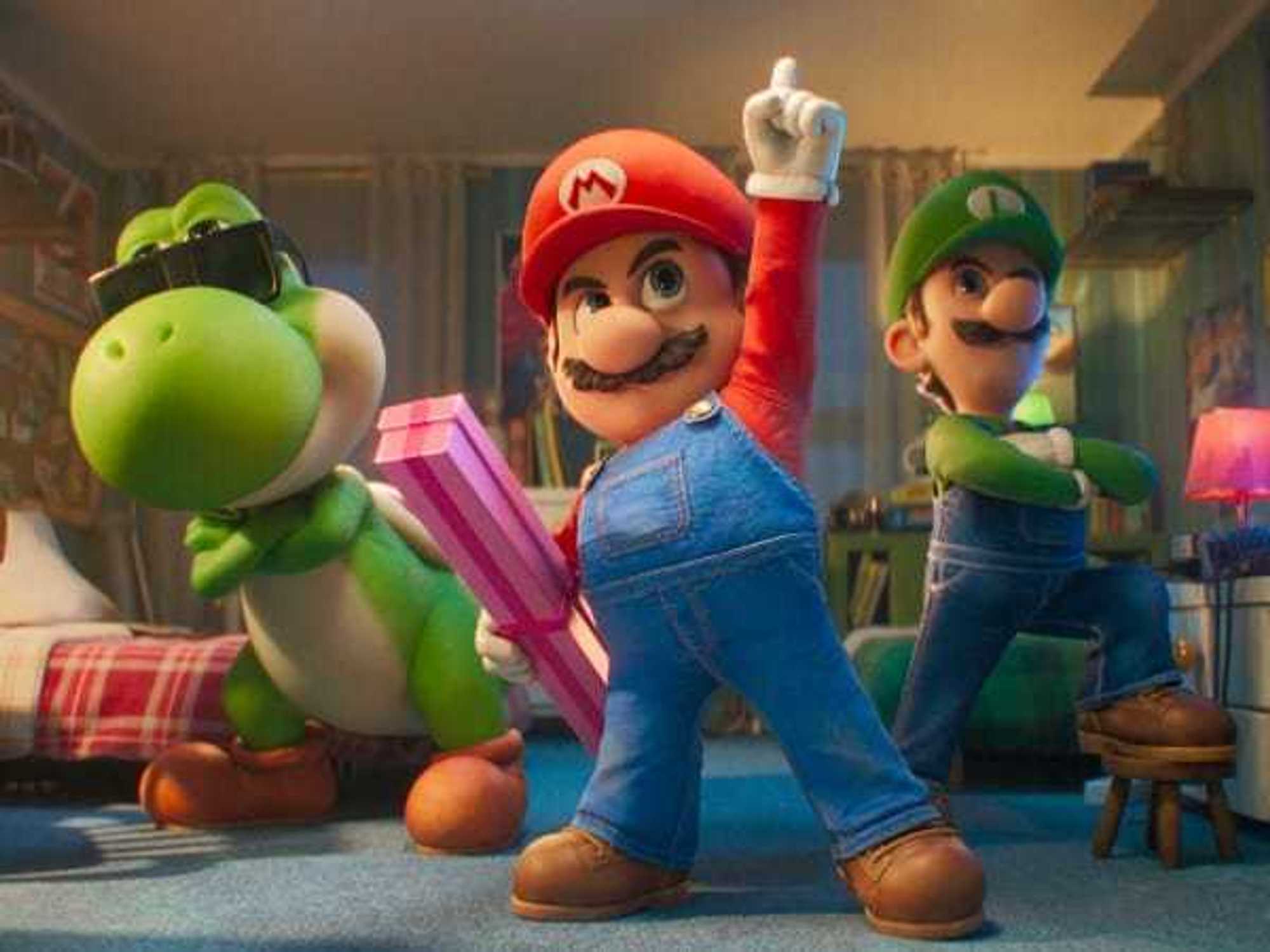
Yoshi, Mario, and Luigi in The Super Mario Galaxy Movie.
When The Super Mario Bros. Movie came out in 2023, it had two big things going for it. Audiences had little experience with a fully-animated video game adaptation, and certainly not from a property as revered as Super Mario Bros. And coming from Illumination Entertainment and featuring an all-star cast, the massive budget for the film was on the screen, showing how much effort the filmmakers put into at least the visuals.
Three years later comes the sequel, The Super Mario Galaxy Movie, passing over a massive number of Mario games to go straight to 2007’s Super Mario Galaxy, originally put out for Nintendo’s Wii system. This time, the returning Mario (Chris Pratt), Luigi (Charlie Day), Princess Peach (Anya Taylor-Joy), and Toad (Keegan-Michael Key), now joined by Yoshi (Donald Glover), are sent on a mission to save Princess Rosalina (Brie Larson) from the evil clutches of Bowser Jr. (Benny Safdie), who’s trying to prove his worth to his dad, Bowser (Jack Black).
And that is about as much actual story there is to be found in a film that feels like a slog even at a brief 98 minutes. The filmmakers - directors Aaron Horvath and Michael Jelenic, co-directors Pierre Leduc and Fabien Polack, and writer Matthew Fogel - have lots of fun inserting references from a bunch of different Mario games, but they pay little attention to giving the characters anything to do that makes sense.
Instead, small groups are shuttled around different points in the galaxy - sometimes using game mechanics, sometimes not - to accomplish minor goals that are forgotten almost as soon as they’re named. Nothing they do rises to the level of exciting or even interesting; everything is merely an excuse to showcase another part of Mario lore for the masses.
It’s impossible to call the filmmaking lazy, as the visuals remain top notch and it’s clear the entire crew put a lot of effort into making every scene as appealing as possible. But the film is certainly cynical, throwing out empty treats like Fox McCloud (Glen Powell) or Bowser Jr.’s magic paintbrush to give Nintendo mega-fans a rush of serotonin without attaching those elements to anything substantial.
I have long railed against using big-name actors in voiceover roles, arguing that few people know or care whose voice they’re hearing in animated films. Somehow, this film makes the idea worse, as the voices of people like Key, Glover and Safdie are changed so that you would never know it’s them, something that’s especially strange for Glover since Yoshi only says one word - “Yoshi.”
Even stranger is that, after making a joke in the first film about Mario not having an Italian accent, Pratt goes in and out of an accent in this film. At least he and Day feel like they’re having fun. Bowser is sidelined for a good amount of this film, giving Black not much to do overall. Taylor-Joy and Larson might as well be anonymous actors for all the impact they make on their roles.
The Super Mario Galaxy Movie is the worst kind of fan service, delivering a shiny product that might make some people feel good in the moment, but something that is forgotten the second they step out of the theater. If Nintendo is to continue adapting their properties, they’d do well to give their fans a film they want to see more than once.
---
The Super Mario Galaxy Movie is now playing in theaters.