Buoyed by the success of a recent series of screenings that showcased the work of directors like Akiro Kurosawa and John Carpenter, the Lone Star Film Society will honor two more master filmmakers this August: Hayao Miyazaki and Alfred Hitchcock.
In a partnership with the Modern Art Museum of Fort Worth, which has the only theater in Fort Worth capable of showing archival film prints, the LSFS will screen five Miyazaki and six Hitchcock films over the course of the month.
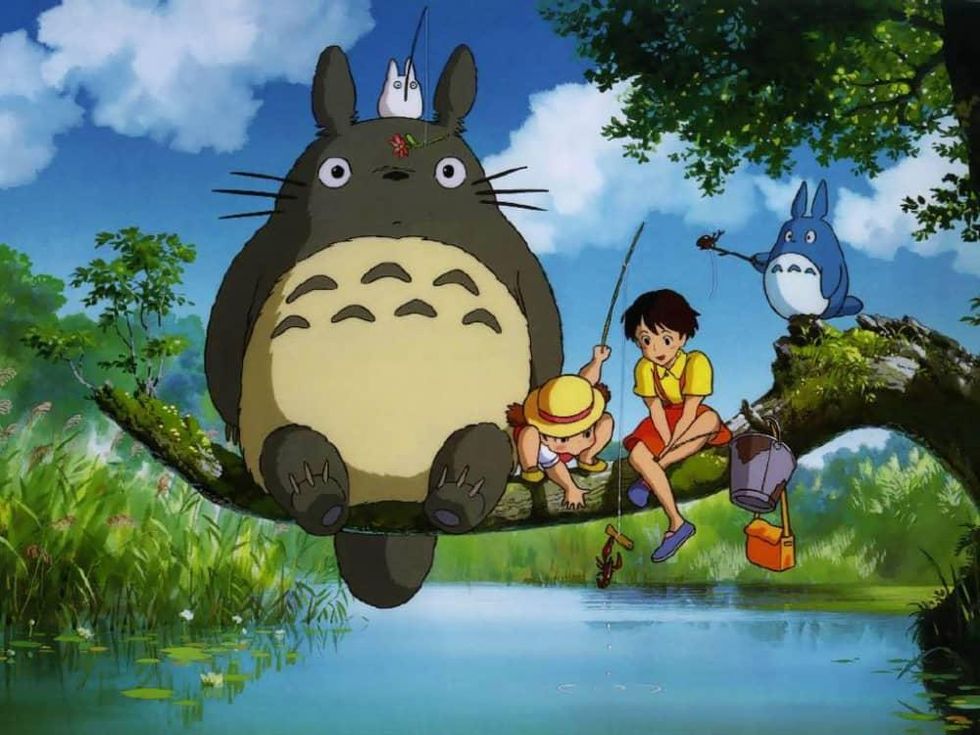
The five Miyazaki films — Nausicaa of the Valley of the Wind, Kiki's Delivery Service, My Neighbor Totoro, Spirited Away and Princess Mononoke — will be shown over four consecutive weekends starting on August 2. Several screenings will include either introductions from or discussions with UT Dallas film professors. For purists, Spirited Away will be shown both in Japanese with English subtitles and in dubbed English.
August 28-31 will belong to Hitchcock. The LSFS will present four of his classics — The 39 Steps, Psycho, Notorious and Rear Window — as well as two of his early silent films, Blackmail and The Lodger. The two silent films, introduced by film professors from TCU and SMU, will be accompanied by live music courtesy of pianist Robert Edwards and film composer Curtis Heath.
Tickets for each film, which are now on sale, range from $5-$9, with Lone Star Film Society and Modern Art Museum of Fort Worth members receiving discounts.
Psycho is one of six Alfred Hitchcock films the Lone Star Film Society will show at the Modern Art Museum of Fort Worth.
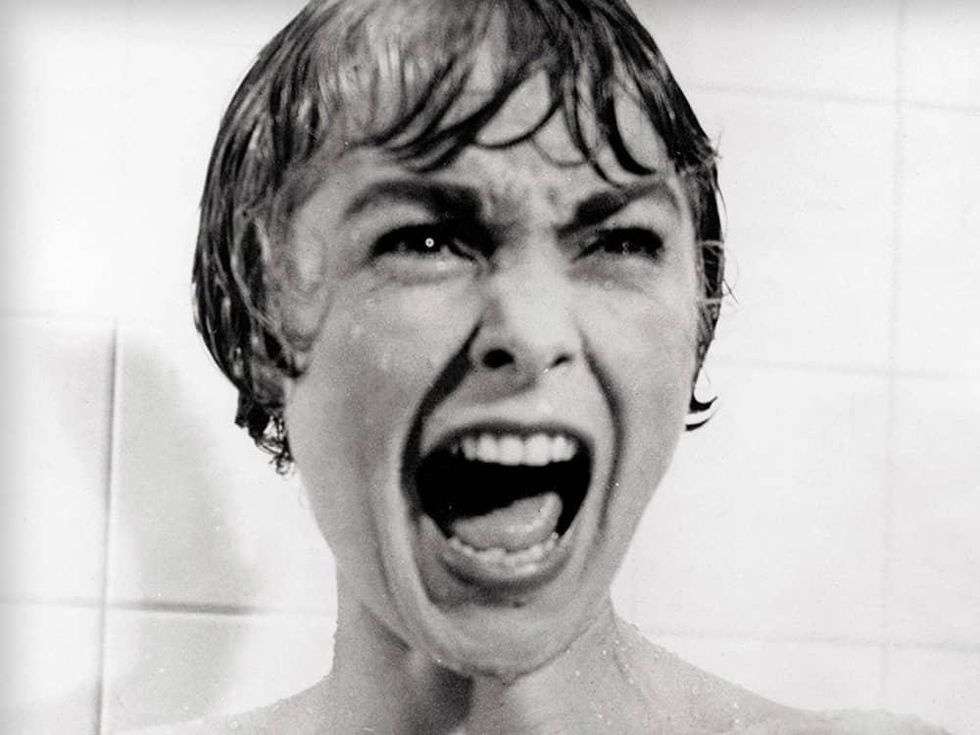
Photo courtesy of Lone Star Film Society
Psycho is one of six Alfred Hitchcock films the Lone Star Film Society will show at the Modern Art Museum of Fort Worth.
In Hollywood’s never-ending quest to take advantage of existing intellectual property, seemingly no older movie is off limits, even if the original was not well-regarded. That’s certainly the case with 1997’s Anaconda, which is best known for being a lesser entry on the filmography of Ice Cube and Jennifer Lopez, as well as some horrendous accent work by Jon Voight.
The idea behind the new meta-sequel Anaconda is arguably a good one. Four friends — Doug (Jack Black), Griff (Paul Rudd), Claire (Thandiwe Newton), and Kenny (Steve Zahn) — who made homemade movies when they were teenagers decide to remake Anaconda on a shoestring budget. Egged on by Griff, an actor who can’t catch a break, the four of them pull together enough money to fly down to Brazil, hire a boat, and film a script written by Doug.
Naturally, almost nothing goes as planned in the Amazon, including losing their trained snake and running headlong into a criminal enterprise. Soon enough, everything else takes second place to the presence of a giant anaconda that is stalking them and anyone else who crosses its path.
Written and directed by Tom Gormican, with help from co-writer Kevin Etten, the film is designed to be an outrageous comedy peppered with laugh-out-loud moments that cover up the fact that there’s really no story. That would be all well and good … if anything the film had to offer was truly funny. Only a few scenes elicit any honest laughter, and so instead the audience is fed half-baked jokes, a story with no focus, and actors who ham it up to get any kind of reaction.
The biggest problem is that the meta-ness of the film goes too far. None of the core four characters possess any interesting traits, and their blandness is transferred over to the actors playing them. And so even as they face some harrowing situations or ones that could be funny, it’s difficult to care about anything they do since the filmmakers never make the basic effort of making the audience care about them.
It’s weird to say in a movie called Anaconda, but it becomes much too focused on the snake in the second half of the film. If the goal is to be a straight-up comedy, then everything up to and including the snake attacks should be serving that objective. But most of the time the attacks are either random or moments when the characters are already scared, and so any humor that could be mined all but disappears.
Black and Rudd are comedy all-stars who can typically be counted on to elevate even subpar material. That’s not the case here, as each only scores on a few occasions, with Black’s physicality being the funniest thing in the movie. Newton is not a good fit with this type of movie, and she isn’t done any favors by some seriously bad wigs. Zahn used to be the go-to guy for funny sidekicks, but he brings little to the table in this role.
Any attempt at rebooting/remaking an old piece of IP should make a concerted effort to differentiate itself from the original, and in that way, the new Anaconda succeeds. Unfortunately, that’s its only success, as the filmmakers can never find the right balance to turn it into the bawdy comedy they seemed to want.