Gazebos similar to this will be on display when Dallas Arboretum unveils its new 12 Days of Christmas on November 16.
Photo by Karen Almond
Despite the calendar showing that it's still August, the Dallas Arboretum is getting us ready for the holiday season by revealing plans for a new exhibit called the 12 Days of Christmas.
Starting November 16, a dozen 15-foot-tall gazebos will pop up around the arboretum grounds, and each will be populated by life-size Victorian-costumed mannequins or whimsical animals to match the verses of the popular holiday song, "The 12 Days of Christmas."
The Dallas Arboretum is pulling out all the stops for this $1.6 million exhibition, with sets and costumes designed by Tommy Bourgeois, the Dallas Opera and Dallas Stage Scenery.
Some of the exhibits will have animated figures to act out the song's lyrics, and each gazebo will be protected by glass, so it will resemble a music box. Lighting upgrades to the garden that came with the Chihuly exhibit a couple of years ago will help showcase each gazebo.
The exhibit, free with regular admission, will be open every day from November 16 to January 4, 2015, save for Thanksgiving, Christmas Day and New Year's Day. As with the Chihuly exhibit, the arboretum also will be open on select nights throughout the run, giving visitors a chance to see a different kind of holiday lights display.
Tickets for the 12 Days of Christmas go on sale starting August 15; anyone who buys tickets prior to September 1 gets an early bird discount. Daytime admission costs $15 for adults and $10 for children, plus $10 for parking. Night tickets cost $20, and parking is included.
Arboretum members and children under the age of 2 get in free.
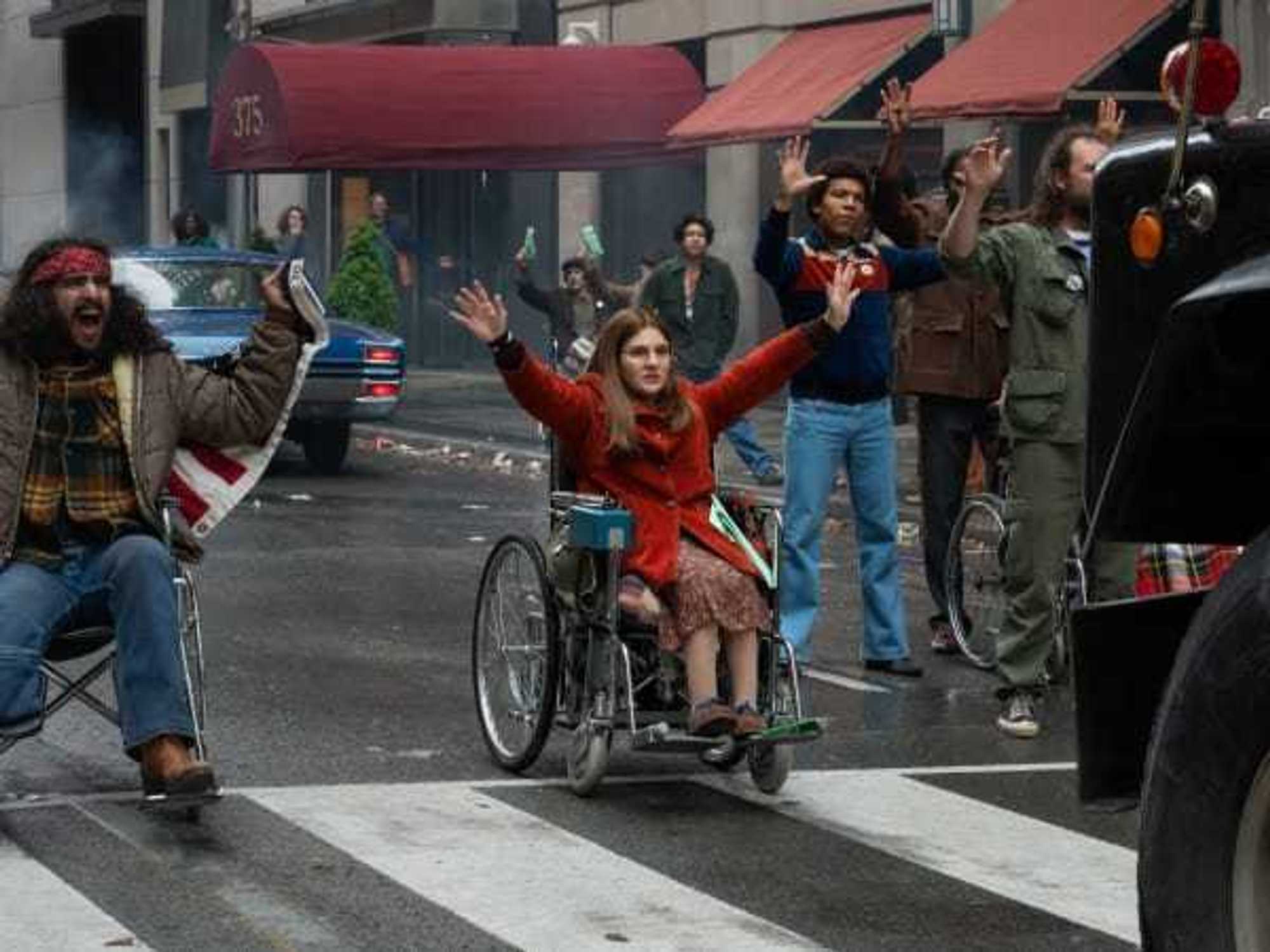
The presence of building ramps, curb ramps, wheelchair-accessible stalls, accessible parking spaces, and more accommodations for people with disabilities is now so ubiquitous in the United States that it’s hard to remember a time without them. But as the new film Being Heumann ably demonstrates, the fight to get those things was as difficult as any civil rights battle.
The film focuses on a specific period of time in 1977 when disability rights activist Judy Heumann (Ruth Madeley) led a movement to try to get U.S. Secretary of Health, Education and Welfare (HEW) Joseph Califano (Mark Ruffalo) to sign Section 504 of the Rehabilitation Act of 1973. After years of no progress under Presidents Nixon, Ford, and Carter, Heumann and her group of other disabled people and allies decide to stage a sit-in at the HEW offices in San Francisco.
What begins as a temporary event turns into a prolonged ordeal, with Califano initially unmoved and the protesters unwilling to leave the building. The strong-willed Heumann, helped by fellow leaders like Kitty Cone (Madeline Delp) and TV reporter Evan White (Dylan O’Brien), not only puts pressure on Califano and other HEW staffers, but also members of her own group, some of whom are unable or unwilling to stay as long as she wants.
Directed by Sian Heder (CODA) and written by Heder and Rebekah Taussig, the film features a rousing story made all the more effective by the presence of actual disabled people. In addition to people in wheelchairs like Madeley and Delp, the cast features people who are blind, deaf, are short-statured, and more. Some of the cast members are professional actors, some aren’t, but they all bring a realism that enhances the story.
Heder and her team underscore the importance of the story by taking their time telling it. That doesn’t just mean giving Madeley and others extra scenes to demonstrate their skills, although the 127-minute film provides plenty of time for that. More pointedly, Heder allows the disabled people to take however long they need to do something, like trying to navigate inaccessible stairways or using a pointer to spell out words. The respect this approach shows the actors brings extra heft to the story they’re trying to tell.
There are multiple moments in the film where audience members may scoff at what’s happening to the disabled people, most notably when they are met with derision by government officials and even regular passers-by. Heder occasionally overplays her hand by either showing Califano as being overly callous or White being supremely helpful, but she mostly plays things straight, allowing the difficulties the protestors face speak for themselves.
Madeley, a veteran actor with over 30 credits to her name, puts in an award-worthy performance. While the reality of her disabled body plays a part in her role, it’s mostly the fieriness and determination that she shows that make it stellar. Others like Delp, Antwan Tolliver, Rio Finnegan, and more prove crucial in supporting roles. Known actors like Ruffalo, O’Brien, and Rob Delaney are fine, but secondary to the main group.
Being Heumann is a great way to honor the legacy of Heumann, who passed away in 2023. There is still work to be done to ensure disabled people are given access and respect in the U.S., but the events in the film show that people like Heumann and the groups they lead have power when they choose to fight.
---
Being Heumann is now playing in select theaters and streaming on Apple TV.