The 2026 pecan season has arrived in Texas and you can buy them fresh at Foster Crossing Pecans, a pecan grower in Anna at 1303 W. Foster Crossing Rd.
These are different from pecans sold in supermarkets year-round, says Foster Crossing Pecans founder Jim Luscombe.
"Pecans sold at grocery stores are good, but they've been stored for a while," Luscombe says. "You're not going to believe how good fresh pecans are."
Foster Crossing is one of the many family pecan farmers across Texas, often passed down through multiple generations, although the number of farmers is decreasing. But more of those remaining growers are pivoting in the same direction as Foster Crossing and selling directly to consumers.
For Luscombe, Foster Crossing Pecans was a second act. He and his wife Robyn founded the company in 2002, planting a first stand of 100 pecan trees on farmland his family had owned since around 1875.
"I had a great career in the computer industry, and when I got ready to retire, I decided to come back to one of the family farms," he says. "It had two nice native pecan orchards. There was pecan history with my grandparents, too. So I started with 100 trees, then another 100. I really enjoy the process of growing them and seeing them mature."
He now has more than 500 improved variety trees along with numerous grand native pecan trees, some estimated to be hundreds of years old.
 Foster Crossing Pecans owners Robyn and Jim Luscombe do their rendition of the "American Gothic" pose..Photo courtesy of Foster Crossing Pecans
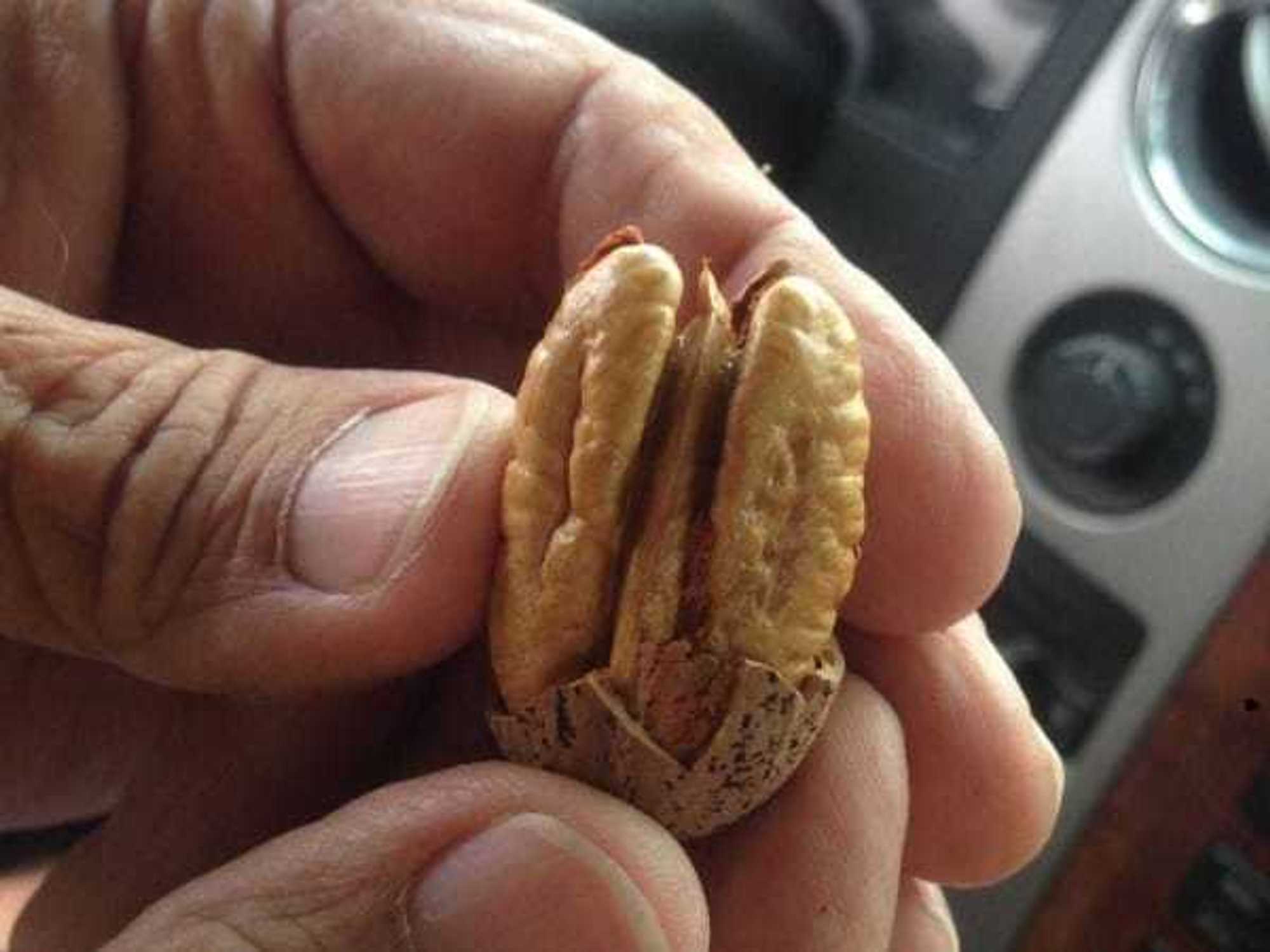
He plants a variety called paper shell, prized for both their delicate shell and their rich, buttery flavor.
"Paper shell are the most sought after because the shells are thin enough to crack easily, and the 'mammoth' size we grow are large enough to make them worth picking up and cracking," Luscombe says. "Over the years, plant experts have improved varieties, resulting in pecans that look good and taste good."
It's a long-term commitment, since pecan trees don't start producing pecans right away.
"A native pecan tree takes about 13 or 14 years before you see pecans," Luscombe says. "If you go to A&M, they've bred more productive pecan trees that bear fruit as quickly as eight or nine years."
This year's crop
The Texas harvest for 2026 is estimated to be 39 million pounds of pecans, an increase from the past few years. Pecan season runs from late September through January, depending on region. In North Texas, the harvest begins in late October and runs through December.
Foster Crossing will open its 2026 season on October 30, selling fresh crop pecans and offering custom cracking at their barn at 1303 W. Foster Crossing Rd. on Thursdays-Saturdays from 9 am-4 pm every weekend until the season ends.
They offer a variety of formats:
- Pecans in the shell, one pound for $8.25
- Cracked-Only Pecans, with the shell partially cracked. You finish shelling and picking, 3 pounds for $25
- Custom Shelled - Shelled pecan halves, to display on top of pies and pecan candies, one pound for $18
- Choppers - Larger pieces, but not whole halves, 3 pounds for $48
They'll sell upwards of 5,000 pounds of pecans, and they sell out every year.
They'll also take your backyard crop and shell them for you, $1 per pound for small native pecans to crack, shell, and run them through the blower to get rid of shell residue.
Pecan Therapy
Lubscombe is a highly engaging fellow and great listener who jokes that they provide "Pecan Therapy at no charge," encouraging all to visit, help crack pecans, sit on the porch, and watch the sunset.
"I have memories from when I was young of being with my dad and my granddad and mamaw — everybody had one of those round wooden bowls with the pecan cracker and the little pickers, sitting and cracking and picking the meat out," he says. "Doing that gave you a chance to talk and visit a little bit."
It's an intrinsic part of the company ethos.
"Foster Crossing brings great enjoyment for me," he says. "I am not making any money, but I get to meet wonderful people. Everyone is happy to be here and get pecans. Many are repeat customers, year after year. They started with us as couples. In some cases, one of the spouses has passed. Or the people who once picked and shelled pecans with their grandparents. Part of our service is to stop and listen to folks who want to tell you their stories. We've discovered that it's important to listen to them as part of our pecan therapy."


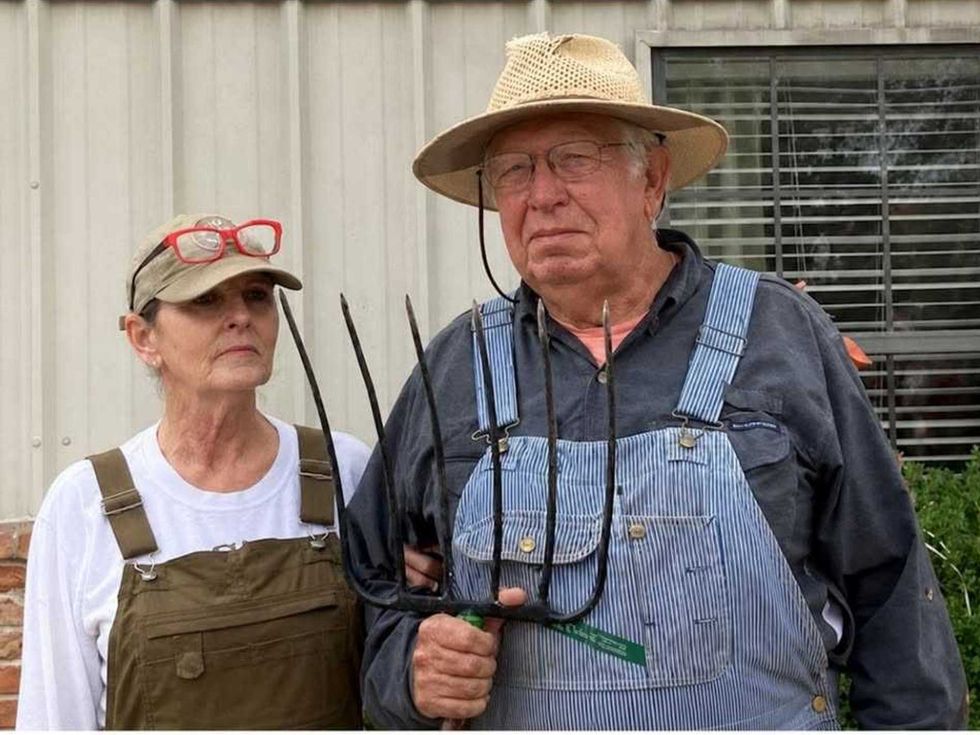 Foster Crossing Pecans owners Robyn and Jim Luscombe do their rendition of the "American Gothic" pose..Photo courtesy of Foster Crossing Pecans