
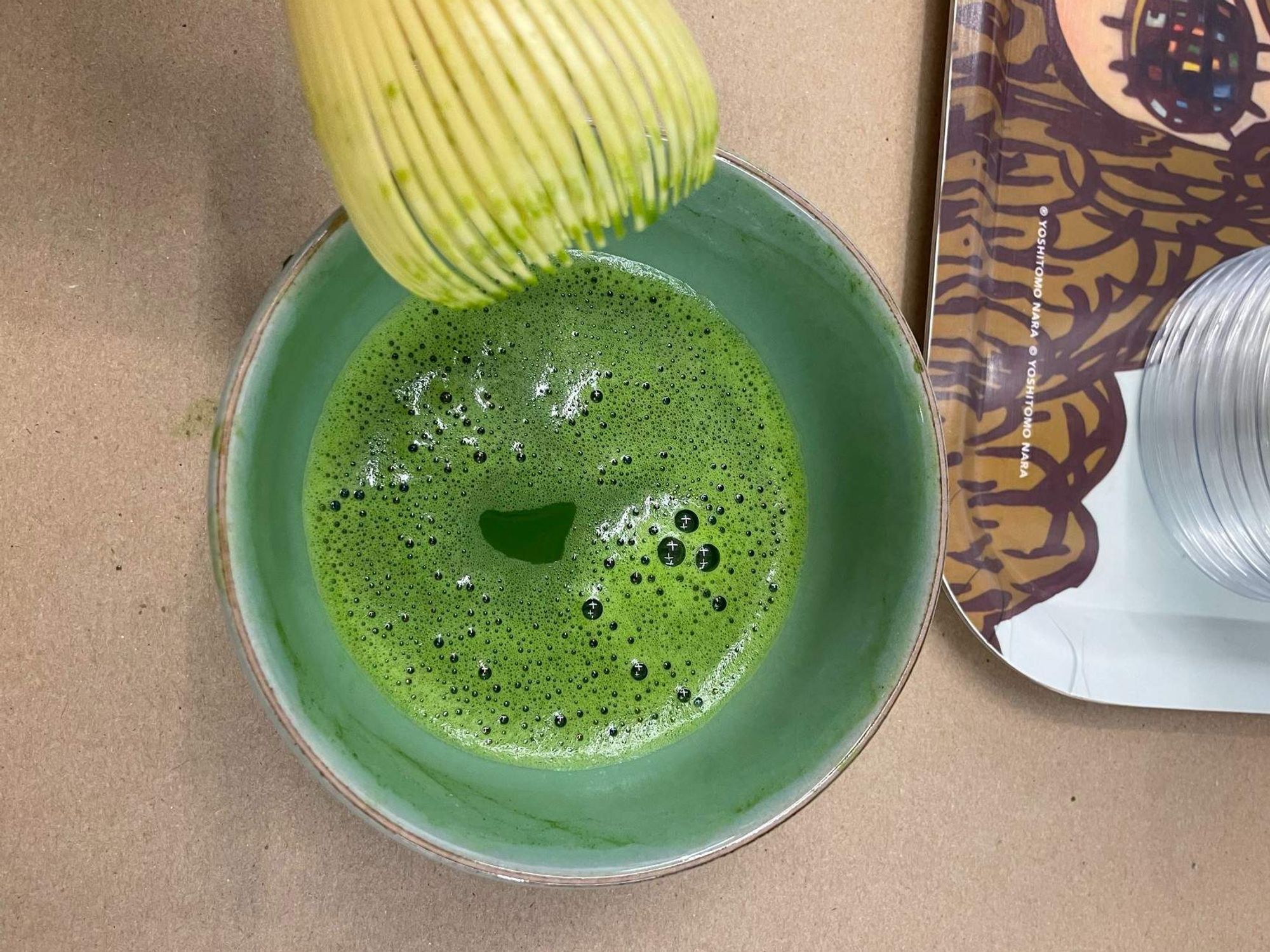
The insatiable mania for matcha surfaced in Dallas in an unlikely location: an art gallery. On July 13, Dallas coffee and matcha cart The Dang Spot led a class on how to make the buzzy green tea at Dallas Contemporary, the art space at 161 Glass St. in the Dallas Design District.
The class was a two-hour dive into the art of making matcha. For impatient types, the lesson could have been summed up in two words: "stir vigorously." But that would have left out the charming quirks of the event — as well as the zen-like experience of meditating on a topic and reaping unexpected benefits.
The Dang Spot started out as a champion of Vietnamese phin-drip coffee, but founders Vivian Doan & Frank Duong added matcha to the menu in response to intense customer demand. This was their first matcha class, and it had a few bumps, including a late start and some mad-dash trips to the store to fetch ingredients. But the 20 attendees — a full house of beverage fans and general-purpose foodies with an interest in matcha — were happy to go along for the ride.
The class had a singular focus. There was no food, no bottomless mimosas, just a careful instruction on the mechanics of making a drink. The simplicity was part of the charm. And hands-on classes are always fun, creating camaraderie, breaking down social barriers, inviting interaction with people you might not otherwise meet.
Matcha is made from the leaves of a tea plant that has been shaded from the sun; it makes the resulting tea more mellow. The leaves are ground into the pretty green powder that's used for matcha lattes, smoothies, pastries, and other baked goods. Matcha's popularity has skyrocketed in recent years, especially among Gen-Z — the audience that Dallas Contemporary has been working to cultivate.
The class
The class was free for Dallas Contemporary members and $20 for non-members, and took place in the same gallery space that held hulking metal pieces by artist Martin Gonzales. It centered on making two basic drinks, using two varieties of matcha powder. The ingredients were not complicated: matcha powder and water. The main task was how to make the drink frothy.
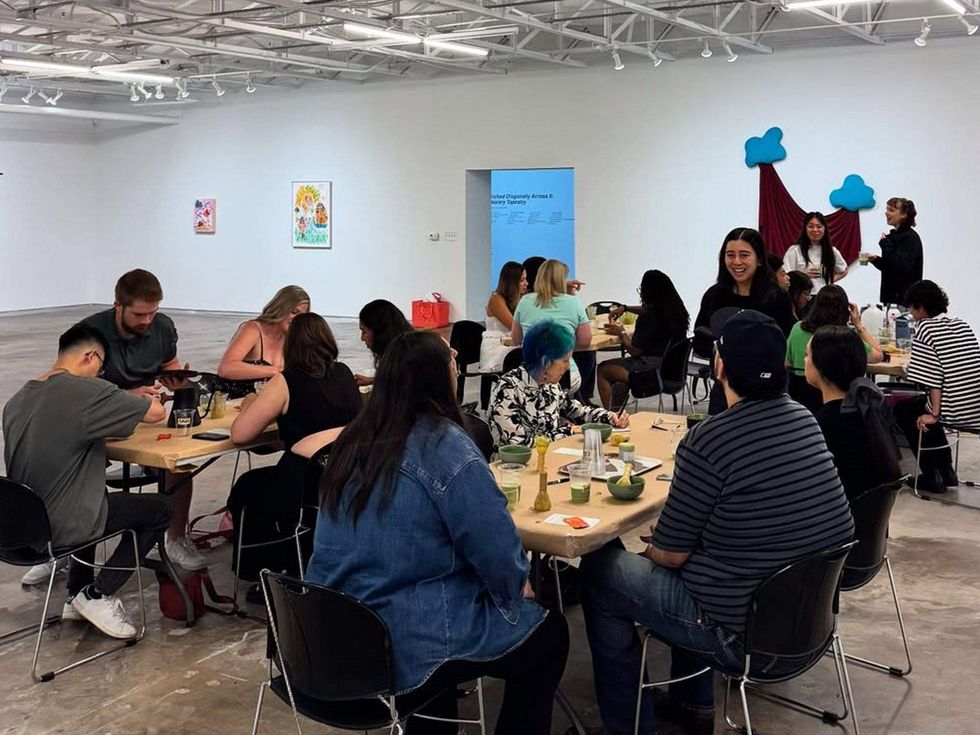 Matcha class at Dallas Contemporary.Dang Spot
The process of making matcha relies on traditional Japanese tea ceremonial elements, with a hyper focus on details.
- A long thin scoop, ideally made of bamboo, called the chashaku, is used to measure out grams of matcha powder.
- The water must be a certain temperature (170 degrees).
- Once the water is poured over the matcha powder, a special whisk called a chasen, also made of bamboo, is used to mix and froth.
(No surprise, Williams-Sonoma has a kit for $34.95.)
Everyone in the class was given a bowl and a plastic version of the bamboo whisk. Tins of matcha powder were passed around; attendees helped themselves to a gram or maybe two, followed by a splash of hot water, matching the matcha with an equal amount of water to create a loose matcha tea paste.
And then it was whisk whisk whisk. First a circular motion to mix it up, then rapidly back and forth, like making the letter "W", to generate a topper of foam. This was not cappuccino-foam, just a thin layer on top, and if the bubbles were too big, it was advised to break them up.
Sipping it solo gave a concentrated focus on the matcha itself, summoning flavors like earthy, nutty, grassy, and mildly sweet — nothing like the loaded-up matcha drinks commonly sold at coffee shops.
But attendees were given the opportunity to supplement the mixture with choice of more water or oat milk; and doctor it up with syrups such as lavender or brown sugar-ube.
Adding the lavender syrup gave the matcha a floral, garden-y personality. Adding the brown sugar-ube syrup gave the matcha a caramel-y richness. You could still taste the matcha, but the additives gave it extra dimension.
Matcha has about 70 to 80 milligrams of caffeine in an 8-ounce serving — a little less than coffee's 90 milligrams, but matcha's aftereffect lingers, releasing more slowly over a longer period of time. After having consumed two cups, I realized I was grinding my teeth on the drive home — and this was even after having stopped in to peek at the Dallas Contemporary's very cool exhibit on tapestry — but it passed quickly enough. Attendees surely experienced an energized Sunday afternoon.
The Dang Spot's first event was at Trinity Groves in November 2024, and they pop up every weekend all around Dallas, most often at fitness studios since being active is a large thing in their lives.
"Our business has a dual interpretation," Vivian says. "Dang is my mom’s last name so it pays homage to her, but ĐẮNG also translates to bitter!"
They're doing a residency at Dallas Contemporary through July, setting up their mobile cart on Friday-Saturday July 18-19 and July 25-26, serving Vietnamese coffee and matcha from 11 am-6 pm, or until sold out.

 Yonx Pizza soup in a bread bowl.Photo courtesy of Yonx