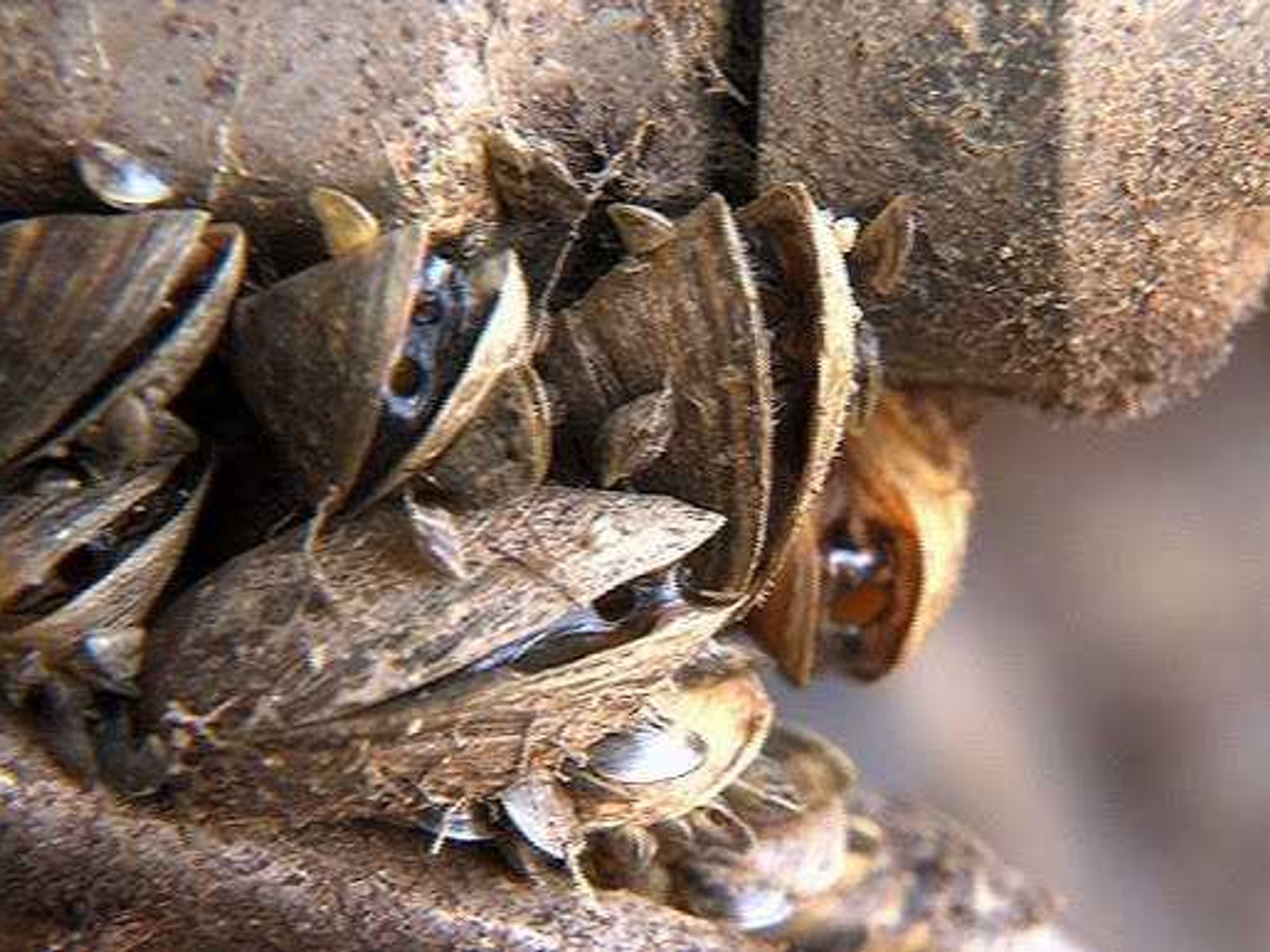
Texas Parks and Wildlife Department (TPWD) has discovered another Texas body of water that has been infested by a dangerous invasive species.
According to a release, Fort Phantom Hill Lake, near Abilene, has now been tested as “positive” for invasive zebra mussels — signifying that there have been multiple detections of the mussel, though TPWD needs additional evidence to determine if the species is fully established.
In late August, TPWD received a report of a single adult zebra mussel next to a dock. Analysis of the most recent routine plankton samples from the lake found two confirmed microscopic zebra mussel veliger larvae from a sample taken near the site of the adult zebra mussel.
In good news, an extensive survey of the shoreline and associated infrastructure found no additional settled mussels; and zebra mussel larvae were not detected in samples taken from other locations within the lake.
This new invasion appears to be recent and in the early stages. Multiple methods will continue to be used to monitor for signs an established, reproducing population has developed.
“With the detection of zebra mussels, the City of Abilene will begin increased inspection and monitoring of our water intake structures,” says Mathew Dane, City of Abilene water utilities director in a statement. “These proactive steps will allow us to detect any presence early and prepare targeted protective measures before an infestation can impact our infrastructure."
Zebra mussels are bad
Zebra mussels are a non-native shellfish that attaches to hard surfaces, posing a significant threat to Texas lakes, altering lake ecosystems, and causing harm to native species.
Their "beard" — hairs on their shell that look like brown seaweed — allows them to attach to surfaces and to each other, with large numbers blocking pipes and valves wherever they occur.
They also damage boats and water supply infrastructure and litter shorelines with hazardous, sharp shells that impact lakefront recreation.
"Unfortunately, detection of zebra mussels at Fort Phantom Hill Lake is part of a trend in recent years of spread of this highly invasive species to lakes in the western part of the state,” says Monica McGarrity, TPWD senior scientist for aquatic invasive species. “As boaters visit waterbodies anywhere in the state, it’s important they take steps to properly clean, drain, and dry boats to prevent the spread of zebra mussels and other aquatic invasive species.”
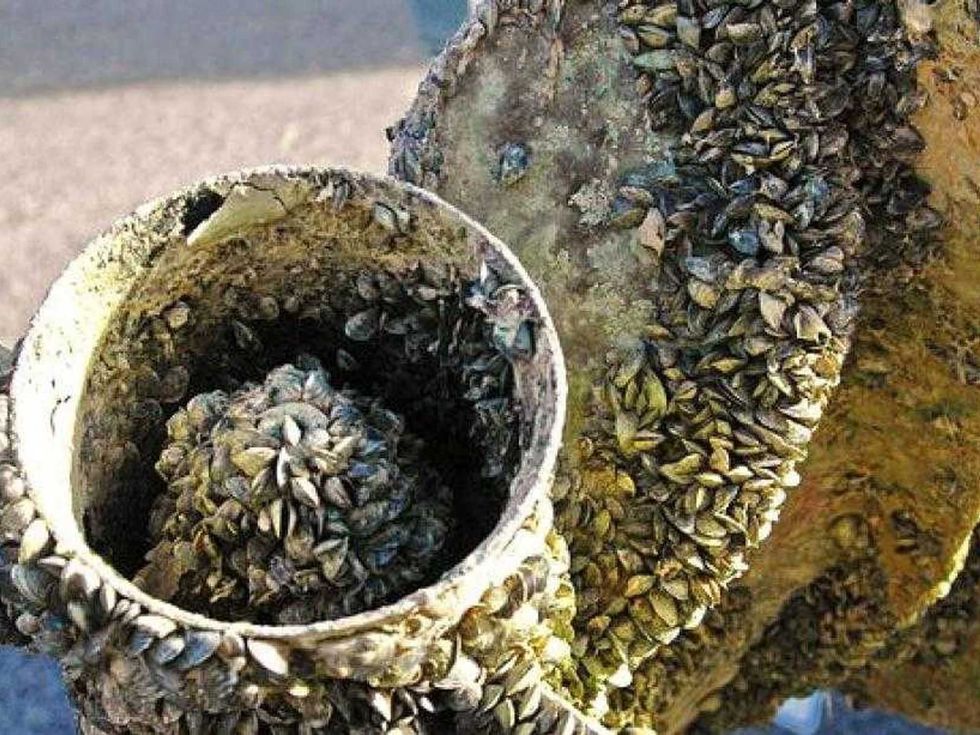 Gear encrusted in zebra musselsUSFWS via Flickr (CC BY-NC-ND)
Advice for boaters
Because zebra mussels are most often transported on or in boats, boaters play a critical role in preventing them from spreading to new lakes. Zebra mussels attach to boats, as well as anything left in the water, including anchors. They can survive for days out of water, often hiding in crevices where they may escape notice. Their microscopic larvae are free-floating and invisible to the naked eye, meaning they can be transported unknowingly in residual water in boats.
"Invasive mussels have now spread to 39 Texas lakes, with 34 fully infested, but there are far more lakes that still haven’t been invaded and are at risk,” said Brian Van Zee, TPWD inland fisheries regional director. “Each boater taking the necessary actions to clean and drain their boat before leaving the lake and allowing compartments and gear to dry completely when they get home can make a big difference in protecting our Texas lakes.”
TPWD urges boaters to follow these three simple but crucial steps to clean, drain and dry boats and gear before traveling from lake to lake:
- Remove plants, mud and debris
- drain all water from the boat and gear
- once back home, open compartments and allow everything to dry completely for at least a week, if possible
If a boat or other equipment, such as barges, docks, lifts, pumps, etc., have been stored in the water at a lake with invasive mussels, they are likely infested and pose an extremely high risk for transporting these invasive species to a new lake unless they are properly decontaminated. Before moving a boat or other equipment that has been stored in the water, call TPWD at 512-389-4848 for guidance.
Anyone who spots the mussels on boats, trailers or equipment that is being moved can help prevent new introductions by reporting the sighting to TPWD at 512-389-4848. Anyone who finds invasive species such as zebra mussels in lakes where they haven’t been found before can help identify new introductions by emailing photos and location information to aquaticinvasives@tpwd.texas.gov.
Texas enforcement
In addition to the harm that invasive species can cause to aquatic ecosystems, water infrastructure and the recreational experience at lakes, the transport of these organisms can result in legal trouble for boaters. Transporting prohibited aquatic invasive species in Texas is illegal and punishable with a fine of up to $500 per violation. Ooh that'll nip it in the bud!
It’s also the law that boaters must drain all water from their boat and onboard receptacles, including bait buckets, before leaving or approaching a body of fresh water. They must also remove all invasive plants from the boat and trailer before leaving a lake.
Alas, Texas is not the only place where zebra mussels are invading. Native to Eastern Europe and Western Russia, they were first discovered in the Great Lakes in 1988. In the U.S., they've been found throughout the Great Lakes, the Mississippi River Basin, and western U.S., including Texas, Colorado, Utah, and California. Even worse, they appeared in various pet stores across 21 states, potentially contributing to further spread.