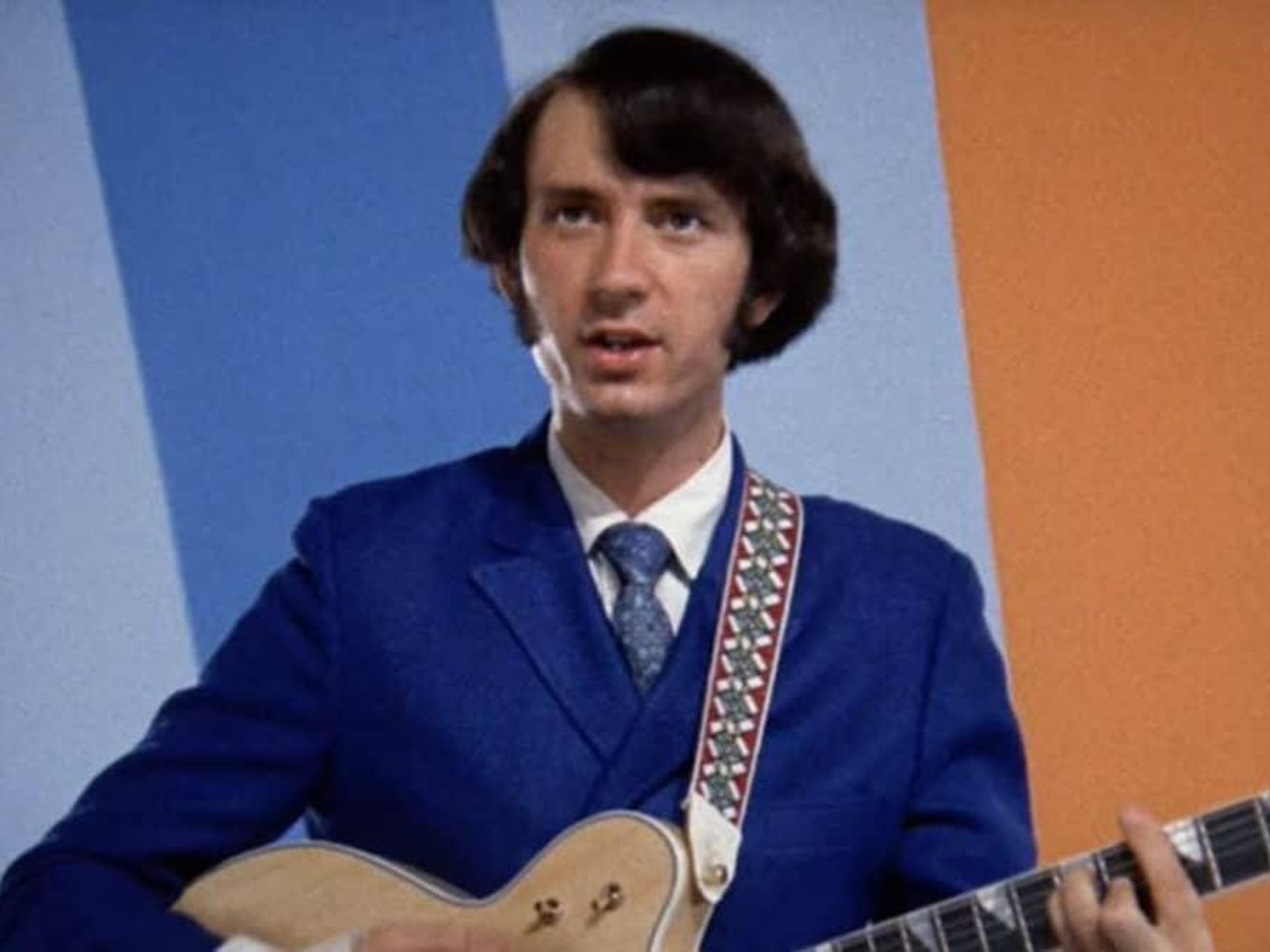
The Monkees' Michael Nesmith will receive the Ernie Kovacs Award from the Video Association of Dallas.
Twitter
It's been a Monkees-heavy year in Dallas so far, and it's about to get even more so as the Video Association of Dallas honors former Dallasite Michael Nesmith with the Ernie Kovacs Award on October 1, prior to Dallas VideoFest 29, which runs October 18-23.
Nesmith is being recognized for a career that spans more than 50 years, including acting, producing, songwriting, and his role with The Monkees band and 1960s TV show. Although Nesmith himself no longer tours with The Monkees, Nesmith's bandmates Mickey Dolenz and Peter Tork have appeared twice in Dallas in 2016, once in June at the Winspear Opera House and again in August at the Bomb Factory.
Over the years, the Video Association of Dallas has recognized the careers and talents of multiple television visionaries with the Kovacs Award, including Rowan & Martin’s Laugh-In creator George Schlatter, Joel Hodgson, Robert Smigel, Terry Gilliam, Harry Shearer, Chris Elliot and Bob Elliot, Martin Mull, and Mike Judge. The award is named for Kovacs because his work in the 1950s and early 1960s summed up the spirit of innovation and the development of the language of television art.
Along with appearing on The Monkees, Nesmith developed Pop Clips in 1980, a precursor to MTV, and his video “Cruisin” was Pop Clips' first video. He also won the first Grammy Award given for Video of the Year in 1981, for his hour-long Elephant Parts.
The award presentation takes place on Saturday, October 1, at The Kessler theater, and tickets can be purchased here.
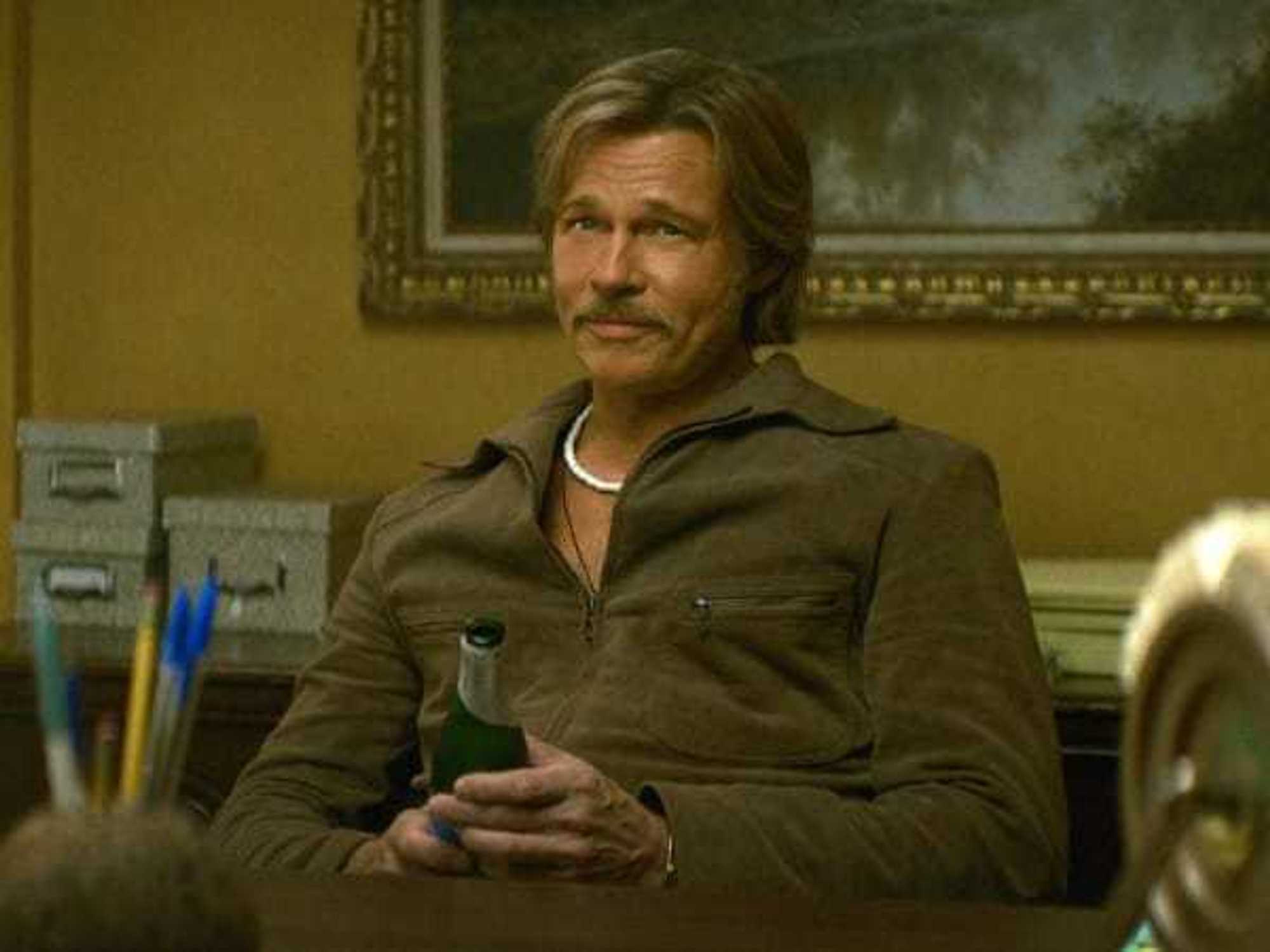
Brad Pitt in The Further Mis-Adventures of Cliff Booth.
For film lovers who came of age in the 1990s, there were few bigger directors than Quentin Tarantino and David Fincher. The men responsible for Reservoir Dogs, Pulp Fiction, Jackie Brown, Seven, The Game, and Fight Club brought an energy and style to filmmaking that has proved influential on many other writers and directors. Now, the two have joined forces for a sequel to Once Upon a Time to Hollywood, The Further Mis-Adventures of Cliff Booth.
True to the title, the film follows Cliff Booth (Brad Pitt) around 1977 Los Angeles as he works jobs as a movie projectionist and bartender, lives in an apartment with his father, Gus (Peter Weller), and seems to catch the eye of everyone within his vicinity. The professional stuntman, who demonstrated a unique set of skills in the first film, also occasionally gets called to help people in a jam, but only for the right person and price.
It’s because of those talents that he finds himself in the circle of TV star Charlie Peters (Scott Caan), who asks his manager, Karen Crosby (Elizabeth Debicki), to recruit Cliff for a job. As Charlie slow-rolls out what he really wants, Cliff finds himself increasingly drawn to Karen, who is his match in both height and wits. Through it all, Cliff plays by a certain code that - usually - keeps him out of trouble.
The marriage of Tarantino, who has a hyper-stylized, jokey style, and Fincher, who leans more gritty and realistic, wouldn’t seem to be a good fit, but there’s not a hint of discord in the entire film. While the speedy, clever dialogue of Tarantino generally rules the day, there’s no mistaking Fincher’s influence on the film, from the darkly-lit scenes to the pops of violence that are staged in such a way to feel different than what Tarantino typically delivers.
There’s a meandering quality to the 140-minute film that only has the barest of plots, but the filmmakers fill the time with innumerable delights. Whether it’s Cliff and Gus bonding over old movies, or Cliff fending off advances from every woman he passes, or a random tennis match involving Cliff, Charlie, Karen, and Charlie’s wife, Toni (Carla Gugino), every piece of the film sets the tone and builds toward the finale. The romantic subplot between Cliff and Karen plays out in interesting ways that never feels contrived.
Fans of Once Upon a Time in Hollywood will enjoy subtle and not-so-subtle references to that film, including people asking about Cliff’s fight with Bruce Lee, an appearance by Sharon Tate (Margot Robbie) in a commercial, and talk about Rick Dalton doing a show in Australia. There are also flashbacks and scenes from fake movies/TV shows that are integrated well, providing exposition without being overt. Unfortunately, Fincher has apparently given in to the temptation of generative AI, using it for vintage signage, scenes placing characters in old footage and photography, and new scenes made to look old.
Pitt slips into the role of Booth like an old shoe, showing that he’s completely at ease embodying the smooth-talking, ultra-confident character that earned him an Oscar. He’s complemented by great performances across the board from supporting actors like Weller, Debicki, Caan, Gugino, and Yahya Abdul-Mateen II, each of whom finds a way to stand out.
There’s no real rhyme or reason for Tarantino to revisit Cliff Booth, but the pleasure of watching the laidback character be completely in control of himself and everyone around him cannot be overstated. Pitt is one of the few actors who could transform a supporting role to a starring one without missing a beat; bring on The Even Further Mis-Adventures of Cliff Booth.
---
The Further Mis-Adventures of Cliff Booth opens exclusively in IMAX theaters on November 25. It will debut on Netflix on December 23.