Neiman Marcus Downtown is known for its holiday displays.
Photo courtesy of Lightwire Theater
Nothing says the holidays quite like a festive window display, and no one does it better in Dallas than Neiman Marcus Downtown. Every holiday season the iconic retailer decorates its storefront to the hilt, but this year promises to be more special.
Neiman Marcus has partnered with Lightwire Theater on an interactive window display featuring an exclusive mini-performance of A Very Electric Christmas. Launching December 16, the hour-long show is set to timeless holiday classics — from Nat King Cole and Mariah Carey to Tchaikovsky — and transforms the downtown store’s Main Street window into a luminescent magical wonderland.
Lightwire Theater performances run 5:30-6:30 pm on December 16, 19, 20, 21, 22, and 23. On December 17 and 18, the shows are 5-6 pm.
Internationally recognized for its signature brand of electroluminescent artistry and poignant storytelling, Lightwire Theater was featured as a semifinalist on America’s Got Talent and won TRU TV Network’s Fake Off. A complete full-length performance of its holiday classic A Very Electric Christmas will be presented at the Winspear Opera House on January 1 at 4 pm. To purchase tickets, visit attpac.org.
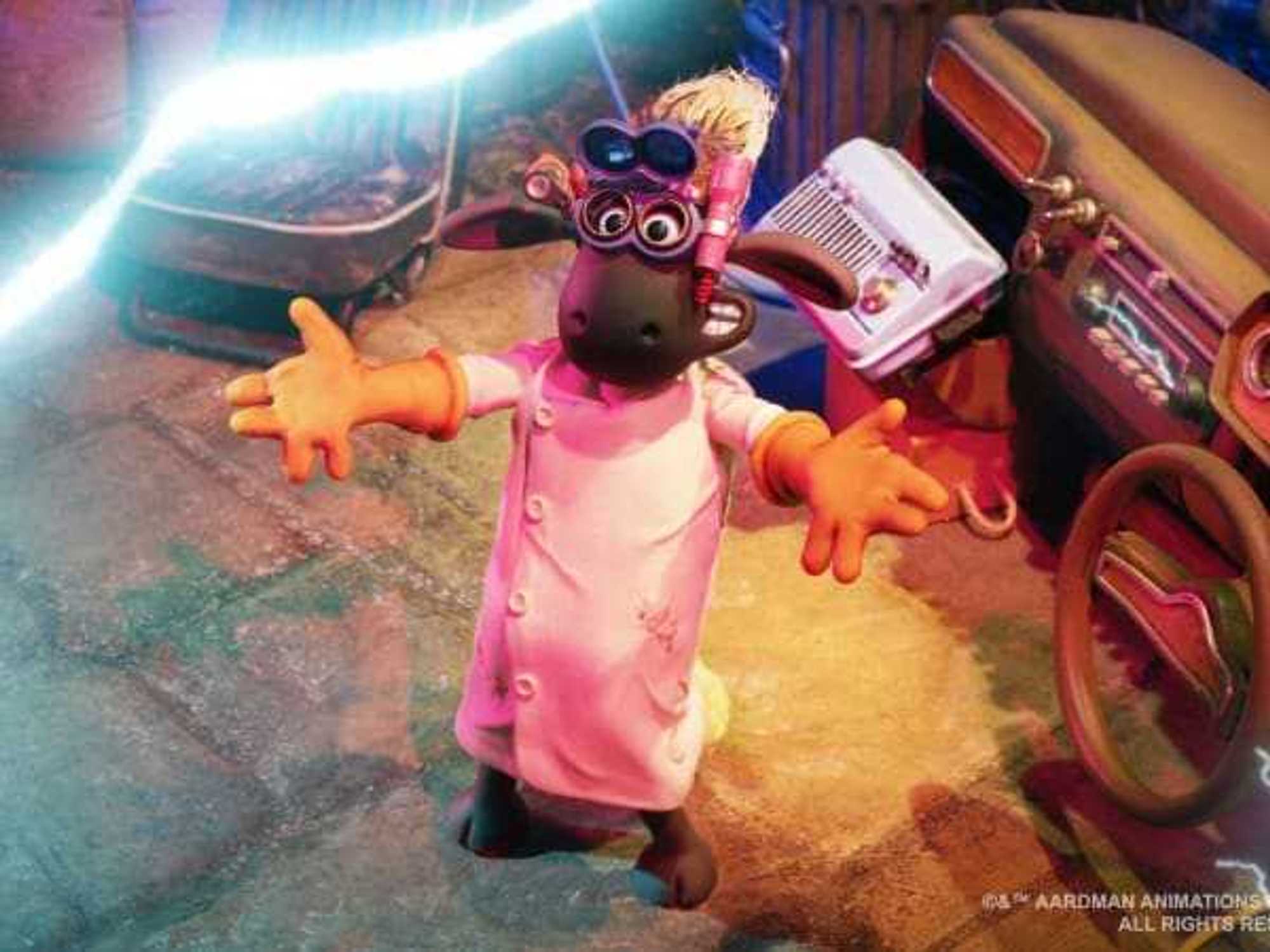
Photo courtesy of Aardman / Sky UK LTD / StudioCanal 2026
Shaun the Sheep in Shaun the Sheep: The Beast of Mossy Bottom.
Since his introduction over 30 years ago, the Aardman Animations character Shaun the Sheep has been almost as popular as the studio’s flagship characters, Wallace and Gromit. There is never a shortage of trouble Shaun can get into as he leads his flock and proves to be a thorn in the side of his farmer and Bitzer, the farmer’s loyal sheepdog.
His antics lead everyone down some slightly spooky roads in the new film, Shaun the Sheep: The Beast of Mossy Bottom. At first, things are only slightly awry as Shaun and the flock are growing a secret pumpkin patch to have their own jack-o-lanterns. But when the farmer accidentally destroys the pumpkin patch, Shaun tries to regrow it quickly with a Frankenstein-esque experiment.
However, disaster looms when Shaun uses an old bottle of Hair-Gro as the container for the serum he creates. Naturally, the balding farmer uses it on his head, and everyone soon discovers how truly successful it is, with pumpkins growing out of control and the farmer sprouting hair all over his body. Through a series of mishaps, the farmer becomes the titular beast, creating mayhem while Shaun and others try to stop him.
Directed by Steve Cox and Matthew Walker, and written by Mark Burton and Giles Pilbrow, the film goes down just as easy as every other Aardman project has. They get the Halloween vibes started from the opening credits, with things like the sheep doing the “Thriller” dance, and continue the fun throughout, referencing everything from Psycho to Friday the 13th in a nice, PG way.
With no script — every character is mute save for reaction noises — the movie relies on sight gags for its humor, and the Aardman team is endlessly inventive in that respect. Sometimes it’s small things like a sheep using toilet paper rolls as binoculars, and sometimes it’s something like forcing the Bigfoot-like farmer to be shaped into a rectangle as he escapes through a window. But there’s a never-ending stream of such moments, so even if one doesn’t tickle your funny bone, chances are the next one will.
The biggest benefit of the characters not talking is that there’s no need for deep character development. The filmmakers do a great job of giving the basic traits of each character, and then use those attributes to color everyone’s actions for the rest of the film. Shaun is the troublemaker, the farmer is a bumbling fool, Bitzer is preternaturally smart, and the town’s vet is empathetic, and the combination of those characters and others makes for a highly entertaining blend.
Like all Aardman creations, Shaun the Sheep: The Beast of Mossy Bottom is a fun lark that doesn’t make its audience think too hard. With just enough references to keep viewers engaged but not so many as to be overbearing, the film puts its well-worn characters to good use once again, delivering a Halloween season story that can be enjoyed by people of all ages.
---
Shaun the Sheep: The Beast of Mossy Bottom is now playing in theaters.