• Home
  • popular
  • Events
  • Submit New Event
  • Subscribe
  • About
  • News
  • Restaurants + Bars
  • City Life
  • Entertainment
  • Travel
  • Real Estate
  • Arts
  • Society
  • Home + Design
  • Fashion + Beauty
  • Innovation
  • Sports
  • Charity Guide
  • children
  • education
  • health
  • veterans
  • SOCIAL SERVICES
  • ARTS + CULTURE
  • animals
  • lgbtq
  • New Charity
  • Series
  • Delivery Limited
  • DTX Giveaway 2012
  • DTX Ski Magic
  • dtx woodford reserve manhattans
  • Your Home in the Sky
  • DTX Best of 2013
  • DTX Trailblazers
  • Tastemakers Dallas 2017
  • Healthy Perspectives
  • Neighborhood Eats 2015
  • The Art of Making Whiskey
  • DTX International Film Festival
  • DTX Tatum Brown
  • Tastemaker Awards 2016 Dallas
  • DTX McCurley 2014
  • DTX Cars in Lifestyle
  • DTX Beyond presents Party Perfect
  • DTX Texas Health Resources
  • DART 2018
  • Alexan Central
  • State Fair 2018
  • Formula 1 Giveaway
  • Zatar
  • CityLine
  • Vision Veritas
  • Okay to Say
  • Hearts on the Trinity
  • DFW Auto Show 2015
  • Northpark 50
  • Anteks Curated
  • Red Bull Cliff Diving
  • Maggie Louise Confections Dallas
  • Gaia
  • Red Bull Global Rally Cross
  • NorthPark Holiday 2015
  • Ethan's View Dallas
  • DTX City Centre 2013
  • Galleria Dallas
  • Briggs Freeman Sotheby's International Realty Luxury Homes in Dallas Texas
  • DTX Island Time
  • Simpson Property Group SkyHouse
  • DIFFA
  • Lotus Shop
  • Holiday Pop Up Shop Dallas
  • Clothes Circuit
  • DTX Tastemakers 2014
  • Elite Dental
  • Elan City Lights
  • Dallas Charity Guide
  • DTX Music Scene 2013
  • One Arts Party at the Plaza
  • J.R. Ewing
  • AMLI Design District Vibrant Living
  • Crest at Oak Park
  • Braun Enterprises Dallas
  • NorthPark 2016
  • Victory Park
  • DTX Common Desk
  • DTX Osborne Advisors
  • DTX Comforts of Home 2012
  • DFW Showcase Tour of Homes
  • DTX Neighborhood Eats
  • DTX Comforts of Home 2013
  • DTX Auto Awards
  • Cottonwood Art Festival 2017
  • Nasher Store
  • Guardian of The Glenlivet
  • Zyn22
  • Dallas Rx
  • Yellow Rose Gala
  • Opendoor
  • DTX Sun and Ski
  • Crow Collection
  • DTX Tastes of the Season
  • Skye of Turtle Creek Dallas
  • Cottonwood Art Festival
  • DTX Charity Challenge
  • DTX Culture Motive
  • DTX Good Eats 2012
  • DTX_15Winks
  • St. Bernard Sports
  • Jose
  • DTX SMU 2014
  • DTX Up to Speed
  • st bernard
  • Ardan West Village
  • DTX New York Fashion Week spring 2016
  • Taste the Difference
  • Parktoberfest 2016
  • Bob's Steak and Chop House
  • DTX Smart Luxury
  • DTX Earth Day
  • DTX_Gaylord_Promoted_Series
  • IIDA Lavish
  • Huffhines Art Trails 2017
  • Red Bull Flying Bach Dallas
  • Y+A Real Estate
  • Beauty Basics
  • DTX Pet of the Week
  • Long Cove
  • Charity Challenge 2014
  • Legacy West
  • Wildflower
  • Stillwater Capital
  • Tulum
  • DTX Texas Traveler
  • Dallas DART
  • Soldiers' Angels
  • Alexan Riveredge
  • Ebby Halliday Realtors
  • Zephyr Gin
  • Sixty Five Hundred Scene
  • Christy Berry
  • Entertainment Destination
  • Dallas Art Fair 2015
  • St. Bernard Sports Duck Head
  • Jameson DTX
  • Alara Uptown Dallas
  • Cottonwood Art Festival fall 2017
  • DTX Tastemakers 2015
  • Cottonwood Arts Festival
  • The Taylor
  • Decks in the Park
  • Alexan Henderson
  • Gallery at Turtle Creek
  • Omni Hotel DTX
  • Red on the Runway
  • Whole Foods Dallas 2018
  • Artizone Essential Eats
  • Galleria Dallas Runway Revue
  • State Fair 2016 Promoted
  • Trigger's Toys Ultimate Cocktail Experience
  • Dean's Texas Cuisine
  • Real Weddings Dallas
  • Real Housewives of Dallas
  • Jan Barboglio
  • Wildflower Arts and Music Festival
  • Hearts for Hounds
  • Okay to Say Dallas
  • Indochino Dallas
  • Old Forester Dallas
  • Dallas Apartment Locators
  • Dallas Summer Musicals
  • PSW Real Estate Dallas
  • Paintzen
  • DTX Dave Perry-Miller
  • DTX Reliant
  • Get in the Spirit
  • Bachendorf's
  • Holiday Wonder
  • Village on the Parkway
  • City Lifestyle
  • opportunity knox villa-o restaurant
  • Nasher Summer Sale
  • Simpson Property Group
  • Holiday Gift Guide 2017 Dallas
  • Carlisle & Vine
  • DTX New Beginnings
  • Get in the Game
  • Red Bull Air Race
  • Dallas DanceFest
  • 2015 Dallas Stylemaker
  • Youth With Faces
  • Energy Ogre
  • DTX Renewable You
  • Galleria Dallas Decadence
  • Bella MD
  • Tractorbeam
  • Young Texans Against Cancer
  • Fresh Start Dallas
  • Dallas Farmers Market
  • Soldier's Angels Dallas
  • Shipt
  • Elite Dental
  • Texas Restaurant Association 2017
  • State Fair 2017
  • Scottish Rite
  • Brooklyn Brewery
  • DTX_Stylemakers
  • Alexan Crossings
  • Ascent Victory Park
  • Top Texans Under 30 Dallas
  • Discover Downtown Dallas
  • San Luis Resort Dallas
  • Greystar The Collection
  • FIG Finale
  • Greystar M Line Tower
  • Lincoln Motor Company
  • The Shelby
  • Jonathan Goldwater Events
  • Windrose Tower
  • Gift Guide 2016
  • State Fair of Texas 2016
  • Choctaw Dallas
  • TodayTix Dallas promoted
  • Whole Foods
  • Unbranded 2014
  • Frisco Square
  • Unbranded 2016
  • Circuit of the Americas 2018
  • The Katy
  • Snap Kitchen
  • Partners Card
  • Omni Hotels Dallas
  • Landmark on Lovers
  • Harwood Herd
  • Galveston.com Dallas
  • Holiday Happenings Dallas 2018
  • TenantBase
  • Cottonwood Art Festival 2018
  • Hawkins-Welwood Homes
  • The Inner Circle Dallas
  • Eating in Season Dallas
  • ATTPAC Behind the Curtain
  • TodayTix Dallas
  • The Alexan
  • Toyota Music Factory
  • Nosh Box Eatery
  • Wildflower 2018
  • Society Style Dallas 2018
  • Texas Scottish Rite Hospital 2018
  • 5 Mockingbird
  • 4110 Fairmount
  • Visit Taos
  • Allegro Addison
  • Dallas Tastemakers 2018
  • The Village apartments
  • City of Burleson Dallas

    The Farmer Diaries

    Texas farmer scraps unsustainable practice to save precious soil

    Marshall Hinsley
    Apr 5, 2015 | 6:00 am

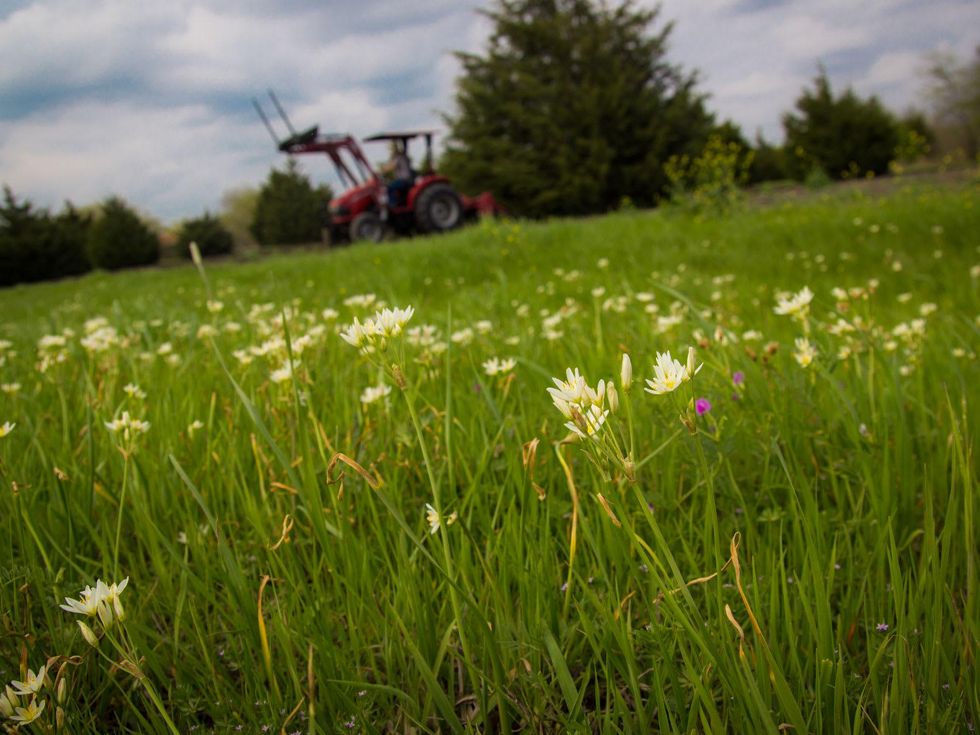
    Hummingbirds have returned from their winter stay across the border, attracted by native Texas coral honeysuckle that began blooming just a few days before their arrival. Bluebonnets, Indian paintbrush and purple verbena are flowering; the sights of spring are everywhere. Growing season has begun.

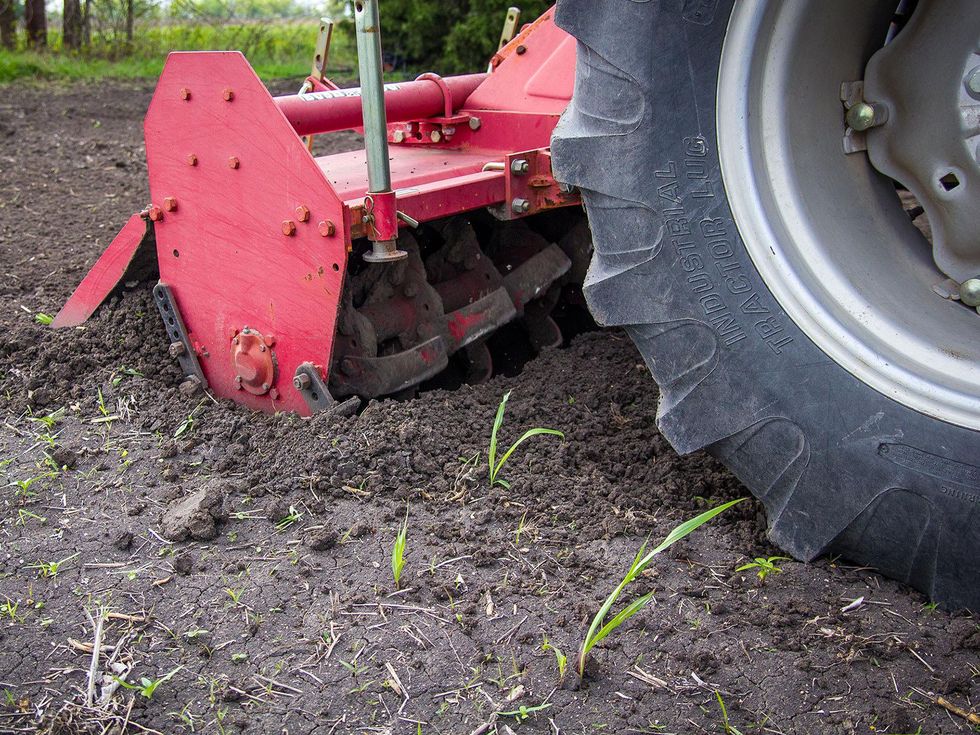
    The tilth of our soil is perfect. My father tilled last fall and again this spring, after the land had dried enough to be friable and easily worked. When freshly turned, soil is a clean slate that's uniform, level and weed-free.

    Tilling removes competitive plants, makes the soil easy to dig into and breaks up the soil's surface tension so that water penetrates faster. After a good tilling, the land looks as if thousands of bags of potting soil have been opened up, dumped out across the land and smoothed out evenly.

    Farmland that's tilled repeatedly, year after year for decades, eventually becomes infertile. That's if it hasn't eroded away first.

    Tilling, plowing or some way turning under farmland has been a technique used by farmers for at least 10,000 years. It works well.

    There's only one problem with tilling: It's unsustainable. Farmland that's tilled repeatedly, year after year for decades, eventually becomes infertile. That's if it hasn't eroded away first. Becoming aware of this fact has made me feel reluctant about my ambition to become a genuine farmer, not merely a man with a large garden.

    Since childhood, I've had a feeling that whatever I do must build things up, not tear them down. But farming as it's always been done tears down the land and fouls the ecosystem, making it fit for little else than a Walmart parking lot or a housing addition.

    Here's why:

    Compaction. Running heavy machinery across the land, several times each year, compresses the soil so that the layers underneath the depth that's tilled become harder. Roots have trouble growing into such compacted land. Water and air can't reach far into it, and both are needed for healthy crops.

    Disruption. Tilling the soil disrupts microbial colonies and nebulous webs of fungi that live below the surface of the soil. These turn inert materials into the compounds and elements plants need to live.

    Without sufficient colonies of these other life forms, the soil is effectively sterile and can't produce healthy crops with adequate yields. If every spring and fall a tornado pulled the roofs off all the houses in Dallas, the population would dwindle into nothing. By ripping apart the surface of the soil by six inches, we disrupt the life below in about the same way.

    Erosion. Tilled soil that's been rid of weeds is loose, ready to be taken wherever the rainwater flows and the wind blows. Natural processes can produce only about a millimeter of soil each century, but erosion can strip inches, possibly feet, of soil away in a single heavy storm. Even tilling itself causes this erosion as soil particles become wind-borne behind the plow and blow away.

    Destruction. Plowing a field destroys the ground-nesting solitary bees and wasps that would have been useful pollinators for the crops. Because almost every insect spends part of its lifecycle in the soil, tilling also destroys beneficial insects such as caterpillar hunters (which do just as their name suggests), praying mantises, colonies of beneficial ants and earthworms. These tiny day laborers perform much-needed work on the farm, pollinating flowers, keeping pests under control or tending the soil below.

    With no-till farming, instead of turning the soil upside down, you plant cover crops in the fall, mostly brassicas like mustard greens and kale.

    As I've become aware of these issues, I've grown increasingly interested in what's called no-till farming, a technique that has the potential to park the plow for good, just by changing a few farming practices.

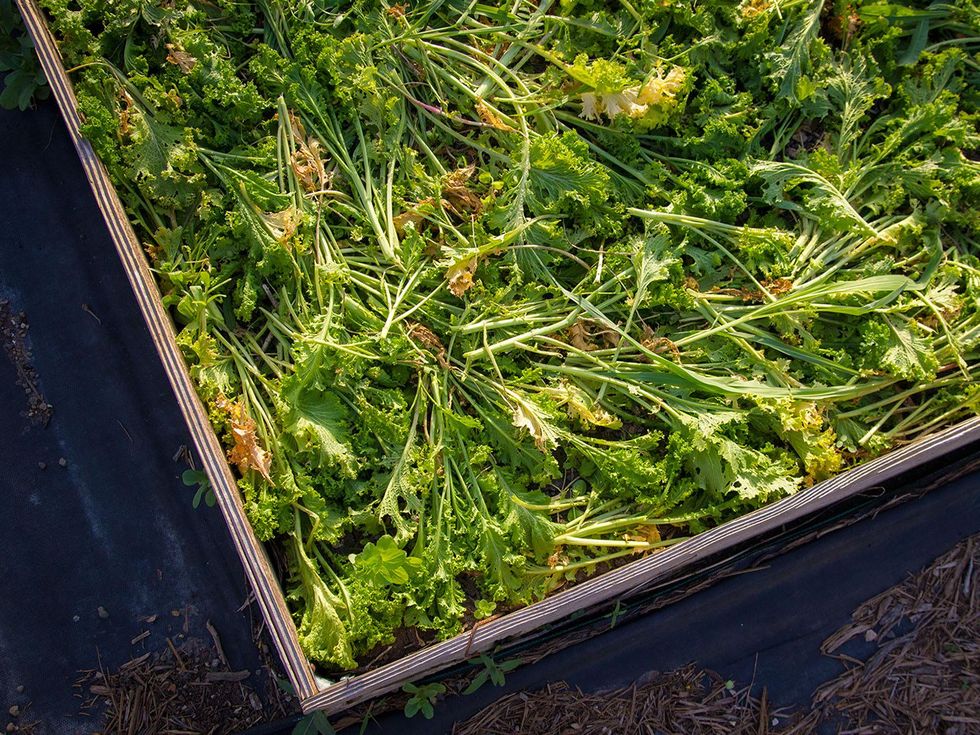
    With no-till farming, instead of turning the soil upside down, you plant cover crops in the fall, mostly brassicas like mustard greens and kale. These crops grow dense all winter long and crowd out weeds. In late winter or early spring, you cut the crop at its base, so the plants fall over and create a green layer of plant material.

    Seed is drilled into the soil, just underneath the cover crop mat that's been formed. As the mat decomposes, it releases nutrients into the soil where they either benefit plants directly or they are turned into plant-available nutrients by microbes. The mat also reduces evaporation, keeping the soil moister than if it were as bare as typical farmland. Weeds are kept in check too; the mat is an effective mulch.

    As a cover crop is planted each fall and turned into a mat in the spring, no-till farming builds a deep layer of spongy, decaying plant matter. When the layer becomes deep enough for seed to be sown into it, the crop is effectively growing in compost, which beats plain soil any day. In this way, no-till farming adds to the viability of the farmland rather than tearing it down. Productivity increases each year; labor is reduced over time.

    I began experimenting with the technique this year in my raised bed garden. A mustard green bed that I harvested from throughout last winter just this week started to bolt. So I cut down the dense growth of greens and scattered them out in the 4-by 8-foot frame. This bed was almost entirely weed-free, as the greens crowded out the grasses that normally take over in the winter.

    I'll not turn this bed under this year, not even with a spade fork. Instead, I'll dig a hole for whatever plant I transplant into it, most likely tomatoes, and scoop out no more soil than I need to properly place the plant into the bed. This way, I'll keep disruption of the microbial life below the surface to a minimum.

    For beds that didn't have a crop of greens growing in them, I use cardboard from discarded boxes as a layer to cover the soil. In either case, my goal will be to leave none of the soil's surface exposed to the sun or weed seed.

    If this technique works on a small scale, I'll apply it to the acreage my father currently tills. Perhaps in a few seasons, we can turn our farm into an example of no-till farming and boost its productivity at the same time while laboring away much less.

    Texas coral honeysuckle naturally attracts and feeds hummingbirds on a farm south of Dallas.
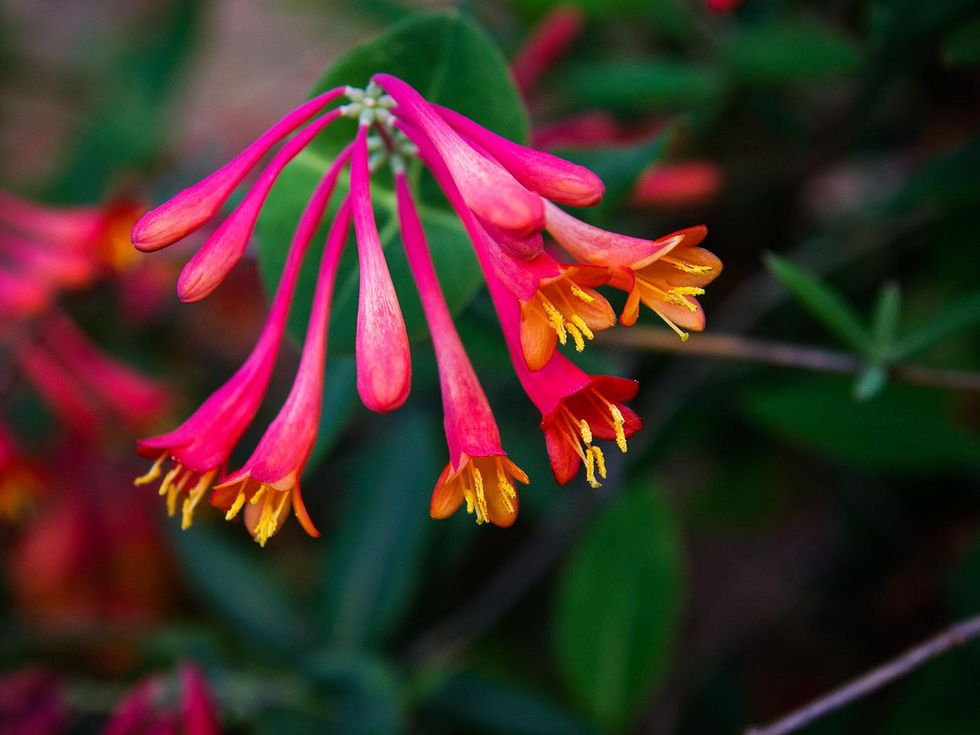
    Photo by Marshall Hinsley
    Texas coral honeysuckle naturally attracts and feeds hummingbirds on a farm south of Dallas.
    unspecified
    news/restaurants-bars
    CULTUREMAP EMAILS ARE AWESOME
    Get Dallas intel delivered daily.

    Taco News

    Tacos and tequila restaurant takes over historic blue house in Rowlett

    Teresa Gubbins
    May 14, 2026 | 5:27 pm
    Tacos from Ollie's Azul House
    Ollie's
    Tacos from Ollie's Azul House

    The city of Rowlett has a fine new place for tacos and tequila: Called Ollie's Azul House, it just opened inside the historic Oliver House at 3410 Main St., taking over the space most recently occupied by Brick & Bones (which closed in January), where it's doing "elevated tacos" and "curated tequila."

    Ollie's is from some of Rowlett's finest, including Michael Gallops, president of the Metrocrest Area Chamber, former Mayor Pro Tem, and six-year city council member; and Chris Kizziar, founder of hunger organization Life Message, located two doors down from the restaurant.

    "I've lived in Rowlett for 22 years and Chris has lived here for 35," Gallops says. "We saw this as another opportunity to give back and do something fun."

    That "something fun" includes tequila, a longtime passion and hobby for Gallops, who is a bonafide tequila connoisseur. The bar is stocked with 100 kinds, many of which come from high-end boutique distilleries.

    "These are different from the shots you drank in college," Gallops says. "We felt like this was a new idea for Rowlett. We have a full bar and can mix anything you want. But on the tequila side, we have several specific tequila cocktails and we also do flights. The goal is to make it educational — to give people an opportunity to learn about tequila and how it's made."

    Gallops' favorite tequilas are additive-free and use a natural process in distillation — El Tesoro, for instance. The focus on tequila also helped shape the direction of the menu, with an eye on affordability, as well.

    "We have a couple of entrees and some shareable dishes like nachos, but it's primarily tacos — no enchiladas, no fajitas," he says. "We hoped to provide a place where someone can come in and get a couple tacos and a drink for less than $25."

    Ollie's Azul House Facade of Ollie's Azul HouseOllie's

    Tacos can be ordered on soft corn, hard corn, or flour tortillas, and include:

    • Oliver — ground beef, lettuce
    • Miller — steak, onions, peppers, and chimichurri
    • Carnitas — slow-cooked pork with crisp edges
    • Elote chicken
    • Mushroom — a vegan option

    They encourage diners to mix and match, adding whatever ingredients they want. They recently added breakfast tacos with eggs, chorizo, potatoes, and more, which can be ordered from 7-10 am from the back window and taken to-go or enjoyed on their expansive patio — a legacy left from the Brick and Bones days.

    Beyond providing great food and drink, the restaurant afforded them an opportunity to give something back to Rowlett and celebrate its history, one in which the "azul" blue house — built in the early 1920s for early Rowlett residents Dee and Maggie Oliver — played a central role.

    They've filled the walls with photos of Rowlett's founding families, old homesteads, churches, an old cotton gin, almost like a museum.

    "It's all about the history of Rowlett," Gallops says. "We're big history buffs and are proud of our city."

    tacosopenings
    news/restaurants-bars
    Loading...